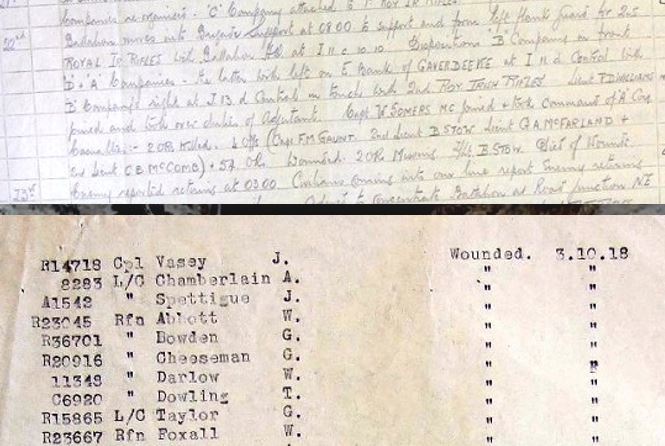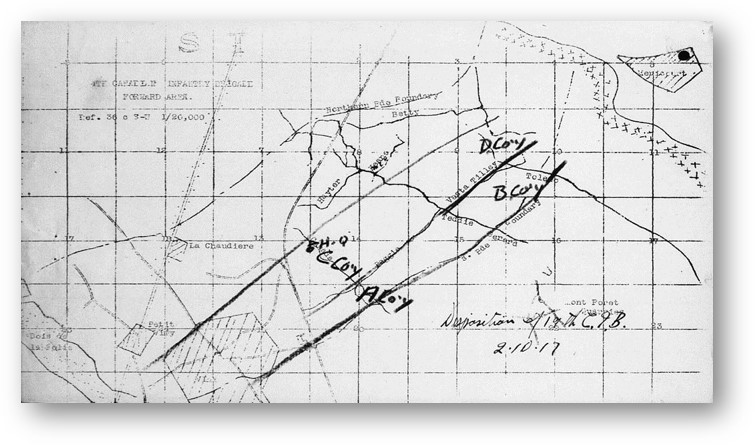






Many service records of those on active service during the war were destroyed or damaged, so an individual record for your ancestor may not have survived. Using war diaries will not provide the same information as that found on an individual record but they will provide useful detail about the actions in which your ancestor would have been involved.
In order to help trace an individual soldier you will need to know the name of the unit he served with - be it a corps, division, regiment or battalion. You should be able to find out where the unit was at any time if on active service during the duration of the war.
It is always useful to look at the war diaries of other units serving in the same location or involved in the same battles because this will provide “the bigger picture”. From experience information not found in one unit's diaries is often included in another unit serving alongside them.
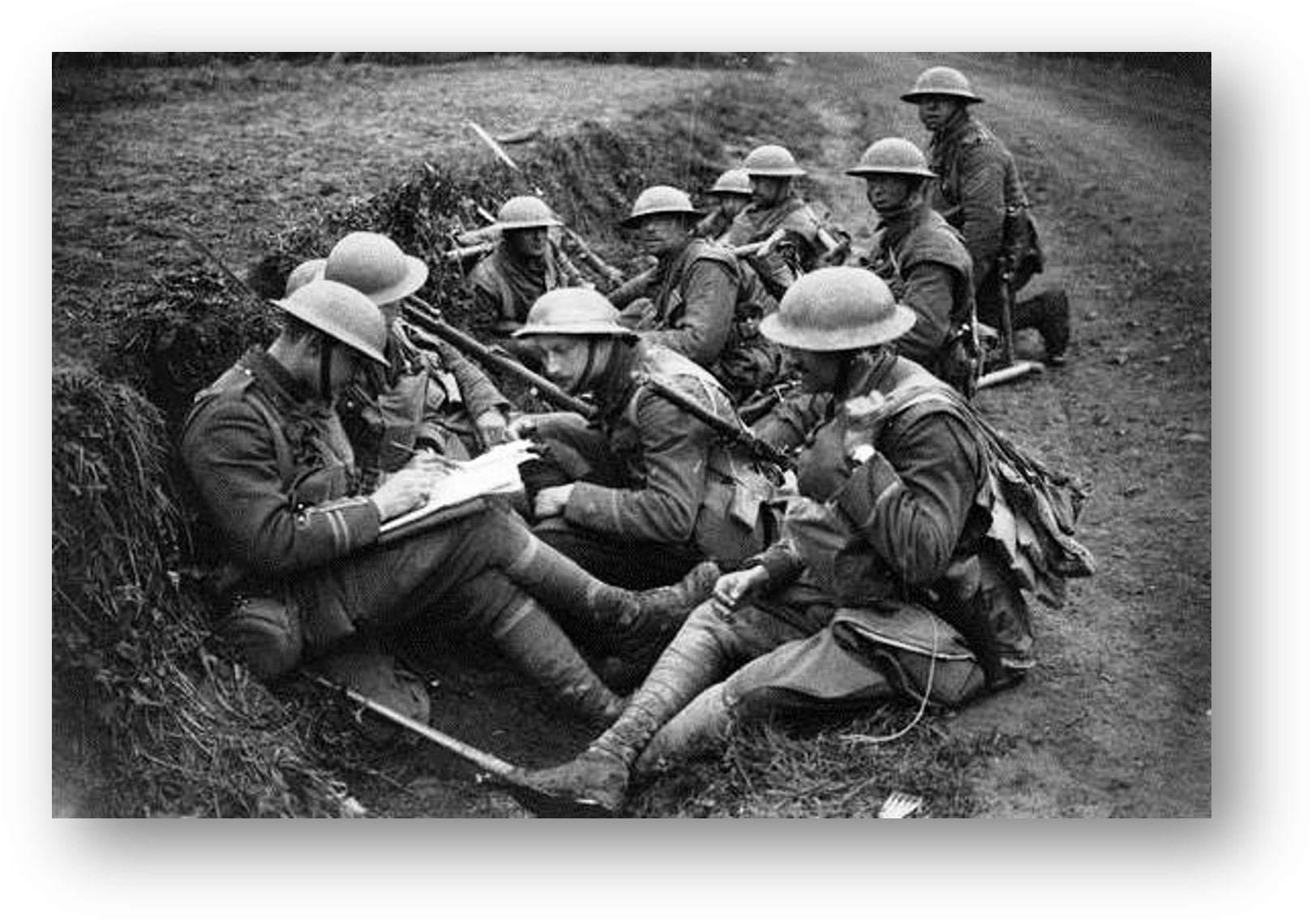
As war diaries were sometimes written under difficult conditions, such as a unit being under fire, some daily reports were brief. The diary can also reflect the views of the individual who compiled them often with some cryptic comments included. However, the real story can more effectively be gleaned from any personal diaries or letters (albeit censored) which may exist in the family archive or, in the case of diaries, within regimental museums having been donated by the family.
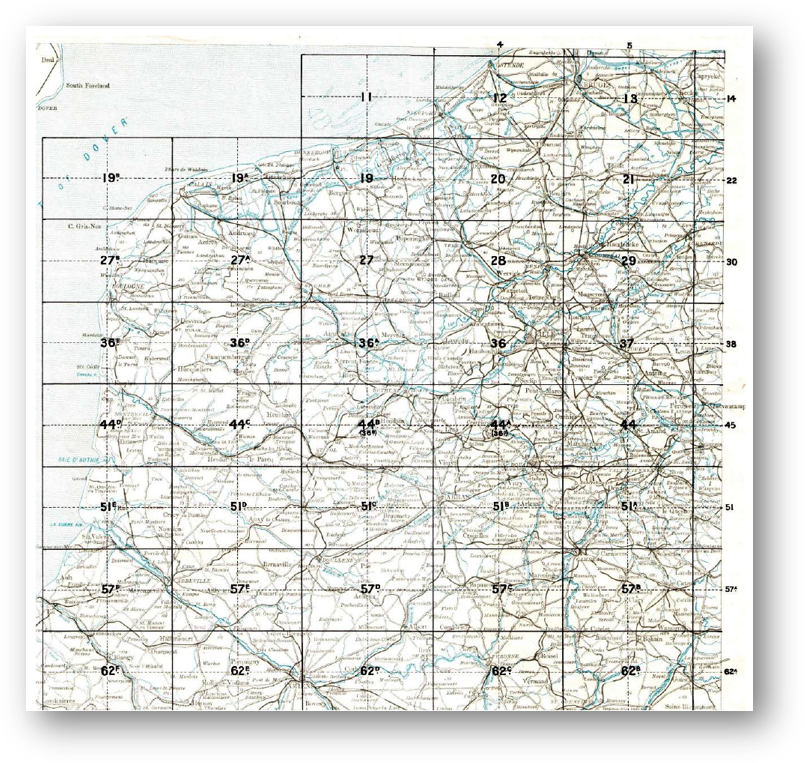
A useful source to identify locations of regiments is the “Orders of Battle and Deployment of Units” which was a multi-volume publication listing by month the location of each unit and the division to which they were attached. They are, however, arranged by division not regiment. Similarly, within series WO 95 there are several files covering orders of battle, British military missions and deployment of units. At the National Archives on open shelves there are separate indexes which provide details of the allocation of battalions to fields of battle as well as any reorganisation of brigades or divisions.
An incomplete series of war diaries exists for the Royal Flying Corps but these are in series AIR 1 (or AIR 20) because they became part of the RAF in April 1918. Some squadron war diaries are missing.