Title deeds are one of the most abundant forms of historical document becaise they provide the crucial link in the sequence of family relationships. They are often unclassified, dirty and misunderstood so they are generally ignored by family historians.

However, we do so at our peril because title deeds can reveal a lot of information to researchers such as the following: 

  • information about people and families including property inheritance
  • land ownership
  • urban development
  • how houses were established
  • how and when place names became established
  • financial status.


Although many deeds will look much the same to the uninitiated, there are various types of deeds which relate to different aspects of our ancestors lives. Recognition of deeds really relies upon three aspects:

  • shape of the document
  • opening phrase (known as formulary)
  • identifying clauses within the wording of the document.


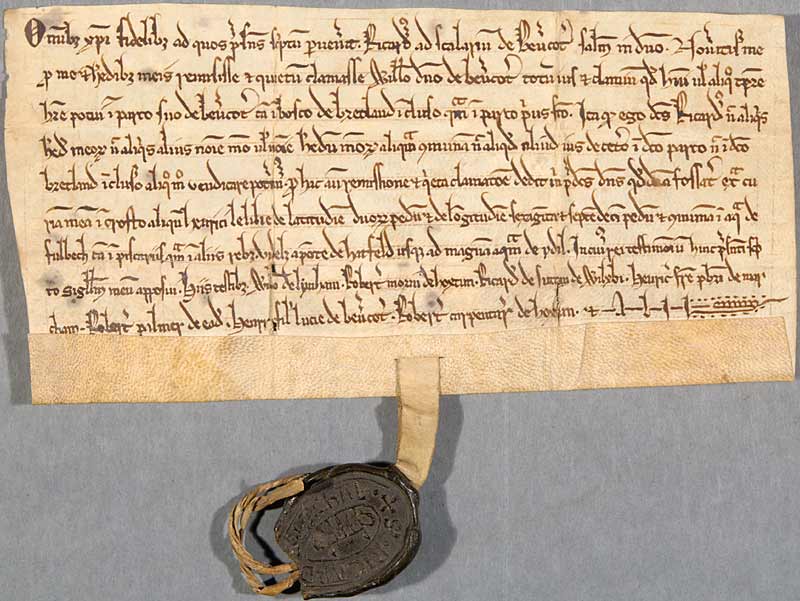
Title deeds come in many shapes and sizes and are either on paper or parchment. Many were written in Latin until about 1550 when English became common, although Latin was still in use until the early 1700s. There were two exceptions – deeds of Common Recovery and Final Concord.

If there is no signature or seal, then the deed was not executed and the inclusion of cut marks meant that it was cancelled; however, not all cancelled deeds were actually cut.

As a result of the Law of Property Act 1925, many title deeds have been deposited in local archives but few have been catalogued. Under the Land Registry regulations, once land is registered deeds do not need to be kept. Besides record offices, deeds can also be in held by solicitors, banks and in private and estate collections.


Parts of a deed

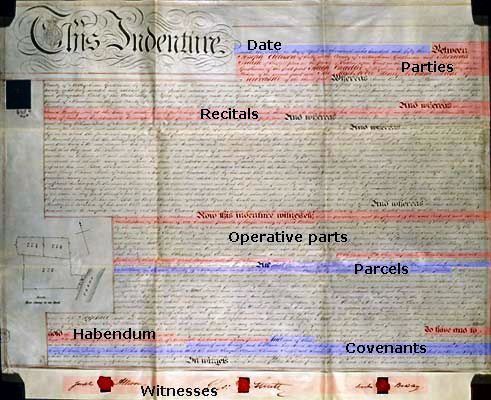
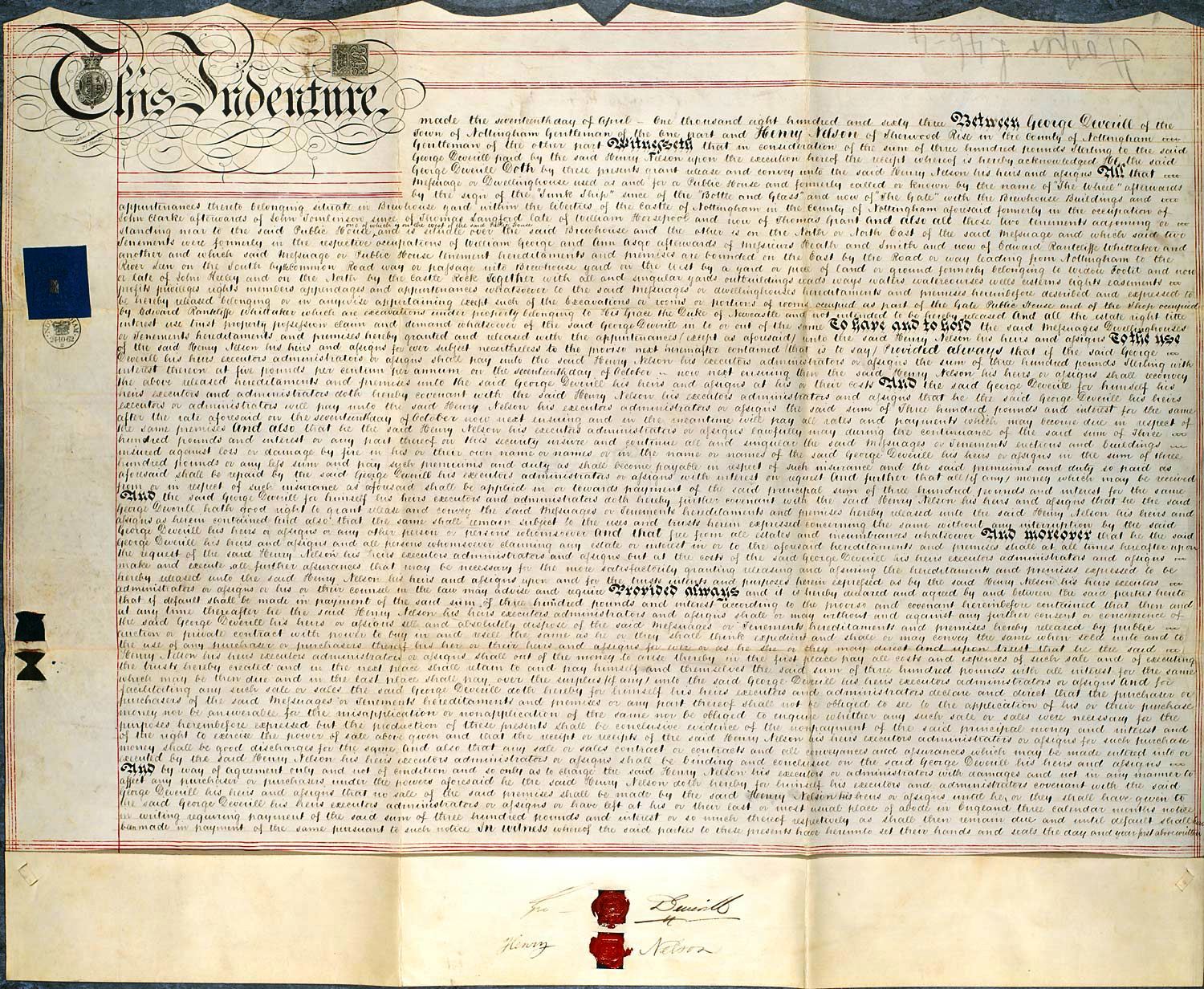
Virtually every deed will contain the following information. (see above).

  • Date - is always at the beginning; can be expressed in regnal years, by religious festival or in secular terms either Julian or Gregorian
  • Parties - simply the names involved in the deed
  • Recitals - summary of activity leading to deed usually denoted by Whereas
  • Operative Part (Testatum) - purpose of the deed denoted by Witnesseth and may include a consideration
  • Parcels – description of the land usually denoted by all that
  • Habendum – defines the terms of the estate usually denoted by to have and to hold either forever or for a term of years
  • Covenants – contains the conditions and provisos of the agreement
  • Witnesses – Names of those who witness the execution and they are normally sealed
  • Endorsements – records of receipts - often written on the back of the deed.


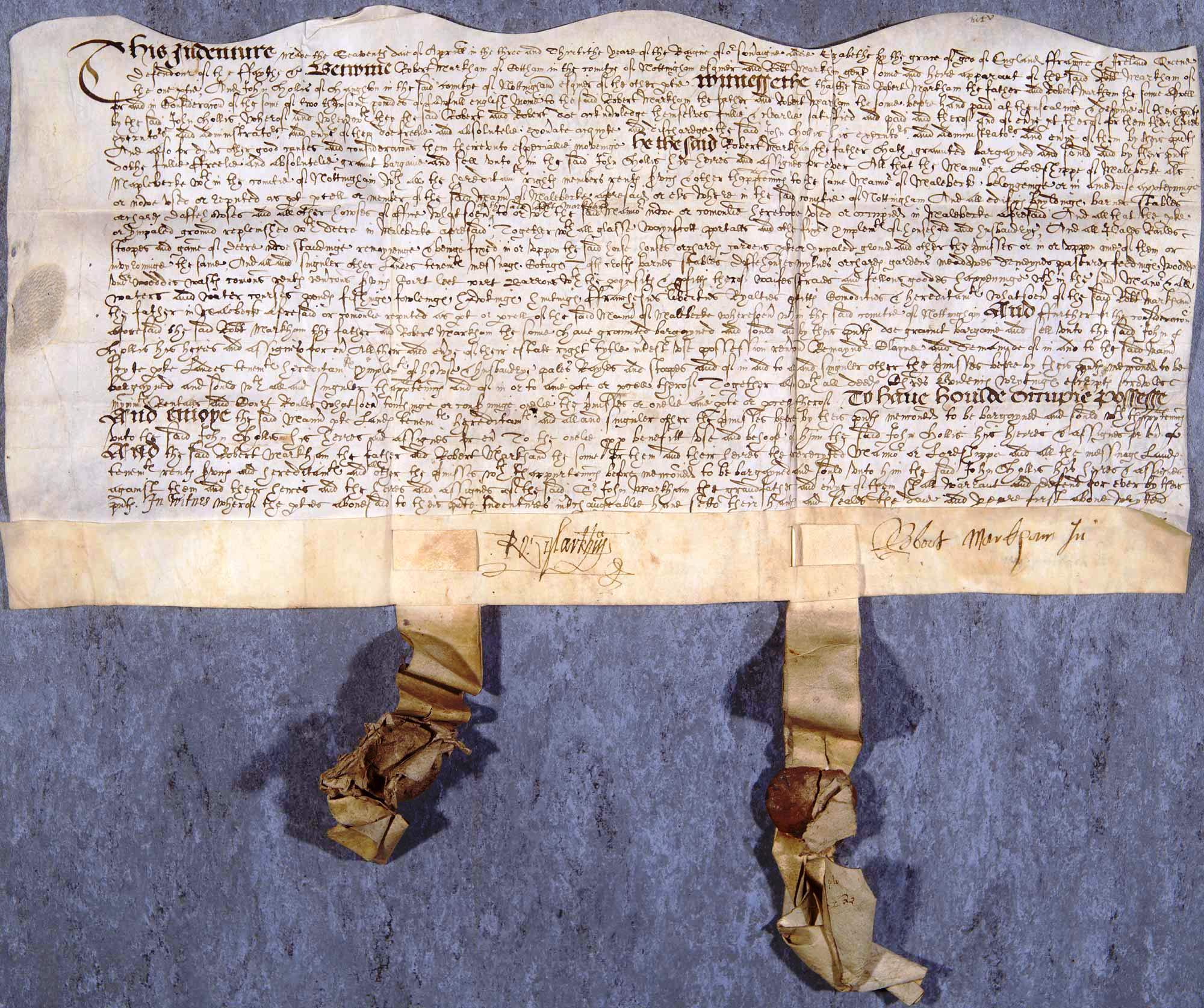
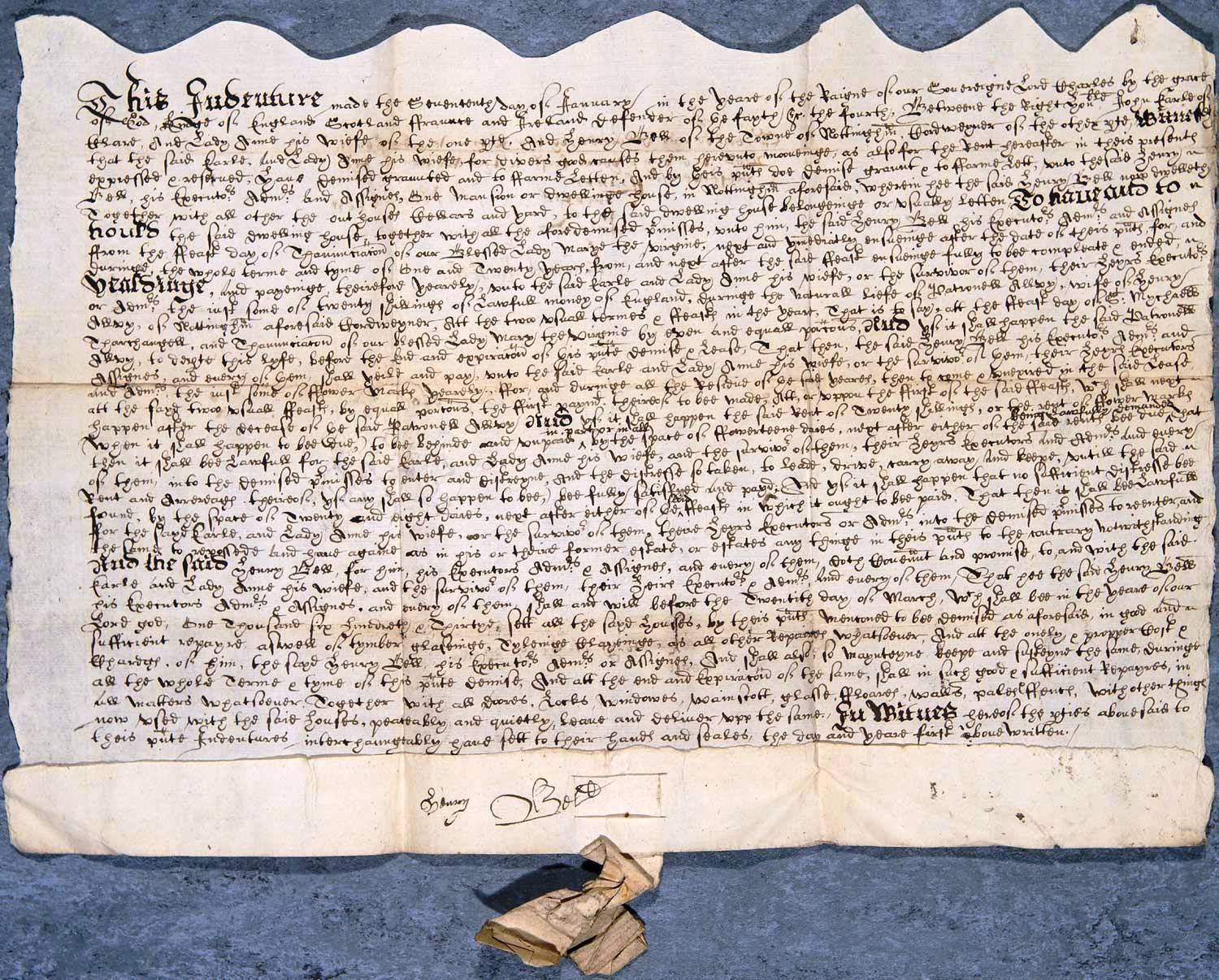
As you handle deeds you will become aware of the different ways in which they are indentured, i.e. the location of wavy lines on the edges. There are essentially three different aspects to any title deed because one part was for the seller/grantor, one part for the purchaser and one part for the registration with the courts.

  • Deforciant – this was the part of a deed for the seller. It will have a wavy indenture down the right-hand side and along the bottom
  • Querent – this part was for the purchaser. It will have a wavy indenture down the left-hand side and along the bottom
  • The Foot – This was part of the deed which was registered with the courts as a formal record. It is usually an elongated oblong with a wavy indenture along the top.
  •  

In all cases the wording of the deed part will be the same, and in order to make sure that the parts relate, various marks cross the indentures and should match when fitted together. This was a safeguard against forgery of other malpractice.

Dates

Dates can be in various formats depending upon the date it was executed.

  • Regnal years - reign of the monarch e.g. 2 Eliz 1
  • Religious festivals – Saints' days etc.
  • Julian calendar - before 1752 year started 25 March
  • Gregorian calendar - after 1752 year started 1 January
  •  

Dates can also relate to the English law terms. 

  • Michaelmas - 1 Oct – 21 Dec
  • Hilary -  11 January until Wednesday before Easter (moveable)
  • Easter - Tuesday after Easter to Wednesday before Whit Sunday
  • Trinity - Second Tuesday after Whitsun to 31 July.
  •  

Some documents may have a combination of dates e.g. Trinity Term End 43 George III (law term and regnal year)

Identifying deeds using formulary

If you are aware of the formulary used, then identification of a deed can be made in the first few words. Formulary for Identification is best identified with the common usage for wills... in the name of God, amen.

Other common types of deed can be identified as follows:

  • Bonds – know all men by these presents
  • Deed of gift – know all present and future … to have and to hold…. rendering
  • Bargain and sale and lease – this indenture…. witnesseth
  • Fines – this is a final agreement
  • Common recoveries – name of reigning monarch
  •  

Because most deeds have a similar physical appearance, identifying a deed relies upon four elements:

  • Time period
  • Physical form
  • Key phrases
  • Notable features
  •  

For simplicity in identification, many deeds relate to property and they can further be divided into types of estates with certain deeds relating to each specific area:

  • Freehold – indefinite duration
  • Leasehold – limited duration
  • Copyhold – land held of a manor and subject to enfranchisement under the Copyhold Acts - it was finally abolished by the law of property Act of 1925.

Do not ignore deeds - they can be very helpful

Why are deeds ignored by family historians?        

  • Early deeds are often in Latin and many find it difficult to interpret the content.
  • Difficult to read as they have a language of their own and palaeography is needed.
  • Like most legal documents the information they contain can be summarised in a few words and researchers find this difficult.
  • The biggest misconception is that they are considered to be associated with property not people.
  •  

Don’t be put off by the use or early English or Latin. Before 1550 many records, including the more common types of documents, will be in Latin. Do you need to be able to read Latin? Not necessarily because a good Latin word list will provide many of the answers. English is not the same today as it was a few hundred years ago because it was also influenced by the Anglo-Norman language. None of this should put you off accepting the challenge to interpret a deed.

Family History Books has recently published two books which might help. Go to Family History Books on our website.

  A Latin Glossary 

  Making Sense of  Latin Documents for Family Historians.


Family history in a deed

Family history was included in many types of deed in order to remove any doubt about the title or inheritance. The seller or granter had to demonstrate they were legally able to dispose of the property. Permission for the sale may be included as an appendage which may show a family tree and may have a baptism or marriage certificate lodged with it. Deeds are therefore a “bridge” where gaps exist in census returns, register entries or other types of genealogical records and may even provide clues to internal migration or even emigration.

Many deeds also relate to people.

The following are the main types of deed which can provide information about people:

  • marriage settlements
  • family settlements
  • mortgage deeds
  • leases
  • fines and recoveries
  • bargain and sale
  • quitclaims.
  •  


Deeds relating to freeholds

Freehold relates to land held in “Fee Simple” – it was owned absolutely and the owner was free to transfer and dispose of the land as he wished.

Quitclaim

Time period: 12th – 19th century

Physical form: parchment or paper and often associated with other deeds; straight edge top

Key phrase: have remised (given granted, bargained) and quitclaimed

Notable features: Usually no consideration, may include covenants, differences between modern and medieval forms.

Letters patent grants of land from the monarch to a private individual

Time period: 12th – 19th century

Physical form: impressive documents on large sheets of parchment; often illuminated and with seal attached and straight edge top.

May include covenants and provisos

Key phrase: to all those to whom these present letters shall come

Notable features: consideration may be stated or not – usually by gift from the monarch.

Bargain and sale

Time period - early 16th century onwards

Physical form: usually written in English, on parchment with an indented top edge

Key phrase: have given granted bargained and sold

Notable features: consideration made,

Memorandum of enrolment endorsed, sealed.

All deeds were enrolled in the Royal Courts under the 1535 Statute of Enrolment so the conveyance was not secret.

Lease and release

Time period - Existed between 1535 and 1845

Physical form: two parchment documents subsequently dated. Lease is small and release is large. Indented top edge

Key Phrase:  Lease – have bargained and sold. Release – Hath released and confirmed …. In his actual possession by virtue of a bargain and sale dated….

Notable features: these were developed as a way of secretly conveying property without enrolling in the courts. The lease lasted for one year at a nominal rent. The following day, a release was made granting full ownership of the property. Release lasted forever and will include details of the purpose of the conveyance.

Final concord

Time period - 12th century until 1833

Physical form - small parchment with an indented top edge

Key phrase – this is the final concord

Notable features - archaic legal writing, Consideration included but vague, Term is undefined, sometimes referred to as a fine, Property description is particularly vague, used to create a settlement of freehold land.

Common recovery

Time period - 15th century to 1833, Early deeds in Latin before 1734.

Physical form - written on large parchment

Key phrase – Tenant to the praecipe, demandant or tenant in tail

Notable features - Look impressive but exemplifications written in archaic legal writing, vague description of land, fictitious legal action where purchaser (recoverer) sued the vendor (tenant) alleging he had no legal title., fines were levied in the form of insurance of title, If a property was required by an earlier deed to pass in a family descendancy then before a sale was agreed this had to be removed. Recovery means that the owner recovered the property form the owner to sell it free of encumbrances.

Modern conveyance

Time period - Exists from 1845

Physical form – written or typed either on parchment or paper. Conveyancing Act of 1881 simplified the format

Key phrase (incorporated within the document) as beneficial owner ….. hereby conveys

Notable features - financial consideration paid in full before deed is effective. Supported by other documents such as abstract of title, mortgage deeds etc.

Abstract of Title - useful as they list previous transactions for which some deeds may not survive, usually paper secured at the top by string or cord, Very often abbreviated.

Requisition of Title - 19th century dating from about 1820, Questions and replies on aspects of title needing clarification, written on paper, often on blue legal paper, two columns, each written in a different hand.

Deeds relating to leaseholds

Lease

Time period - Existed from 12th century to present day

Physical form - various sizes, written on parchment until about mid-19th century then on paper, indented and sealed until replaced in 1881 by modern format

Key phrase – Demised, granted, set or let. Yielding and paying …. per annum

Notable features - financial consideration noted, specific number of years, contains covenants relating to use and maintenance of property.

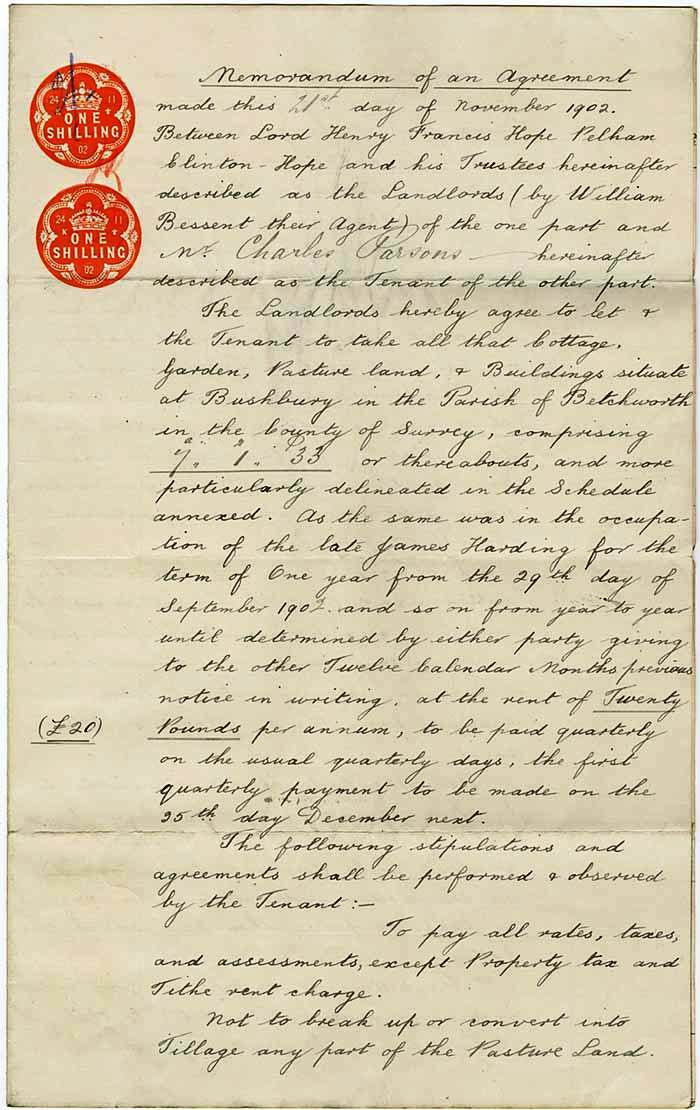
Tenancy agreement

Time period - From 17th century to present day

Physical form - paper from 19th century

Notable features - indefinite until terminated by either party, terms very detailed within document, referred to as “Articles of Agreement” or “Lease from year to year”, protection afforded by statute in regulated tenancies

Copyhold

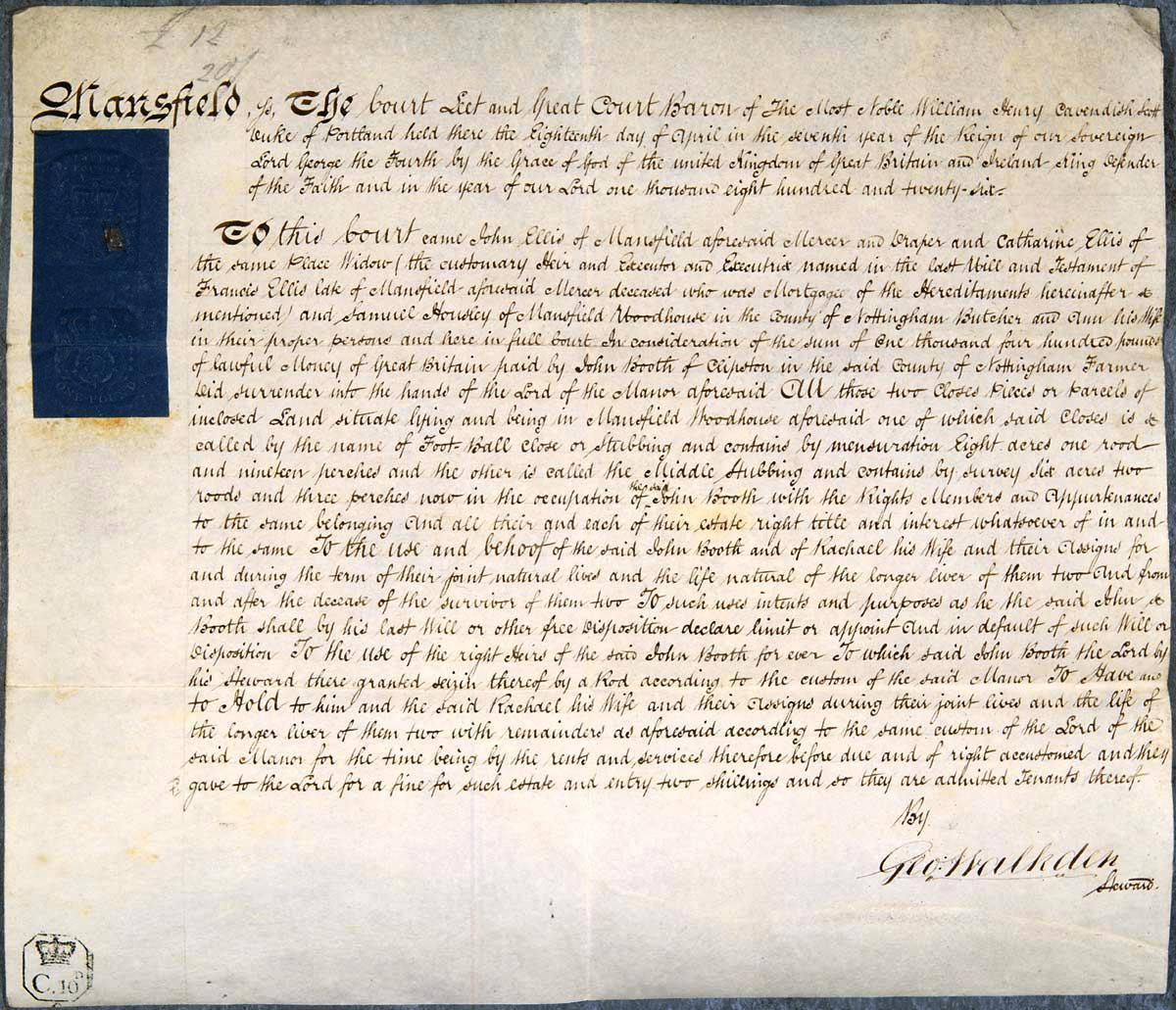
Copyhold is an interest in land abolished in 1922 and associated mainly with the manors. Copyhold land could be inherited or settled but every transfer was subject to the manor court and was recorded as such in the court rolls, usually as Admission and Surrender

Time period - 17th – 20th century

Physical form - parchment and always headed by the name of the issuing manor, in English after 1733, straight edge

Key phrase – is admitted tenant according to the custom of this manor

Notable features - no consideration made, may contain covenants and provisos, signed by the steward of the manor or sometimes the Lord.

Where to find deeds

Locally held collections in County Record Offices or in private hands or with solicitors

National collections are held at The National Archives, university libraries and the British Library

There is no guarantee that a deed will exist but if it does then there is a goldmine of information.


Family History Books has recently published two books which might help.

Go to Family History Books on our website.

  A Latin Glossary 

  Making Sense of  Latin Documents for Family Historians.

This article was contributed by Ian Waller from Family History Federation.
Website by Beachshore