Leather is made from the hides or skins of animals. These hides and skins are by-products from the meat industry and come from animals originally reared for meat, milk and wool. There is a subtle difference between a hide and a skin. Skins come from small animals such as calves, lambs, goats, and hides from larger animals such as cows, deer and horses.
Hides and skins could be made resistant to bacteriological decay by steeping them in tannin obtined from tree bark, mainly oak bark. In 1805, Sir Humphrey Davy discovered that materials from other trees such as chestnut and ash had the same properties and could also be used. Advertisements often appearing in provincial newspapers for bark peelers; it was their job to prepare the oak bark for processing, stripping the bark from the trees then grinding it to a powder to sell to tanneries or tan yards.
Leather was mainly processed for shoemaking and saddle/harness making, two village trades that were essential to the local economy. Tan yards, usually located by a river or stream, became a familiar sight and smell in virtually every village. Tanners who operated in towns bought their skins from the abattoirs or local butchers who slaughtered animals. The quality of finished leather goods depended upon the type of skin or hide used and the skill of both the tanner and currier.
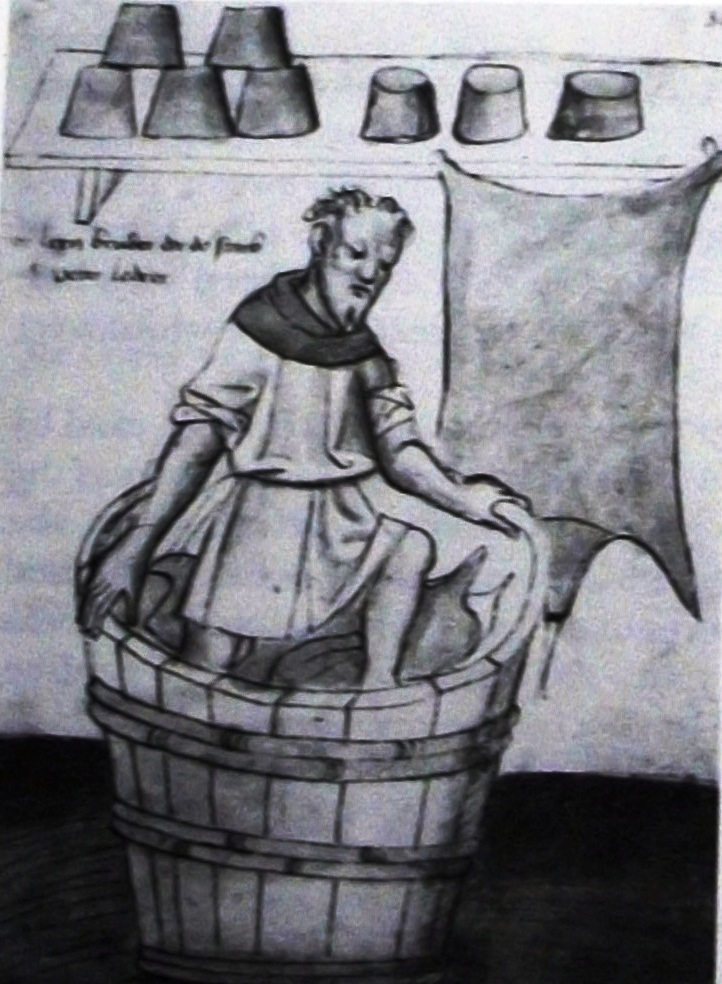
All hides and skins were treated in much the same way by the initial salting-down to prevent putrification. Salting also loosened and dissolved dirt and grease followed by a soaking in water to remove the residue. In areas where lime was available, hides were laid in lime pits to initiate the process of loosening hairs. In other places, they were dusted with ground-up oak-tree bark. The treated skins were then immersed it in a shallow pit containing the fermenting solution of organic matter such as urine, dog poo and chicken dung, known as bate. The bacteria which grew as a result of soaking were sufficient to fully loosen the hair and fat from the skins which was sold off to make glue.
At this stage more tanning material (usually more oak bark) was added until the solution fully penetrated the skin. The extent of penetration affected the quality of the finished product. The process could take up to a year depending upon the thickness and type of the hide. Any remaining hair or fat was then removed with a blunt stone or wooden scrapper and the leather was then hung in open sheds for several days to dry and cure. The later introduction of alum-based earth salts produced a fine white leather, considered to be the best for the fashion industry for gloves and bags. The demand for softer leather arose because virtually all industrial machines used leather belts to drive them.
The industrial revolution saw a great demand for leather and the process of tanning changed. Chemicals like hydrochloric and sulphuric acid signalled the end of traditional processes, and by the end of the nineteenth century, many traditional tanneries closed because the demand from the fashion houses made leather treated with vegetable based materials just unworkable.
Two new processes were introduced into the tanneries in the 1800's. Vats were replaced with drums and the use of chromium as the tanning agent was introduced, reducing the process to a few days. This process became known as chrome tanning, the name derived from using salts of chromium, known in the trade as liquor. This process is still used today. Tanneries became larger and were mainly based in towns employing a significant number of men.
Universal regulation of the leather processing industry was never easy to achieve but an attempt was made as early as 1663 which at best resulted in a code of conduct for tanners. There were often law suits and court cases in relation to the regulation of both tanner and currier. In 1738 a petition was made to Parliament by the tanner and leather-worker journeymen of London and Westminster in respect of laws about sales of tanned leather; this resulted in a bill allowing curriers to sell leather.