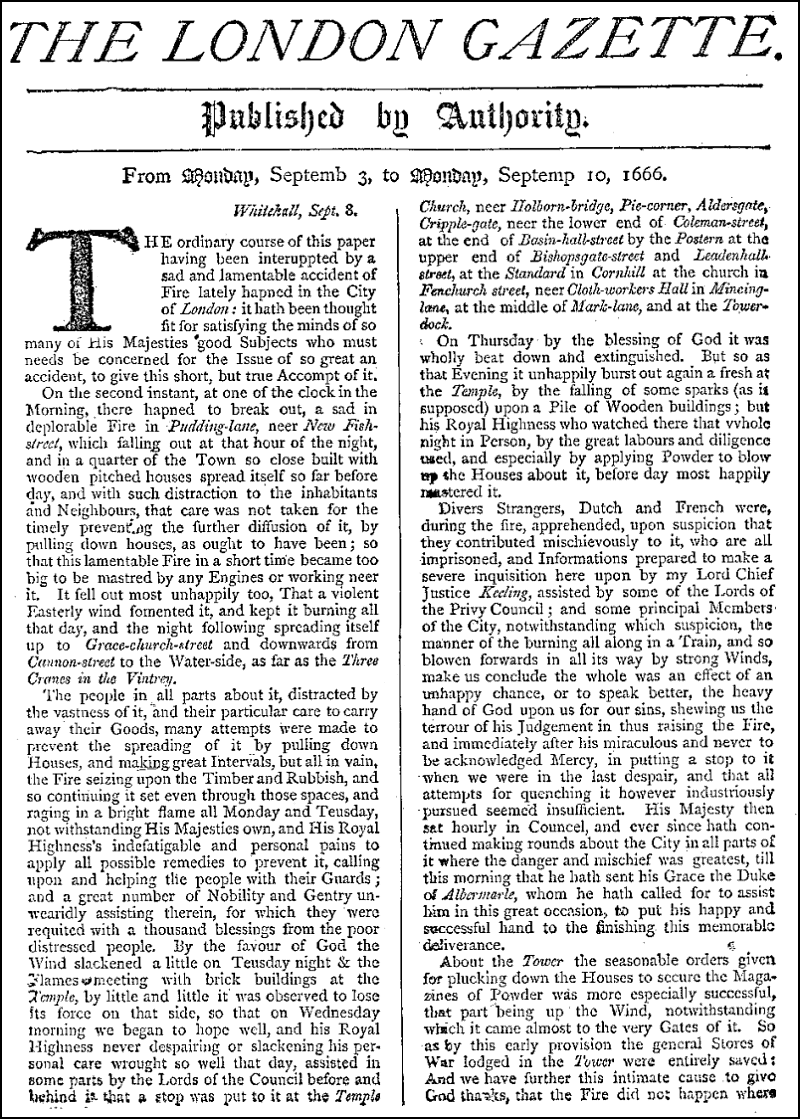
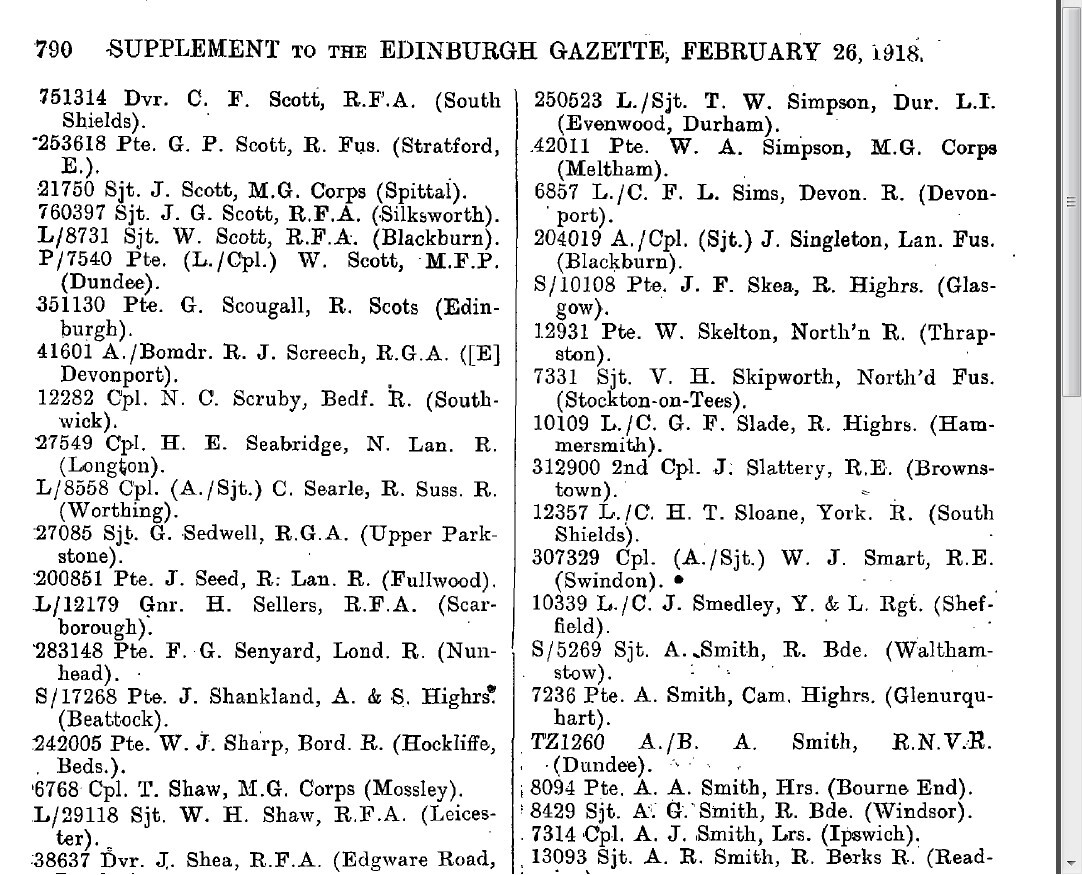
Family historians are advised to make extensive use of the Gazette because it is full of names which will enable them to add to the basic knowledge they aoready have of their ancestors such as name, dates of birth, marriage and death.
The Gazette is a useful resource for family historians as the official notices published in the paper are wide-ranging and cover many different levels of society. Amongst the most useful are:
- appointments and promotions to the church and for officers in the armed forces and militia
- grants of peerages
- medal awards of gallantry and citations
- those who were mentioned in despatches.
- ancestors changing their name
- naturalisation as a British subject from 1886
- ancestors being declared bankrupt, dissolving business partnerships or liquidating companies.
-
Many appointments of prominent people who held public or royal office are recorded.
Unclaimed estates and missing heirs. Various other publications relied on the lists of unclaimed estates in the Gazette, publishing the names of those who may be the missing heirs and looking for next of kin. Appendices in the printed Gazettes list dormant funds in court and became a source of people thinking they might have ‘money in chancery’. The index register of Next of Kin Notices is a useful resource with information dating back to 1685. This can be searched at the Society of Genealogists' library. The Colonial Probates Act 1892 allowed for notices to be given about the estates of British people who died abroad which also meant that next of kin notices appeared in other newspapers as well as the Gazette.
Official Appointments
From the late seventeenth century, the London Gazette included the date on which English officers of state took their oaths. The creation of peers, baronets and knights are also recorded. Details of the appointment of government and other officials including Justices of the Peace, other church and legal appointments and promotions are also given but content may be a little haphazard.
The promotions of naval, army, militia and air force officers are included because an officer's commission was not considered official until he was "gazetted" meaning that he was listed in the London Gazette.
Names of officers killed and wounded at Waterloo appeared as a supplement to the Gazette on 1 July 1815 but those of other ranks did not normally appear until the Crimean War at which point full lists of casualties have since been given. Lists of money due to their dependents were also published particularly for the First World War.
Awards and Mentioned in Dispatches
Since the middle of the nineteenth century, gallantry awards for all ranks have been recorded. Thousands of men and women received such awards in both World Wars but some of the entries only give the name of the person and their unit. For some of the higher wards, such as the Victoria Cross or the Distinguished Conduct Medal, a citation summary may also be given. Those mentioned in dispatches are also listed but it was not until 1843 that other ranks were included. From the start of the First World War all recipients of honours and awards have been listed.
Royal Warrant Holders
Annual lists of the names of the Royal Warrant Holders are published. These record those tradesmen who supply the various Royal Households and have received a Warrant entitling them to use the appropriate Royal Arms.
Shipping
Since the eighteenth century, losses or capture of both RN and merchant navy ships have been recorded - although the event may not be exactly when it happened because actual news of the disaster may have taken some time to be known.
During the Napoleonic War, notices of the sales of captured ships and their cargoes were published showing the date of capture, followed by the dates for the distribution of the proceeds or prize money to the officers and company of the capturing ship. There was a restriction of three years allowed for claimants to come forward. Notices relating to prize money ceased in 1866.
Certificates of Competency for Merchant Navy Officers
Between 1845 and 1850, certificates of Competency for Masters and Mates of merchant vessels were published in the London Gazette showing the date and place of birth of the master or mate, his ticket number, type of certificate, his service and the date and place of the examination.
Dissolution of Partnerships
There was never a legal requirement to list dissolutions of business partnerships, but after 1750, notices about these began to appear in the London Gazette. By the mid-1800s, there were frequently around 1,500 such notices published but because there was no requirement to publish such notices it is not known how complete these were.
Bankruptcy
Notices relating to bankruptcies have been published in the London Gazette since it was established. During the eighteenth century, it was standard practice for a formal statement to be included which showed name, address and occupation of the person declaring bankruptcy. These notices were duplicated by publications such as the Gentleman's Magazine and The Times newspaper. Information for declared bankrupts between 1820-43 also appear in the bankrupt directory. By the early 1900s, the notices contained more details such as dates of hearings, meetings for creditors and distribution of final assets.
Insolvent Debtors
Notices of the date and place of the hearing of petitions from insolvent debtors, whether in debtors’ prison or not, appeared in the Gazette between 1813 and 1861, although you may find some earlier and later entries. These are useful for finding the whereabouts of your ancestors because some of the entries indicate movement form place to place.
Wills and probate
Wills in the London Gazette appear as Deceased Estates Notices under section 27 of the Trustee Act; these are legal notices placed by executors or administrators to identify any creditors and beneficiaries before distributing the assets of the estate. To place a notice, a grant of probate or letters of administration is usually needed. Placing such a notice is a protective measure as it proves reasonable effort was made to find creditors and shields executors from any personal liability for unknown debts. The notices include the name of the deceased, date of death, address of the executor/administrator and a deadline for claims.
Under probate law, certain wills must be published in the London Gazette to provide publc notice, especially when dealing with unclaimed estates or to alert creditors. It also helps prevent fraud and ensures transparency.
Unclaimed Money
From the late seventeenth century, lists of estates being administered by the High Court of Justice and worth at least £50 were published every five years in March in the supplements to the London Gazette up until 1938. The first list of Dormant Funds in Court was published in February 1877 but do not contain much information and act only as a finding aid. But they are complete lists of all the funds existing in those years.
The lists do not provide information about the sums involved and this information will be available from the Court Funds Office upon application and payment of a fee to those who can prove a beneficial interest in the funds.
Name changes
Acts of Parliament and Royal Licences relating to those who change their names have been published in the London Gazette from early times and are indexed in Phillimore and Fry. Associated with the grants are the change in armorial bearings but such changes are not described in the Gazette entry. Name changes by deed poll in the Enrolment Books of the Supreme Court since 1914 are required to be advertised in the London Gazette.
Naturalisation
Before 1844, some Letters Patent of denization were published in the Gazette but since the 1899 Naturalisation Act, those who receive naturalization certificates as British citizens have been listed.
Civil Service
After 1870, notices of civil service recruitment and examinations for all grades including Post Office staff have been included. Notices or honours and awards for government staff, businessmen and women or individuals including those for the Imperial Service Medal for retiring civil servants are also included.