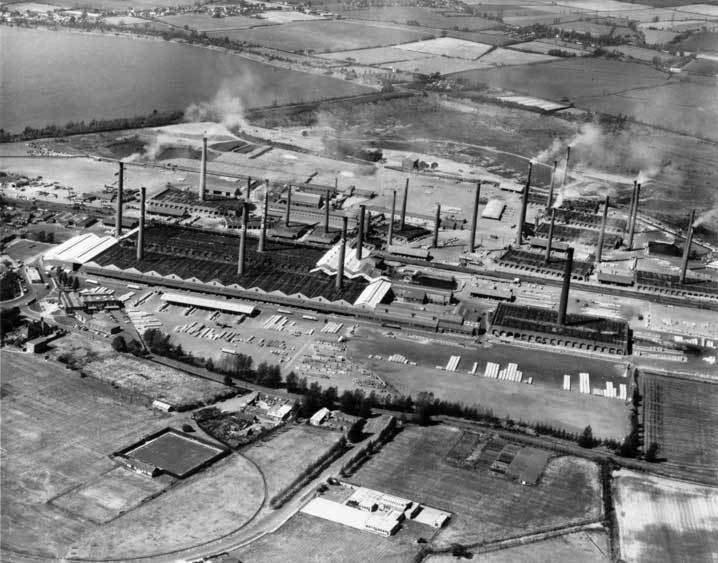
Residential Stewartby was a model village originally built in 1926 to house the local workers of the London Brick Company. The village was designed and built on the ‘Garden City’ principle and was took the name of Stewartby after the Stewart family, many of whom were directors of London Brick Company.
Brickmaking was a very slow process until the 1930s when the company acquired the giant dragline, a machine which scooped up large quantities of clay from the pits and delivered it via a conveyor belt to the brickworks.
In the factory the clay was put into a grinding pan, then passed through a heated piano wire screen, ready to be pressed into bricks and fired in a Hoffmann kiln which mass-produced bricks economically. Stewartby was integral to modern brickmaking in the Marston Vale area.
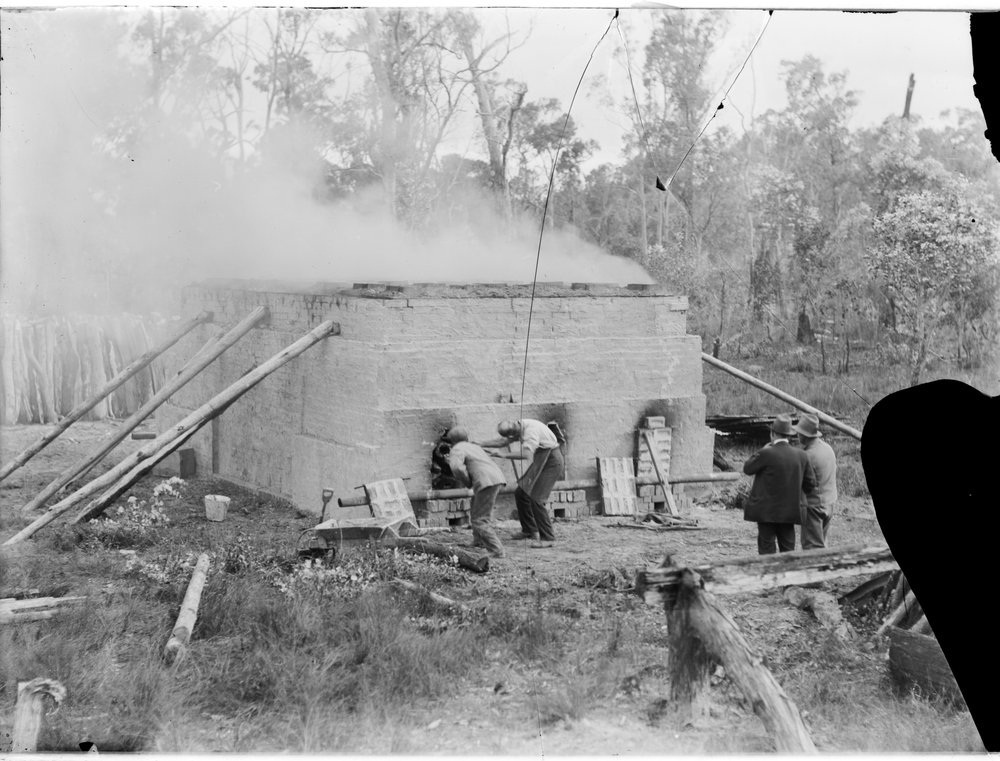
When the Fletton brick industry was in its infancy in the mid-1800s, open clamp kilns were used to fire the bricks which proved inefficient and caused pollution. Brickmakers were very unpopular, so much so that an injunction in 1881 resulted in a change over to the first Hoffman kilns at the Fletton works near Peterborough.
The modern Hoffman kiln process used at Stewartby and Elstow required a large kiln built with a series of chambers. Flues built within the kiln and controlled by the huge chimney stack on top allowed the fire to move gradually around the chambers which produced the most efficient use of the heat to dry then fire and ultimately cool the bricks. Each chamber held 64000 raw bricks. They were carefully stacked allowing for the curve of the kiln roof and making efficient use of the space. Once loaded, the bricks are sealed into the chamber with a screen of old bricks and sealant of brick dust, plaster and cement known locally as a wicket.
The fire in the kiln was controlled by the flues gradually reaching all the loaded dried bricks. Once the temperature reached approximately 400 degrees centigrade, the bricks ignite and fire themselves. When the combustible elements within the bricks were burnt off, a small amount of coal was added to keep the bricks at the correct temperature. When the bricks were fired correctly, the fire was moved to the next chamber. When the chamber had cooled the wicket was broken open allowing fresh air to complete the brickmaking process.
This method of production allowed for continuous manufacture. The kiln at Stewartby was lit in 1964 and had never been out of production until closure of the works in 2008.
This basic technology was first devised in 1858 showing that brick production was rudimentary. In summary, modern brick manufacture followed this process...
- Clay was cut by mechanical drag
- Placed in a crushing machine at the clay pit
- Crushed clay was loaded onto a conveyer belt for its journey to works
- Clay was further crushed to remove impurities
- Clay was mixed and tested to ensure uniformity of product
- Common Flettons were left plain but patterned bricks were dampened and had a special finish added
- Clay was placed in brickmoulds and double pressed
- Bricks moved along a conveyor to then be stacked by hand
- Brick stacks were taken to kiln
- Bricks were allowed to dry then sealed into kiln for start of an eleven-day firing cycle
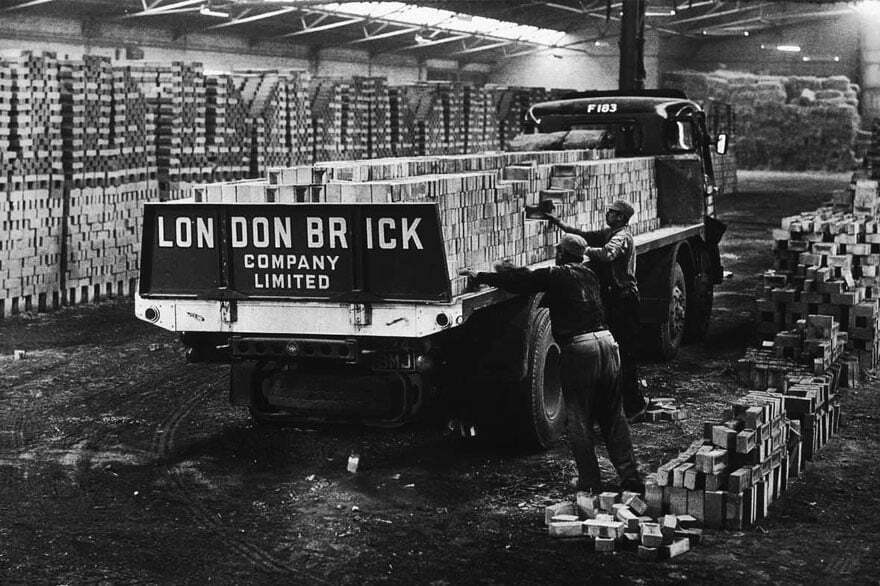
- Fired bricks were removed to stacking sheds
- Bricks were quality-checked ready for sale.
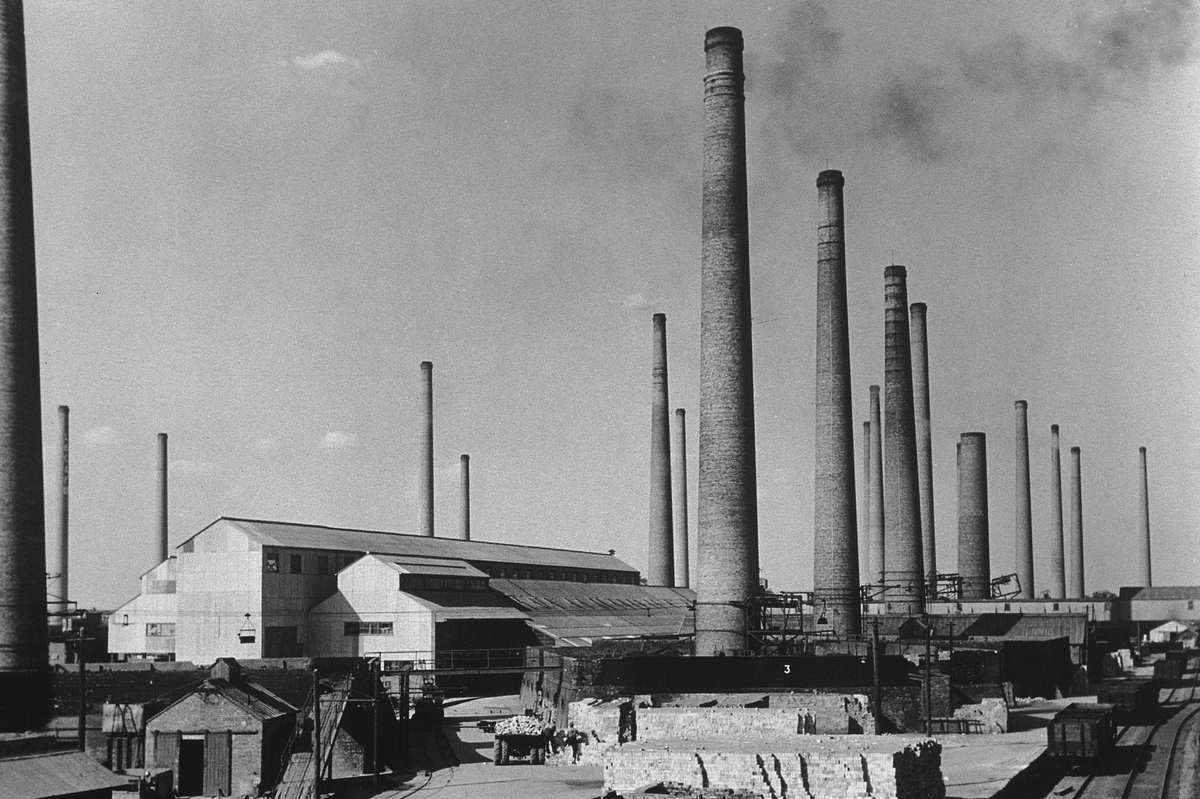
Stewartby brickworks closed in 2021 when the last four tall chimneys were demolished. In context, at the height of production, Stewartby had 167 chimneys.
Brick production continues today in the UK, primarily in Leicestershire but there are still a few small brickworks making handmade bricks.