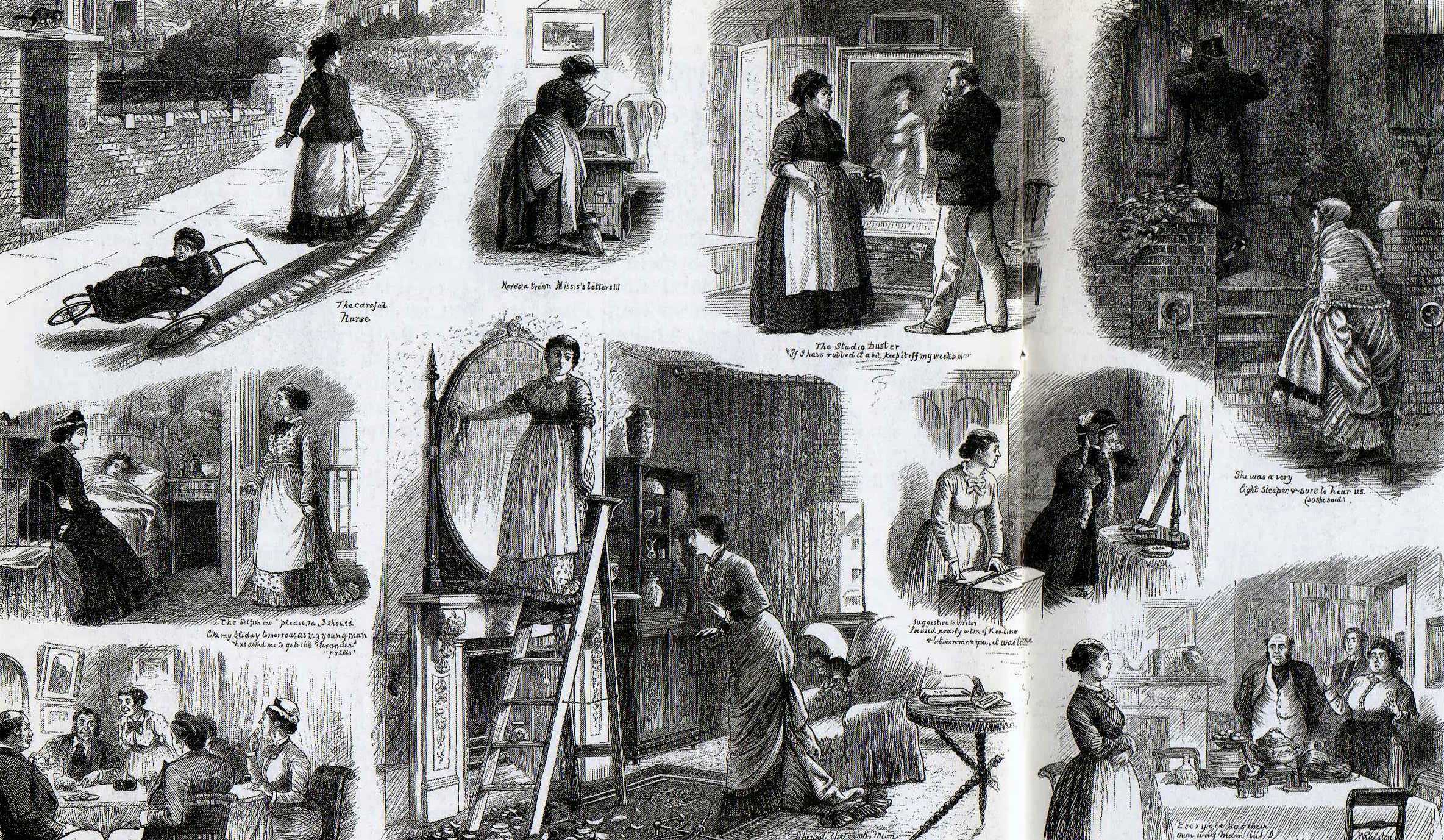
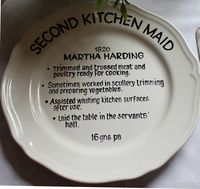
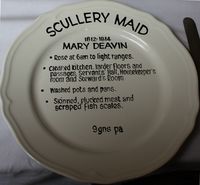
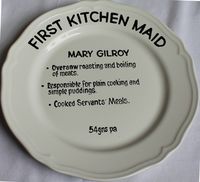
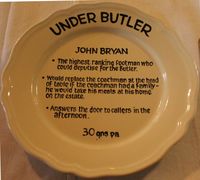
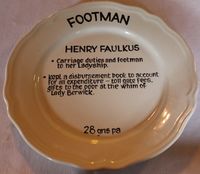
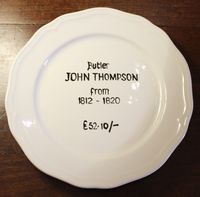
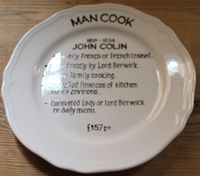
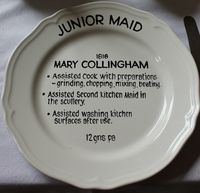
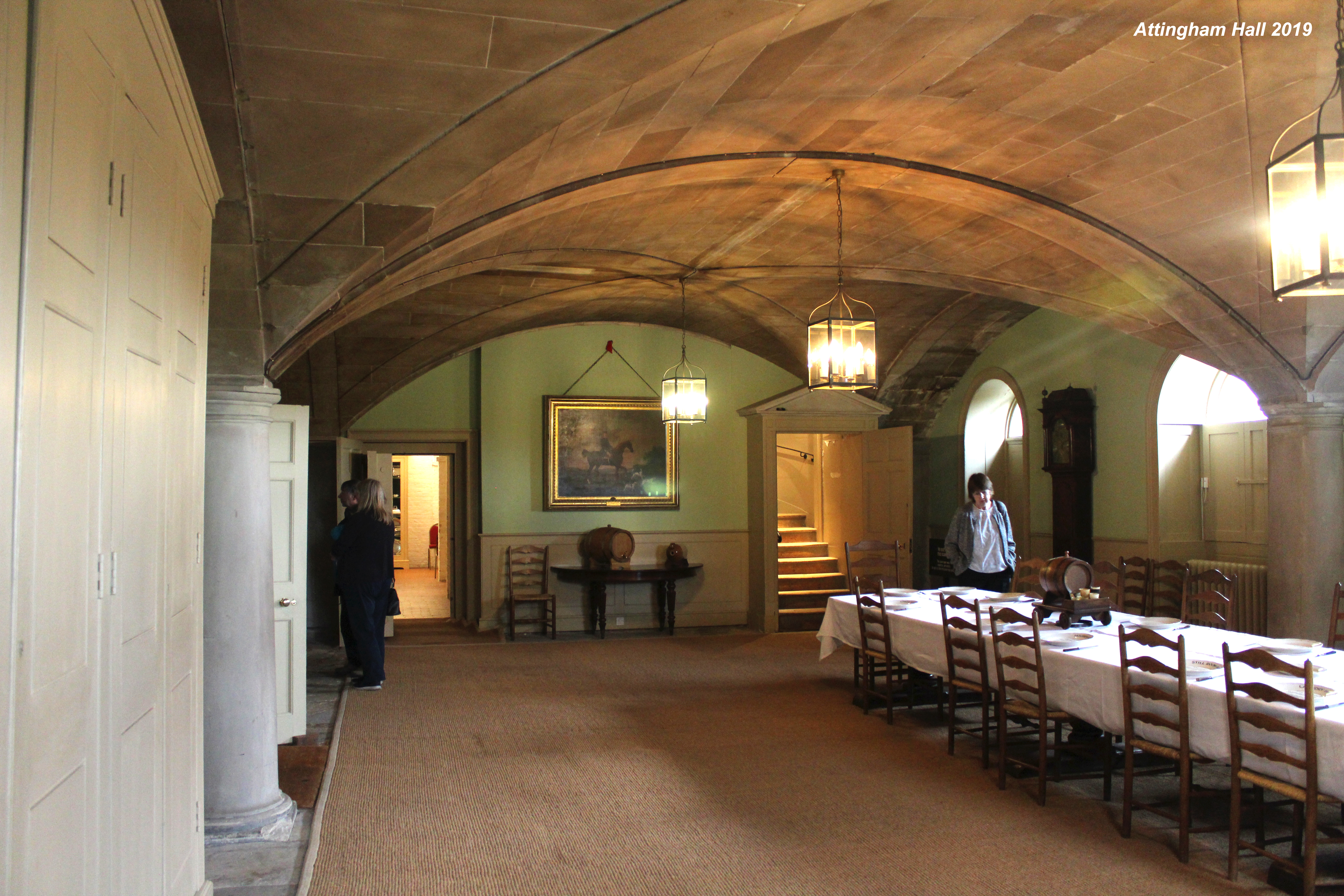
In the nineteenth century domestic service was the most popular occupation for women but many men were also employed both as indoor and outdoor servants.. However, it was one of the few jobs where there was no protective legislation for the workers. Trade union representation was almost non-existent until the early twentieth century. It was not until domestic service declined and servants became scarce that public interest was aroused. For many servants who were lucky enough to be employed in “the big house”, there had always been less freedom than in many other occupations but they did benefit from receiving food and accommodation.

In 1840 there were about 700,000 servants employed but by 1914 there were 1.5 million of which ten per cent were males. By 1931 there were only about 320,000 servants most of which worked in the “big house” environment.

What was the background of domestic servants?

Most domestic servants were recruited from the rural working classes. When a family member lived out, this eased overcrowding in a family cottage and enabled a positive contribution to be made to the family income. Most servants were found bed and board by their employer but in some instances they still remained on the breadline - even if you were a single live-in servant. Most middle-class households employed at least one servant doing most of the general household work.

Recruitment of girls usually began between the ages of ten and thirteen after they had been through some elementary schooling although some servants were illiterate. If servants worked for a middle- or an upper-class family, they would usually have to go to live in the house where they were working. They would be accommodated in the servants' quarters, the location of which depended upon their job. However, despite some of the comforts, the hours of labour were long.

The disadvantages of being a servant

Up to 1860 it was not illegal to beat servants without any redress. It was also legal to order them to accompany their employer to church although they sat in at the back of the church in a segregated section. This could be a reason why your servant ancestor changed their religious affiliation.

However, many advertisements for servants in the newspapers would specify that anyone applying for the job must be Church of England or of a particular denomination. They couldn’t even depend on maintaining their own name for the purposes of their working life.

Domestic servant recruitment

Important characteristics for the job of a domestic servant often depended on class and background because they were all required to be honest and respectable. A servant's health, diet and religious standards were also important attributes. Victorian families normaly had one or two servants. 

Recommendation

Many servants both male and female, were employed initially by people known to the family. Advancement was often through recommendation of the existing employer. Some servants were headhunted, particularly after visits to households in the London Season or after weekend visits by the new employing household. However, there was an overriding maxim within the industry - No reference: no work. It was imperative that domestic servants ensured that they were never in a situation where a reference would not be available on leaving an existing employment. For those dismissed because of incompetence or misdemeanour, no reference would be forthcoming and their career in service was usually at an end.

Mop fairs

In many rural areas servants availed themselves of the opportunities presented by the annual mop fairs. Mop fairs were usually held at Michaelmas alongside the hiring fairs for agricultural labourers. Female servants displayed a small mop or broom as an emblem of their skills and availability. If a job was secured in this way, then it was normally a step up from being a general char or maid of all works. Many girls became servants to local farmers or artisans.

Domestic servant registries and agencies

Servants' registries (employment agencies) were established in many provincial towns by former servants, normally in conjunction with another business, and servants often invested their savings in the venture. Some charities such as the Girls’ Friendly Society and the YWCA also ran registries. They became popular during Victorian times because of the rise in the demand for servants. The servants' registries specialised in providing domestic servants to those households who registered with them. Most registries had booths so prospective servants could be interviewed in private.

From around 1907 registries had to be licensed, particularly in London. The licences could be rescinded in the event of complaints. Some local authorities did not always licence the registries in their area.

Newspaper advertisements

Most provincial newspapers and many national newspapers including The Times carried classified advertisements for both male and female servant vacancies. However, there was nothing better than personal recommendations to fill vacancies.

Domestic servants' school

There were many training facilities around the country, perhaps the most prolific was the training provided by the Industrial Schools where girls learnt to become domestic servants. Girls would learn knitting, sewing, housework and washing, and boys would learn trades such as gardening, tailoring and shoemaking.

Perhaps the most renowned training facility during the Victorian period was the school established by the Countess of Jersey at Middleton Stoney. She left £4,500 in her will to establish a school which operated between 1807 and 1925, specifically catering for girls aged twelve to sixteen years. All the girls were guaranteed a placement after successful completion of the course. Some training facilities concentrated on specific aspects of domestic service such as Norland College founded in 1892. It still operates today and is renowned for childcare training.


The household bible

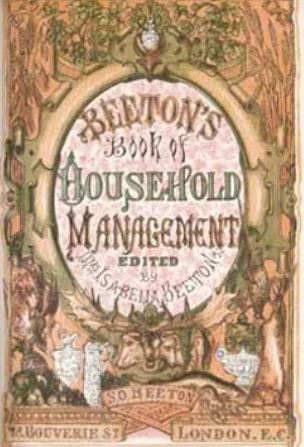
The reference book used by employers, housekeepers, stewards and butlers was Mrs Beeton’s Book of Household Management. Besides rules for running a household, it also contained very useful tips on processes. For example:

Morning prayers - Prayers were held at 8.30am after the servants' breakfast and before the family breakfast.

Service bells - Bells or flags were used from 1780 to summon servants. Later speaking tubes were used.

Preparing newspapers - Individual pages were cut from the newspaper and ironed to dry the ink and remove creases and folds. The butler then stitched the pages together before handing to the master.

Alongside the tips the book also set our some of the main characteristics needed to be good domestic servant:

  1. Be sober, honest and discreet.
  2. Be in person clean and neat.
  3. Avoid strong drink.
  4. Scrub well, cook well and attend well.
  5. Be methodical.
  6. Understand household duties.
  7. Know how to polish, clean and launder.
  8. Do not be subject to idle vanity.

Service in Victorian households

Victorian households established their staff of domestic servants in accordance with a well-understood pattern. Domestic help began with a daily girl or charwoman. The first living-in servant would be a general maid of all works, usually a young girl often of thirteen or fourteen years of age. The next addition was either a housemaid or nursemaid depending upon the household’s more urgent needs at the time. The third servant would be the cook. These three occupations generally met the needs of many middle-class and artisan families.

Most average middle-class tradesmen, wholesalers and professionals fell into the income bracket of between £150 - £300 pa. and it is known that fifty per cent of domestic servants would have worked in this type of household. Less than ten per cent of servants worked in the Big House but around forty per cent worked with other servants in the houses of artisans and professionals. In 1861 Mrs Beeton reckoned that families with different income could support different levels of domestic staff.

  • Family with an income of £1,000 could support a cook, upper housemaid, nursemaid, under-housemaid, manservant.
  • Family with an income of £750 could support a cook, housemaid, nursemaid, footboy.
  • Family with an income of £500 could support a cook, housemaid, nursemaid.
  • Family with an income of £300 could support a maid of all works, nursemaid.
  • Family with an income of £150 could support a maid of all works.

The maid of all works

The majority of female domestic servants were employed in this station undertaking all household duties and generally working alone. The maid would have to be quick and active as she would need to complete all the following tasks during her working day.

  • prepare and light fires
  • general cleaning duties around the house
  • blacken ranges, clean steps, sweep floors
  • prepare food, cook, lay tables
  • wash up all crockery, dishes etc.
  • laundry and clothing preparation
  • helping to look after the children.

Many “Maids of all Work” aspired to greater roles. Although most servants in the “big house” were employed as a result of recommendation or training, those who worked on their own frequently progressed usually through working in a small group of servants and then being recommended to the master or mistress of the big house. Many were also the children of existing servants.

The poor law servant

As you undertake your research you may find that an ancestor was apprenticed under the poor law in housewifery, the commonly used description for domestic service. Such apprenticeships tended to be a source of cheap labour for the lower gentry and farming communities. Again most would have been Maids of all works.

Many lowly female servants eloped with soldiers who were billeted locally in order to escape their so-called apprenticeship. Getting “scarlet fever”, after the red colour of soldier uniforms, was a common occurrence.

Many “fallen” women or rescued prostitutes became domestic servants, usually under the auspices of the poor laws or as a result of religious missions working amongst them to provide them with respectable jobs. Traditionally servants came from the lower, middle and working classes from which many prostitutes also came.

Servants' duties and typical wages

Servants in the big house

For many researchers the first clues about where a domestic servant worked can be found in the census returns. There were strict rules which needed to be observed by servants working in such establishments.

  • When being spoken to, stand still, always look at the person speaking to you.
  • Never let your voice be heard by the ladies and gentlemen of the household unless they have spoken directly to you.
  • In the presence of your mistress, never speak to another servant or person of your own rank or to a child.
  • Wherever possible, items dropped such as spectacles or handkerchiefs should be returned to their owner on a salver.
  • Always respond when you have received an order and use proper address.
  • Never proffer your opinion to an employer unless asked to do so.
  • Always give room to your betters.
  • If required to walk with your master of mistress, always do so a few paces behind them.
  • You must obtain the permission of the housekeeper or butler if you wish to entertain family or friends in the house.
  • Breakages or damages within the house will be deducted from wages.

The servants' hall

Life below stairs for the servants centred on the servants' hall and there were also rules to be observed there which helped to maintain respect amongst the servant hierarchy.

The hall shall be cleaned daily by the servants taking their turn weekly.

The servant who has management of the hall shall at the end of the week hand over to his successor all things belonging to it, clean and in good order.

If anyone shall take anything from the hall or waste the food or clean incorrectly, then a forfeit of 2d shall be made.

Anyone leaving dirty footwear or make any dirt without immediately cleaning it up, or be guilty of indecency, shall be subject to a punishment of six stokes with a boot on their breech.

Anyone heard swearing shall forfeit the sum of 1d per utterance (origin of the swear box).

The servant hierarchy

In most households the hierarchy of servants was also strict and had to be adhered to at all times. At mealtimes there was a very strict observance of where each servant was to sit. The seating position reflected the person's position in the hierarchy. The butler as head of the servants sat at the head of the table and the housekeeper sat at the opposite end. The servants sat in order of hierarchy down each side of the table - males on one side and females on the other.  The first footman sat on the butler's right. No one could sit or leave the table until the butler gave his permission.

The indoor servants were engaged in specific duties in the house with male staff working under the direction of the butler and female staff directed by the housekeeper. Kitchen servants worked under the direction of the cook. Outdoor staff came under the direction of the estates' manager and those looking after the estate transport under the direction of the coachman.

Male servants

  • House steward
  • Butler
  • Valet
  • Footman
  • Under-butler
  • Second footman
  • Groom
  • Coachman
  • Stable boy
  • Page boy
  •  

The highest ranked servant was the butler who was in charge of running the house. He would undertake key tasks including engaging new servants and managing the daily routines of all the household chores. His work would have been shared with the female housekeeper as she would control the female servants and also looked after the fabric of the house.

The footmen were also key servants with the first footman having the most important jobs such accompanying the master and mistress on trips out, serving the family meals and assisting the butler and standing in for him if he was indisposed. The other footmen would perform tasks to assist him such as holding doors open or helping at meal times. As their occupation suggests, they also  looked after the footwear. Sometimes the footmen were liveried.

Female servants

  • Housekeeper
  • Cook
  • Ladies' maid
  • Upper-housemaid
  • Housemaids
  • Kitchen maid
  • Upper-laundry maid
  • Laundry maid
  • House parlour maid
  • Between maid (Tweenie)
  • Scullery maid.
  •  

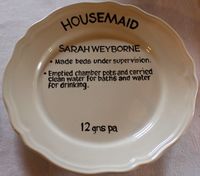
Depending on the size of the household, various maids would be employed with each being responsible for different tasks. The lowest maids in the hierarchy would be scullery maids who would wash the dishes; the laundry maid took care of all the washing and ironing of the family’s clothes. Parlour maids would be responsible for looking after the reception rooms whereas the chamber maids had the responsibility for the bedrooms. The most highly valued maid was the lady’s maid who was really a private servant of the lady of the house and her daughters. A number of other maids may have been employed to carry out other duties including the general house maids, and the tweenies and kitchen maid who assisted the cook.

A cook and various under-cooks would be employed to prepare family meals. The cook was in overall charge of the whole kitchen and other cooks might be employed to carry out specific culinary duties such as pastry cook etc. The number of cooks involved with a household was really dependent upon how essential it was for the mistress of the house to impress guests when the family was entertaining.

Outdoor servants

There were also other servants who were not considered part of the servant hierarchy within the servants' hall. These included

  1. Gardeners
  2. Gamekeepers
  3. Estate workers.
  4.  

Many country houses had extensive grounds and enormous gardens to maintain which was taken care of by the outdoor servants. Many houses would also have needed a coachman, groom and stable boy, none of whom were considered outdoor servants although they worked outdoors. Large estates would also have a gamekeeper employed to prevent poaching and to maintain game and birds for shooting parties. These outdoor servants usually lived away from the big house, often in estate cottages. Most were family men.

Looking after the children

  • Governess and nanny – were the two servants usually attending the children, along with a nursery maid.
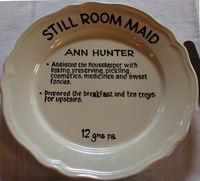
  • Still-room maid - these servants worked in the still room, a place where preserves were made and fruit and herbs were dried for home remedies.
  •  

Looking after the children of the household was the domain of the governess and nursery maids. Depending on how many children there were depended upon the number of nurses.. Around twenty per cent of nurses employed in mid-Victorian period were between twelve and fifteen years old. The governess was responsible for educating the older girls because most wealthy families sent the boys off the boarding school. The governess often led a difficult life because other servants often viewed her as being above them, coming from a more educated and perhaps wealthier class.

Where to find records of servants

There are a number of different records which will confirm the status of you servant ancestors.

  • Estate records -– servants' wage and livery books, housekeeping accounts, employment correspondence found in county record offices and private archives of estate houses, including the National Trust.
  • Servants' tax 1777-1852 (Males) 1785 -1852 (Females). Mainly in county record offices (where they survive) and appeals records at Senate House
  • National Union of Domestic Workers from the twentieth century are in the London Metropolitan University TUC collection.
  • Poor Law and Union Records including bastardy bonds etc.
  • Census returns
  • Servants' training school records
  • Newspapers
  • Business records of the domestic servant agencies.

Decline of domestic service

After Queen Victoria’s death in 1901, more opportunities existed for females in factories and shops which enabled them to have more free time. The watershed really occurred on the outbreak of First World War; the men enlisted and went off to war and the women then replaced the men in the essential jobs. By the 1920s modern appliances such as vacuum cleaners, washing machines and other novel household appliances replaced the need for manual labour and many servants were no longer needed.

This article was contributed by Ian Waller from Family History Federation.
Website by Beachshore