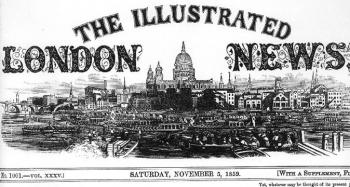
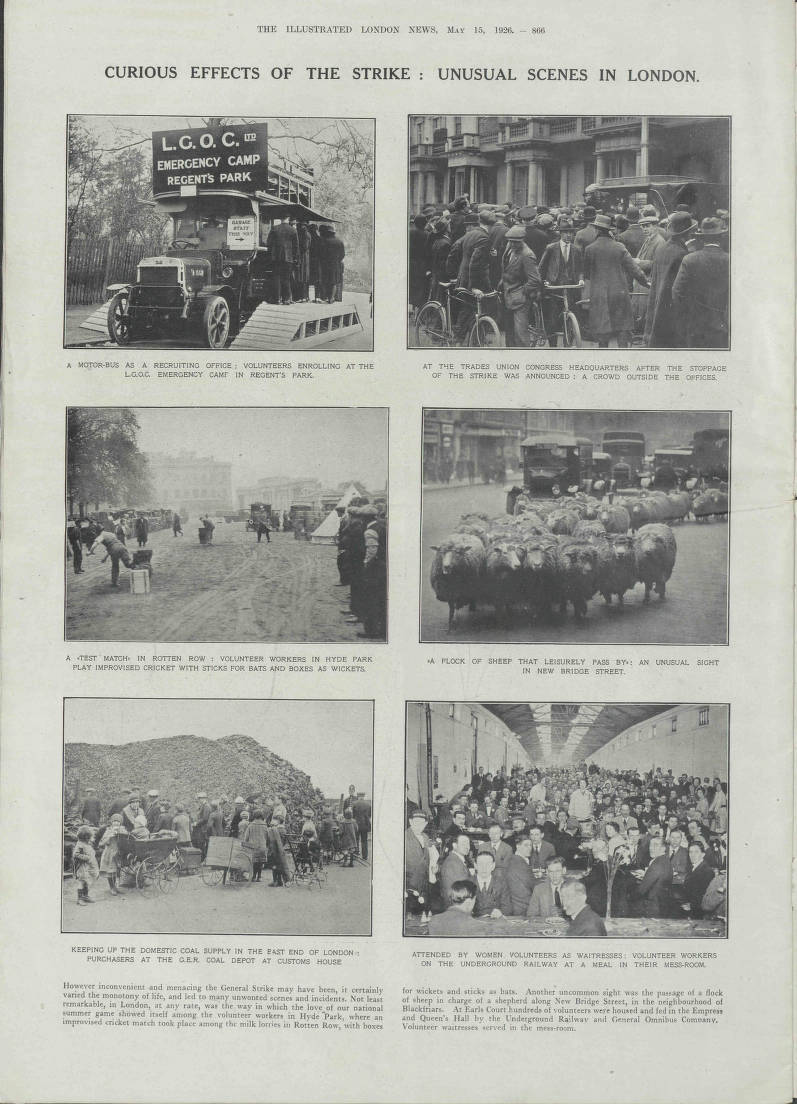
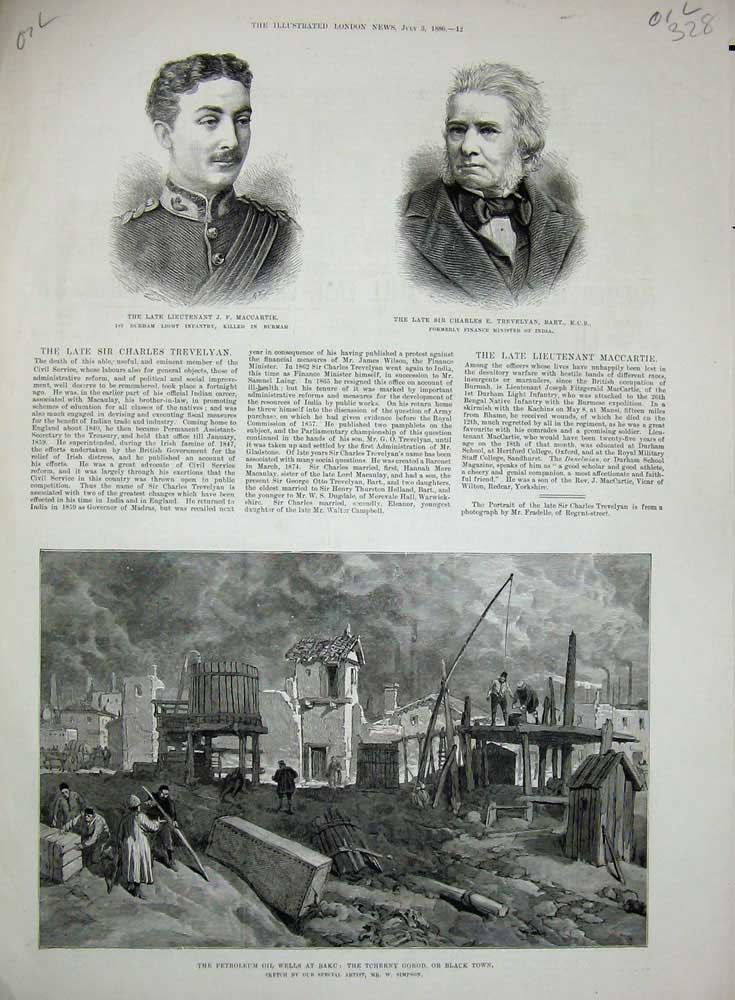
The Illustrated London News, published weekly from 1842 to 2003, is a much-underused resource in the newspaper world and has been a premier resource for nineteenth- and twentieth-century British family and social history. It was the first newspaper offering illustrated records of social events, obituaries, wills and portraits and it provides rich visual context for genealogy, including reports on births, marriages, deaths and notable events such as the Rebecca Riots.

The history

It was originally published by Herbert Ingram on 14 May 1842 and was the world's first weekly illustrated newspaper providing extensive visual coverage of events, news and social history; it originally using woodcut illustrations before starting to use photographs.

Herbert Ingram was born in 1811 in Boston, Lincolnshire, and from 1834 he ran a printing, newsagent and bookselling business in Nottingham in partnership with his brother-in-law, Nathaniel Cooke. As a newsagent, he was very much aware of an increase in newspaper sales when they featured pictures and sensational and shocking stories. So, he planned a weekly newspaper in which pictures would feature in every edition following the adage that a picture paints a thousand words. Herbert Ingram died in September 1860 as a result of a paddle-steamer accident on Lake Michigan. He was succeeded by his youngest son, William Ingram, then by William’s son, Bruce Ingram, in 1900, who remained as editor until his death.

FThe frst edition comprised sixteen 16 pages containing thirty-two wood engravings and covered topics including the war in Afghanistan, the Versailles rail accident, a survey of the candidates for the US presidential election, extensive crime reports, numerous theatre and book reviews, and the first list of births, marriages, and deaths. Ingram hired 200 men to carry placards through the streets of London promoting the first edition of his new newspaper which sold 26,000 copies at a cost of 6d each..

Despite the initial success, sales of subsequent editions declined but as Ingram was determined to make his publication a success, he sent all the clergyman in the country a copy of the edition which contained illustrations of the inauguration of the Archbishop of Canterbury in an endeavour to reach new subscribers.

The publication was founded to provide a vivid picture of news through images and was a pioneering publication that brought international events and social history to a broad audience. By the end of its first year, circulation was 60,000. In 1855, due to its pictorial coverage of the Crimean War and with the abolition of the Stamp Act that heavily taxed newspapers, its sales rose to around 200,000 copies per week. By 1863 The Illustrated London News was selling around 300,000 copies every week, which at the time was more than other British newspapers of the time.


Photographs instead of woodcuts

Both photographic and printing techniques advanced around the end of the nineteenth century, so the Illustrated London News began to introduce photos to depict events, and by the end of the First World War, the pictures used in each edition were nearly always photographic.

The publication included detailed illustrations of wars, inventions and the British Royal Familyl its famous contributors included Robert Louis Stevenson, G.K. Chesterton and Agatha Christie. After 1971, it was published less frequently and completely ceased publication in 2003.

The Illustrated London News was not without competition from other publications including Lloyd's Illustrated Paper, which was another successful Victorian publication close on the heels of the Illustrated London News. There was also a short-lived publication known as the Illustrated Midland News which took much the same format. Further competition appeared in 1869, with the establishment of The Graphic, another weekly illustrated newspaper.

Value to family historians

Genealogically the publication contained the following: 

Obituaries and wills with detailed, often illustrated, entries on upper- and middle-class individuals, including names, locations, and sometimes coats of arms.

Social history from thousands of illustrations, woodcuts, and photographs depicting daily life, fashion and major events, allowing researchers to visualise the contemporary world of their ancestors.

Birth, marriage, and death notices, perhaps the original “hatch, match and dispatch” columns, covering major life events.

Extensive documentation about the Royal Family as well as detailed reports on disasters, accidents and notable local events that could easily have involved our ancestors.

Later editions also contain an array of contemporary advertisements which enable the researcher to ascertain the costs of items at the time.

Accessing the archive

There are numerous places that the Illustrated London News can be researched both online, in libraries and archives.

The Genealogist has searchable, digitized copies of the publication which can be particularly useful for finding articles about specific ancestors.

British Newspaper Archive gives access to back issues.

Ancestry UK has a collection of Illustrated London News records, which can be useful for highlighting the social history and obituaries.

Many local libraries and local history study centres have microfilm copies between 1842 and 1993.

British Online Archives gives access to over a quarter of a million images from the publication.

Complete editions of the publication are available to browse search on the Internet archive

To get the most effective results, search online records by specific names, locations or dates when navigating these digital archives. The archives of the Illustrated London News are considered a vital resource for research, offering a visual record of over 150 years of history.

This article was contributed by Ian Waller from Family History Federation.
Website by Beachshore