



British commercial whaling began as early as the late sixteenth century and continued in various forms until the middle of the twentieth century. Some of our seafaring ancestors would have been involved in the whaling industry because British whaling covered two broad areas. The northern fishery involved hunting off the coast of Greenland and adjacent areas, and the larger southern fishery hunted anywhere else in the world including the Pacific, Atlantic and Indian Oceans as well as the Antarctic. The industry was very profitable and also provided a supply skilled mariners for the Royal Navy during wars.

For over 350 years the British were involved in whaling in three distinct areas:

  • the northern whale fishery between 1610 and 1914
  • the southern whale fishery between 1775 and 1859
  • the modern whaling trade between 1904 and 1963.

Each area was distinguished by the geographical location, the species of whales hunted and the methods and techniques used to capture the whales. Both the northern and southern whale fisheries were differentiated by legislation.

History of whaling in Britain

Stranded whales or those that died at sea and were washed ashore provided meat, oil and bone to coastal communities way back in prehistoric Britain. Early whalebone weaving combs have been discovered far and wide from Orkney to Somerset.

The Bishop of Chichester was granted a charter in 1148 which allowed him the right to any whale found on the land of the church of Chichester. In 1315, Edward II asserted the right to an entire whale which became beached and it was from this time that whales were known as Royal fish because their disposal was the exclusive right of the monarch. Today the Crown Estate still asserts ownership of beached whales.

Commercial whaling in Britain began around 1576 when a British whaling vessel, which up until then operated as part of a fleet in the Bay of Biscay, sailed to Labrador and Newfoundland. Whaleboats had operated in the Bay of Biscay from the twelfth century, and by the middle of the sixteenth century they were crossing the Atlantic and establishing whaling settlements in the area. In 1577 the Muscovy Company in London was granted a Crown licence to hunt whales anywhere in the world. Two years later  the British government banned importing whale oil from the Spanish Basque country.

The success of the Muscovy Company continued when it exploited the Spitsbergen whaling grounds in 1611, so much so that by 1617 fifteen British vessels were operating off Spitsbergen during the season. They ended up competing with the more dominant Dutch whaling fleet which, by the 1660s, had hundreds of vessels operating in the Spitsbergen area.

Because the British were losing out, Parliament took steps to revive British involvement. Legislation introduced in 1672 allowed British whaling crews to include foreign nationals in their crews and this attracted both Dutch and German seafarers. The same legislation also exempted whale oil from customs duty, whilst imposing duty on other fleets of other nations.

In the 1690s, the British created the Greenland Company which was unsuccessful and involved significant financial losses. This then delayed further British involvement until the 1720s, when the South Sea Company vessels returned to the Spitsbergen fishery.

Twenty new vessels were built and sent there but again this was unsuccessful. Parliament wished to revive whaling to build up a naval reserve of ships and men that could be mobilised in times of war; so from 1732 a series of bounties were offered which increased over time. The incentive was slow to begin with and even by 1740 only four or five British vessels were involved most of which were owned by merchants who imported whale oil.

The tipping point in the trade came in 1750 due to the increase in demand for whale oil. The woollen textile industry was using whale oil to clean wool before it was spun; as a result of the Industrial Revolution, lubricants were needed to keep machinery running. Urban living also increased the demand for lamp fuel both in houses and for street lighting. Whale oil was also used to make soap, with Lever Brothers being the major user of whale oil in Britain The building industry used whale oil in paint, varnish and putty. It was all this activity that led to the increase in demand which in turn led to a rise in price. Investors began to take notice!  At the same time, the Dutch withdrew from the fishery. London was the most important whaling port although other ports were also involved including Whitby, Exeter, Ipswich and Hull as well as other traditional fishing ports around the country.

There were, however, setbacks including war in Europe in 1756, so whaling crews were depleted by the press gang. A fall in the price of oil meant that shipowners left the trade. The number of vessels involved in northern whaling slowly picked up as the turn of the century approached as they were relatively unaffected by the Napoleonic Wars. Prices of both oil and bone increased as the nineteenth century progressed and the Davis Strait fishery, between Greenland and Canada, began to develop.

Vessels involved in the industry began to stay longer on the whaling grounds to achieve better catches but some became trapped in the ice. Some ships were crushed by the ice and crewmen had to evacuate; this frequently meant that If there was no vessel nearby to rescue them, they perished. In any case crews faced scurvy, starvation and unsanitary conditions till the ice broke up when the vessels could return home.

The main challenge facing whaling ships was actually finding the whales so to make a trip profitable they had to stay at sea until the whales  were found. The length of time at sea sometimes depended on the size of the vessel but for most whalers, the voyages could last for  months or even years. For example, the  whaling ship Nile departed in 1858 and didn't return until 1869!

The Southern Whale Fishery

British entrepreneurs were prompted to send their ships to the South Seas to obtain sperm whale oil. In 1775 ten whalers left Britain to go to the South Atlantic to hunt for sperm whales. Some 930 British vessels made around 2,500 whaling voyages between 1775 and 1859.

The Rotch family owned at least ten British South Sea whalers between 1775 and 1794. These vessels were re-purposed merchantmen or Admiralty prizes. After 1825 specialist whaleships were built at the Wigram Blackwall Yard. They were designed to sail to the whaling grounds and back as quickly as possible. British vessels also had a different colour scheme from the those of other countries. They were basically brown with yellow-orange-cream gun ports. Many whaleships in the trade had long careers but around two hundred vessels and their crews were lost.

Initially British ships hunted in the mid- and south Atlantic but later ventured to the Pacific and Indian Oceans in the 1780s. The first British whaler to enter the Pacific was the Emilia which sailed from London in September 1788 and fished the Peru Grounds before returning to London in March 1790 with 139 tons of sperm whale oil. This was typical of many of the voyages but not without international conflict and competition.

British whaling continued in the Pacific Ocean but the Anglo-French War, the Anglo-Spanish War and the War between Britain and the United States in 1812 forced ships to travel in convoys with Royal Navy warships as protection. During the latter conflict, the US warship Essex captured a dozen British whalers in the Pacific. In some respects these conflicts also presented opportunities for British whalers because they sailed with Letters of Marque from the government which enabled them to capture enemy-owned vessels.

Crown monopolies granted to the East India Company and the South Sea Company restricted British maritime activity in both the Pacific and Indian Oceans to ships owned or licensed by those companies, but these restrictions were gradually lifted between 1786 and 1813 giving British whalers access to the whaling grounds. Between 1800 and 1809, the British South Sea whaling fleet consisted of seventy-two vessels. British involvement in the South Seas fishery reached its peak between 1820 and 1822.  A decline in whale stocks caused a steady increase in the length of voyages.

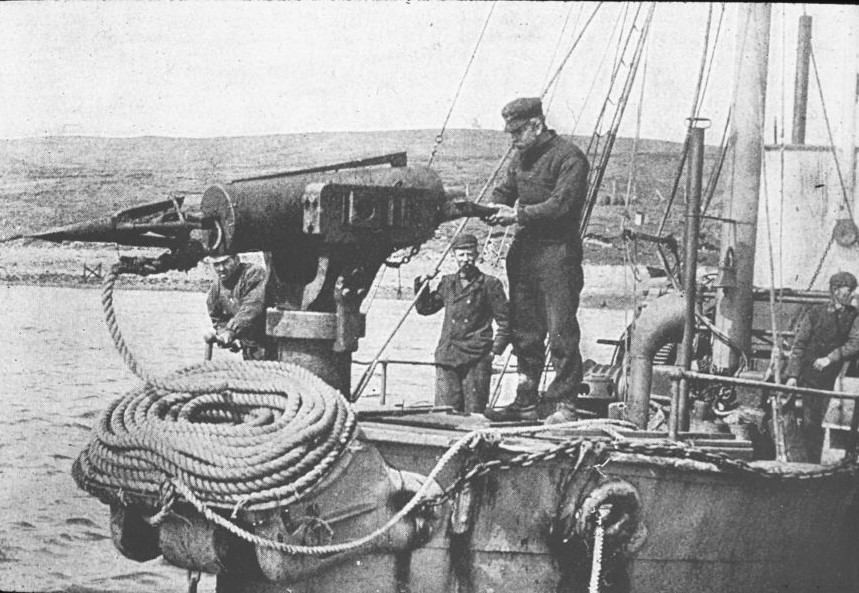
Harpoon guns were trialled by the South Sea Company in 1737 and hand-held guns that discharged rocket harpoons were in general use in the second half of the nineteenth century. Safer and more efficient harpoon cannons were patented in 1870 and these were mounted on the bow of whalers which resulted in faster whale species being caught. The introduction of factory fishing also meant greater efficiency and better safety for the industry.

Modern whaling processes including shore-based whaling stations date from 1904. During the twentieth century, the whaling industry fell into decline.

Whaling customs

Being on board a whaling ship was a lonely existence. Crew sizes generally weren't more than thirty or forty men and sometimes half that number. Social options were therefore very limited and it was unlikely that they would ever meet different people. On a typical voyage you could expect to be on the open seas for upwards of nine moths (often longer) without contact with other people.

Although voyages were long and arduous, crews of whaling vessels found time for entertainment and established various and often unique customs on their vessels.

The May Day celebration was an initiation ceremony for younger sailors who had never been on an Arctic whaling voyage before. The May Day ceremonies were similar to those that took place on land. A sailor dressed as Neptune and chose certain seafarers to be his "prisoners" who were covered in a lather of soot and grease and then shaved. The ceremony could be quite violent - and for some young crew members quite traumatic! If crew members had a grudge against someone, then the ceremony was the place to take revenge. The festivities would usually end with a rowdy procession where frying pans, kettles and pot-lids provided the “music”.

Scrimshaw

Scrimshaw is the art of crafting objects on whalebone. It was done by men working on whaling ships dating from around 1815. It evolved because of the commercial whaling industry.

Initially scrimshaw pieces were carved from whale teeth. Sailors on whaling vessels perfected their craft with designs depicting life at sea. It was a way of occupying their time usefully while they were away at sea and the items were usually given as gifts on their return to port. It was also a way of making money and there is evidence of men selling or trading them usually with one another.

Scrimshaw was usually an elaborate picture or engraved lettering carved on the surface of the bone or tooth. Sometimes pigments would be used as colouring. Scrimshaw was done using sailing needles or other sharp implements; the movement of the ship as well as the skill of the sailor produced different levels of detail. The colouring pigments were also readily available on board as the whalers used candle black and tobacco juice.

Records of the whaling industry in Britain.

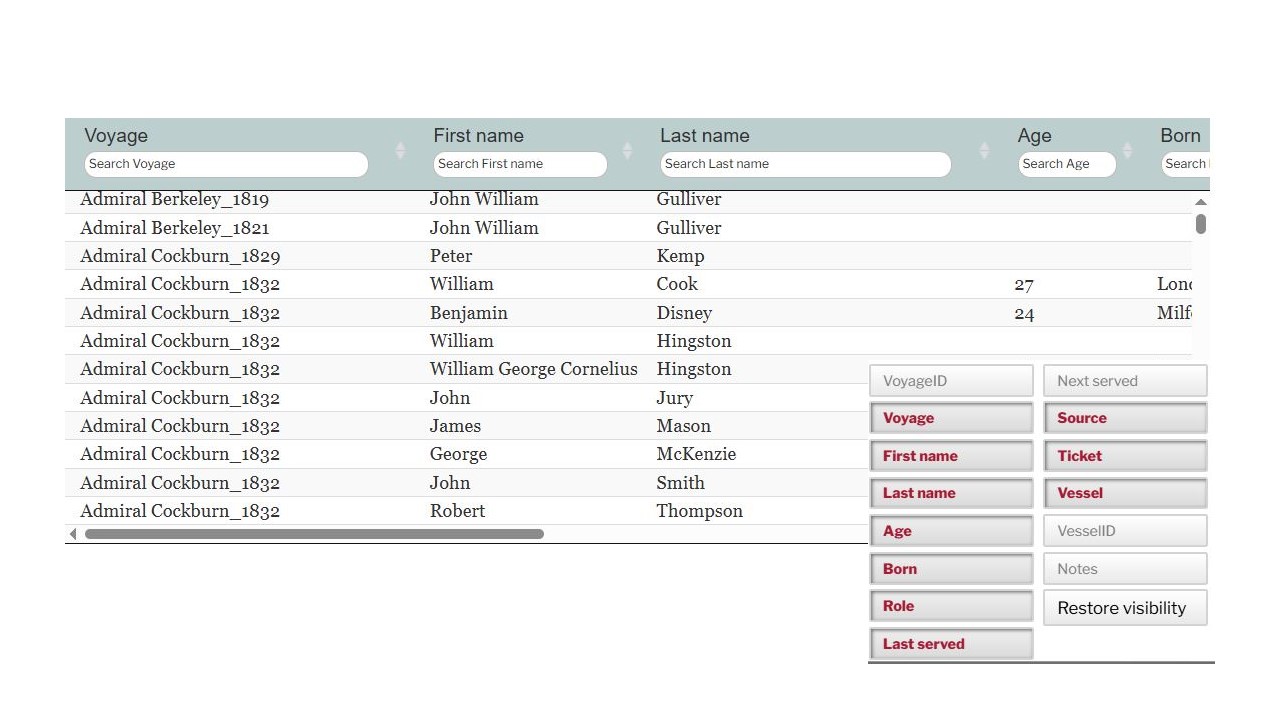
Two useful databases are available online at WhalingHistory.org:

  • Voyages
  • Crewmen
  •  

The databases contain both voyage and crew information relating to the Southern Whale Fishery covering 1775 to 1859. The voyage database relates to around 2,550 voyages and the crew database lists information on around 14,000 men who sailed in those ships within the British Southern Whale Fishery.

The most informative document on the whaling ships was the logbook which recorded vital information relating to the voyage including:

  • dates of the voyage
  • locations and route of the voyage
  • weather conditions
  • incidents that occurred both to crew and vessel
  • information about where whales were caught.
  • measurements of the whale
  • barrels of oil yielded.
  •  

Besides information contained in the database, the other main resources for information about the whaling industry, particularly the Southern Whale Fishery, are the logbooks, personal accounts and various firsthand contemporary records of voyages made by British whalers to the South Seas.

Most information is available at the Caird Library at the National maritime Museum in Greenwich but some remain in private hands. The logbook was the most important document on a whaling ship because they record vital information relating to the voyage and other details relevant to the industry. Most of this information can be accessed through the above mentioned database.

Records of individual crewmen who held a seaman’s ticket are available within the Merchant Navy records held at The National Archives at Kew.

This article was contributed by Ian Waller from Family History Federation.
Website by Beachshore