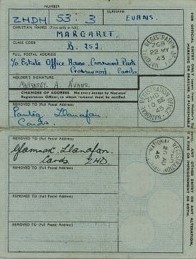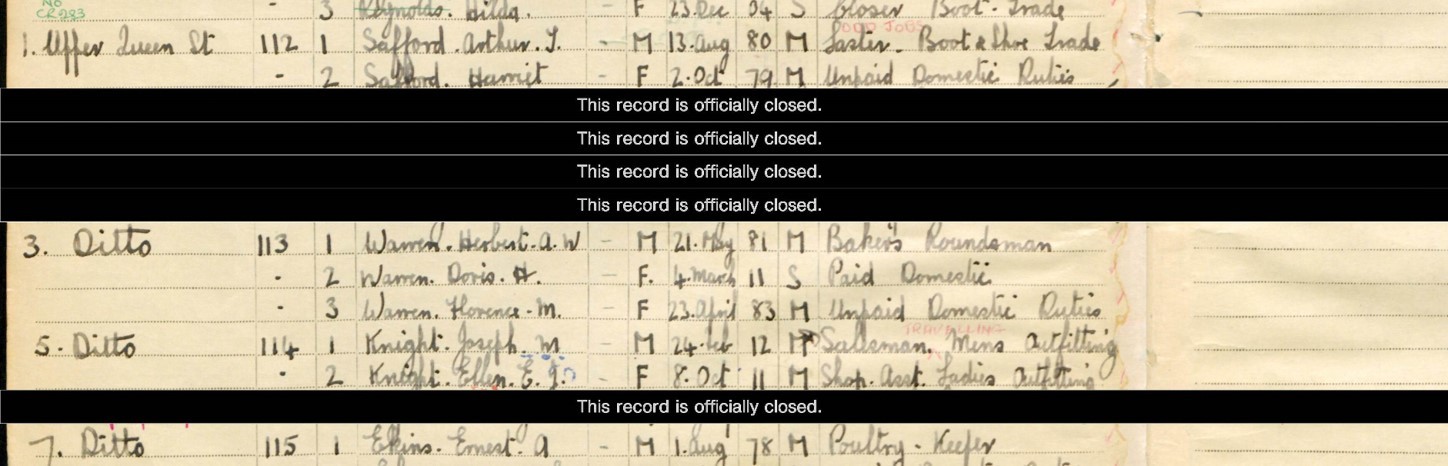





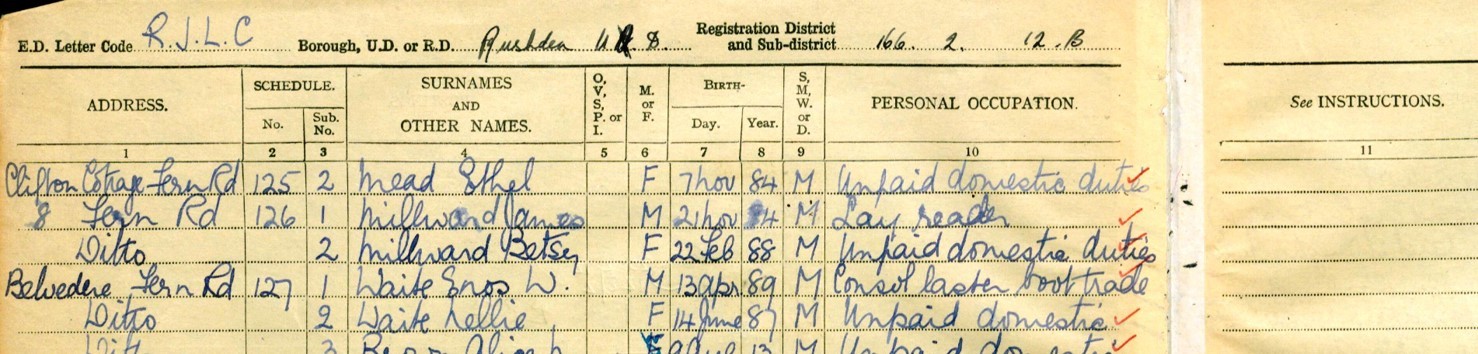
The common green-coloured identity card was issued in 1943 for adults. Prior to 1943, adult identity cards had been buff-coloured cards, children's cards were manila and government officials had green cards with endorsements and a photograph. Those in the armed services or temporary displaced persons were issued with a blue version of the identification cards.
Children under sixteen years of age were issued with identity cards but they were kept by their parents. Identification was necessary if families became separated from one another or their house was bombed and if people were injured or killed.
The sections in the cards showing the change in address were important because many people moved several times during the war.
Each card included class codes used for administration and electoral purposes. Cards were marked A, B, C, N or V.
A - Over twenty-one years of age
B - Card numbers for those aged between sixteen and twenty-one were followed by three numbers. The first two digits indicated the year of birth and the third digit showed which quarter of the year when the holder was born
C - This letter only appeared on yellow cards issued to Irish workers conditionally admitted to Great Britain
N - Used to indicate that a card had be re-issued under an alternative name
V – Appeared only on yellow cards issued to those British people over sixteen years of age arriving in this country but who were usually resident outside the United Kingdom