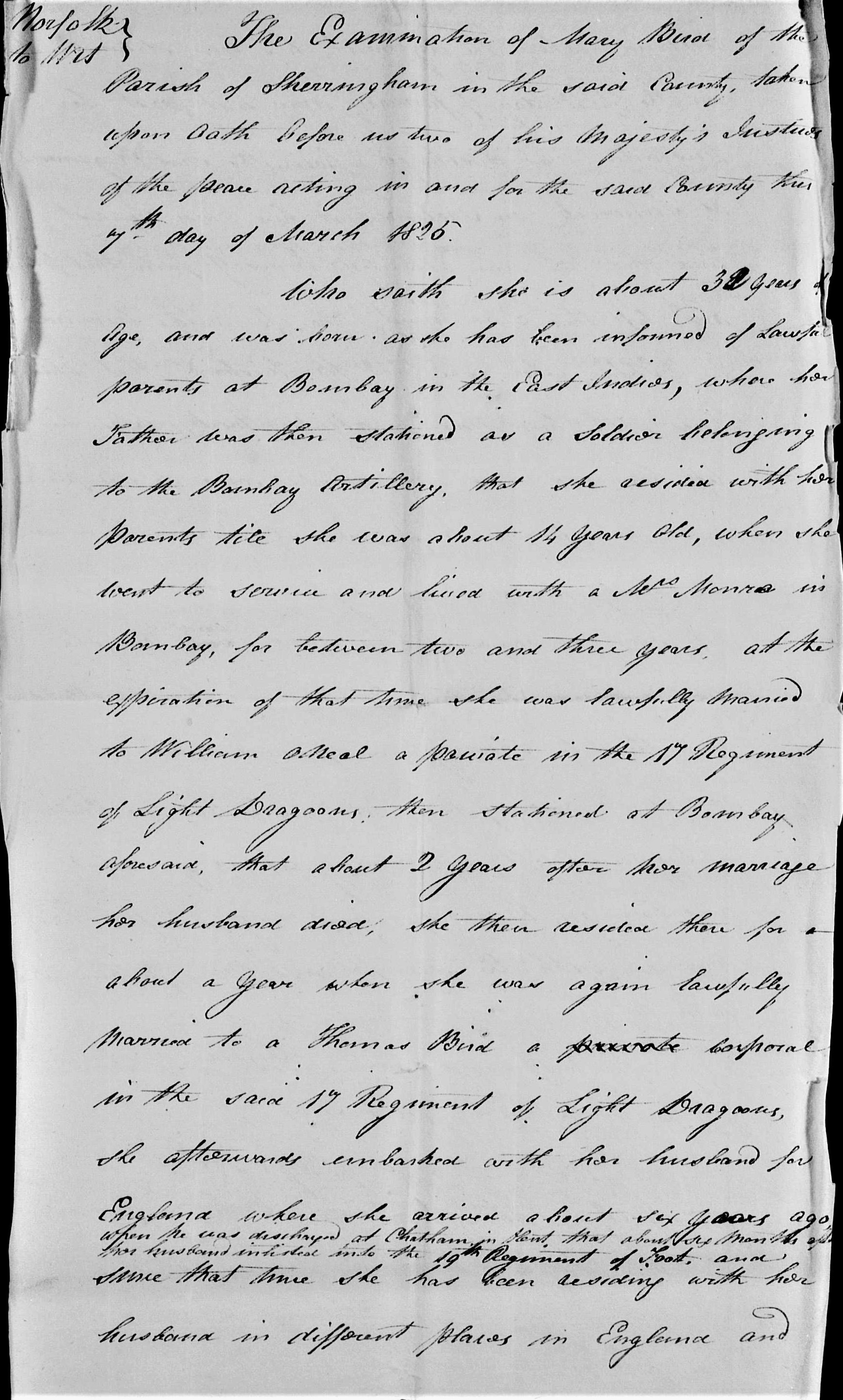





These documents vary depending on the year of issue and the preferences of the parish; some were handwritten entirely. They were by their nature loose documents and were usually kept in the parish chest.
The certificate was issued solely to identify an individual’s or a family’s parish of legal settlement. They were handed to an individual or head of a family when they moved away from their parish of legal settlement. The certificate was usually surrendered to the overseer of the new parish of residence in case the individual or family ever needed relief. It was a kind of insurance so if the person or family required assistance, the parish of legal settlement had to pay for the relief or take them back.
In accordance with the 1697 Act, certificates were generally pre-printed documents, with details of the individuals, whose settlement was being confirmed, entered on the form; this was then signed by the churchwardens and overseers of the poor granting the certificate along with signatures of two Justices of the Peace.
Obtaining the six signatures required for a legally-binding certificate was often time-consuming. The document was only valid for a single move because the certificate was addressed to the overseers and churchwardens of a named parish to which the individual or family was moving. A further certificate and more signatures would be required when an individual wanted to move again.