



The Royal Engineers (Corps of Royal Engineers) is a division of the British Army which provides military engineering and technical support. The Corps Headquarters and the Royal School of Military Engineering are based in Chatham, Kent. Today the corps is divided into several divisions based in Britain and around the world.

History of military engineering

In previous years, the then military engineers were responsible for siege warfare and building field fortifications, temporary camps and roads. Although the Royal Engineers can technically trace their origins back William the Conqueror, in reality the origins lie with the Board of Ordnance which was not established until the fifteenth century.

In 1716 at Woolwich, the Board of Ordnance established a Corps of Engineers which at the outset consisted of only commissioned officers. In 1772, a Soldier Artificer Company was established for service, initially in Gibraltar, and this was the first time non-commissioned military engineers were included. In 1787, they became the Royal Corps of Engineers. Also in that year their role was expanded by the establishment of the Corps of Royal Military Artificers consisting of non-commissioned officers and privates which was directed in its work by the Royal Engineers. In 1797 the earlier established Gibraltar company was then incorporated into the Royal Engineers and in 1812 the whole division became the Corps of Royal Sappers and Miners.

The Board of Ordnance was abolished in 1855 and authority over the Royal Engineers and Royal Sappers and Miners transferred to the Army Commander-in-Chief thus integrating them with the rest of the British Army. In 1856 the Royal Engineers and Royal Sappers and Miners became the Corps of Royal Engineers and at that juncture they relocated from Woolwich to Chatham.

As a result of various army reforms further changes occurred in 1861 when Volunteer Engineering companies were created. The Volunteer Force engineers supported the regular Royal Engineers in various roles but principally operating the boats to tend the submarine mine defences that protected our harbours around Britain and throughout the empire.

Just prior to World War One, the Royal Engineers formed its Air Battalion. Then during the First World War a massive transformation of the Royal Engineers took place because new technologies became paramount in warfare on the Western Front in particular, which required engineers to undertake an increasing range of roles. During the war, manpower increased from about 25,000 at the start of the war to 315,000 by 1918.

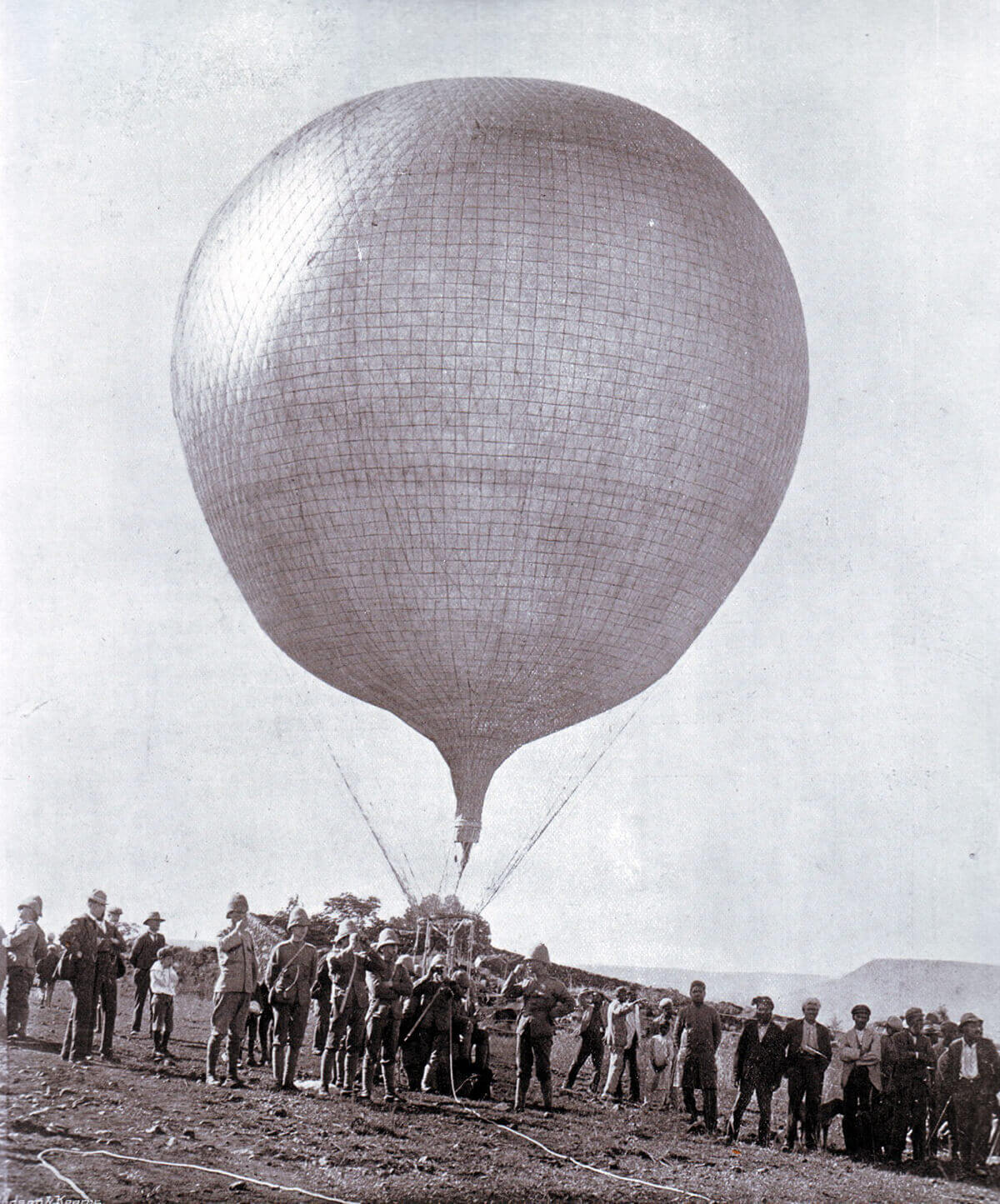
Air Battalion of the Royal Engineers

The Air Battalion of the Royal Engineers was the first flying unit of the British Armed Forces founded in 1911 which, a year later, was integrated into the Royal Flying Corps.

In 1911 the War Office issued instructions for the School of Ballooning, originally formed in 1888, to be expanded into a battalion resulting in the formation of the Air Battalion of the Royal Engineers. Initially this consisted of fourteen officers and 150 other ranks. Officers were selected from any branch of the army but the other ranks were all from the Corps of Royal Engineers. Pilots also had to hold a Royal Aero Club certificate.

The Air Battalion consisted of two companies and a headquarters located at Farnborough.

No. 1 Company based at Farnborough was equipped with airships.

No. 2 Company based at Larkhill on Salisbury Plain was equipped with aeroplanes.

The Corp of Royal Engineers during the Great War

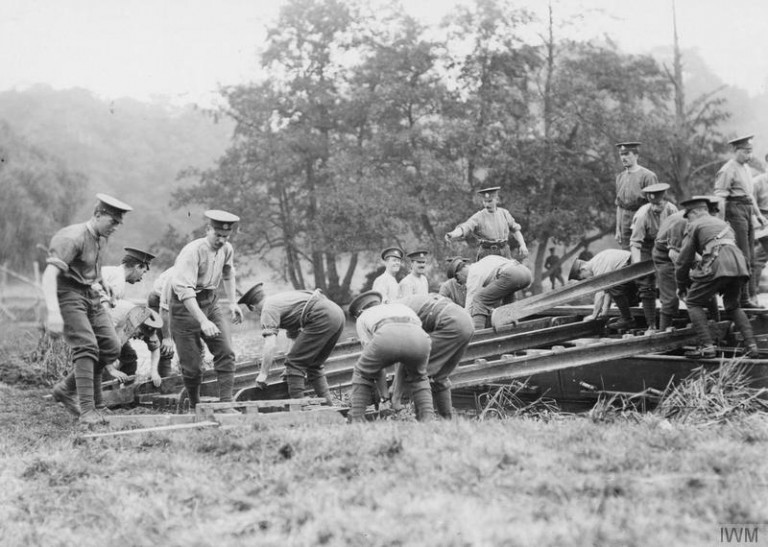
Without the Royal Engineers, there would have been no supply routes to the British Expeditionary Forces. It was the Royal Engineers who maintained the railways, roads, water supply, bridges and transport and more importantly operated the railways and inland waterways. They also maintained the telephones, wireless and signalling equipment. They designed and built the fortificatons at the front line and developed chemical and underground warfare. More importantly they were responsible for the maintenance of guns and other weapons.

The Corp consisted of several general and specialist companies.

Field companies

These provided technical skills supporting the fighting units. The thirteen field companies then based in Britain were reorganised to create twelve field companies, divided between the six divisions of the British Expeditionary Force.

Field survey companies

At the outset of the war, three field survey companies were undertaking work for the Board of Agriculture and Fisheries in Britain. On mobilisation, two were split up and the men sent to coastal units. Four companies were formed in France in early 1916, each comprising a headquarters and special sections for topography, maps, observations and sound-ranging section. The army printing sections were also incorporated into the field survey companies in order to produce all the maps that were needed - many of which exist in war diaries found in records.

Poison gas company

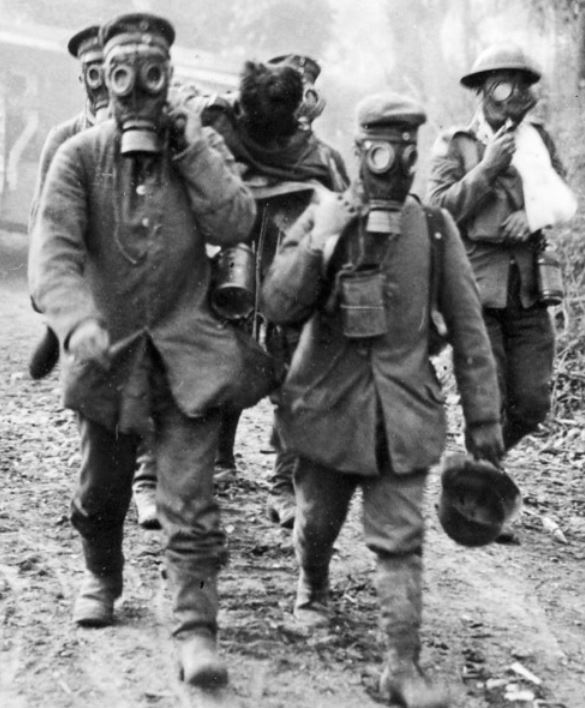
In May 1915 Britain authorised measures to counteract the use of poison gas by the Germans. Research work was carried out at Porton and Helfaut, near St Omer in France. The Germans had a method whereby a continuous cloud of poison gas was discharged from cylinders into the atmosphere which allowed the wind to direct it over enemy positions. Special Royal Engineer companies of technically skilled men were formed to deal with the gas and the men were given the rank of Chemist Corporal.

Tunnelling companies

These companies created underground tunnels and then mined under enemy lines; they  placed explosives and then blew them up. In some areas, both sides mined and counter-mined intensively. For the engineers underground, it was a hard job and sometimes resulted in death. Digging beneath enemy positions to destroy them was siege warfare.

In February 1915 eight tunnelling companies were established closely followed by a further twelve companies and one further one in 1916. They were all undertaking work which included the digging of subways, cable trenches, signal and medical refuge chambers and offensive or defensive mining. There were underground encounters, as a tunnelling team met the enemy underground. The blowing of mines below the enemy front lines occurred frequently.

Railway construction companies

Sappers were assigned to one of eight construction trains. Each construction train had two railway companies which enabled the sappers to carry both themselves and all their tools and equipment to and from the workings.

As the war progressed the railway companies were engaged all over the British sector, laying miles of temporary track that criss-crossed the area. Not only was it tracks but other construction in the form of howitzer spurs, ambulance train sidings, tank enablements and bridges. Constant maintenance and line doubling also occurred.

The engineers' primary objective was to take standard gauge railways as close to the front as possible and thus minimise the use of narrow gauge light railway systems and horse transport. Inevitably there were casualties. At its height there were forty-five companies engaged in standard gauge railway construction, on the Western Front and in Egypt and Salonica.

Royal Engineering achievements

Besides their involvement in warfare, the Royal Engineers were also responsible for many other engineering feats both civil and military including:

The foundation and settlement of British Columbia as the Colony of British Columbia.

The Royal Albert Hall - designed by Captain Francis Fowke and Major General Henry Scott of the Royal Engineers who were influenced by ancient amphitheatre structures. Although built by civilians, the Royal Engineers were involved in the superstructure.

Indian infrastructure - Much of the British colonial era infrastructure of India was created by Royal Engineers based in the three presidencies including the design and construction of the great irrigation works on the river Cauvery, the sea defences for Vizagapatam, the Godavery Delta project and the Ganges Canal.

They also constructed the Rideau Canal around 1812 because there remained a threat of attack by the United States on British Upper Canada. Initially the Rideau Canal was for military use to provide a secure supply and communications route between Montreal and the British naval base in Kingston, Ontario.

Drop Redoubt on the Western Heights of Dover comprised a series of forts, designed and built to protect Britain from invasion. They were created to augment the existing defences and protect the key port of Dover from both sea and land attack.

Pentonville Prison designed by Capt. Joshua Jebb of the Royal Engineers. Construction was completed in 1842. He introduced new concepts such as single cells with good heating, ventilation and sanitation.

The Abney Level - an instrument used in surveying was invented by William Abney, a Royal Engineer also known for his pioneering of colour photography and colour vision. Abney invented the level whilst employed by the Royal School of Military Engineering in Chatham in the 1870s.

H.M. Dockyards - In 1873 Henry Brandreth, a Royal Engineering officer, became Director of the Admiralty Works Department; during his tenure of office, many Royal Engineer officers superintended engineering works at Royal Navy Dockyards in various parts of the world, including Bermuda.  Chatham, home of the Royal Engineers, meant that they and the dockyard maintained a close relationship. The Engineers designed the iron roof trusses for several of the covered slips at Chatham.

All members of the Royal Engineers were trained combat engineers and all sappers, the privates and non-commissioned officers, had another engineering or associated trade.

The Royal School of Military Engineering

The Royal School of Military Engineering was founded in 1812 and is based in several different places - Chatham, Camberley and  Bicester, Oxfordshire. The Institution of Royal Engineers is the professional institution of the Corps of Royal Engineers established in 1875 and was granted a Royal Charter in 1923. 

The Royal Engineers' Journal and Official History was first published in August 1870. The idea for the publication was proposed at the Corps Meeting of May of that year. The History of the Corps of Royal Engineers, now extending to twelve volumes, was first published as two volumes in 1889.

Corps band

The Band of the Corps of the Royal Engineers is their official military band. The RE Symphony Orchestra was founded in 1880 and notably performed at Buckingham Palace at a banquet celebrating Queen Victoria’s Diamond Jubilee. During 1916–1917, the band toured France and Belgium as a morale booster giving over one hundred and fifty concerts. The band continued its tour of Europe following the cessation of hostilities.

The Royal Electrical and Mechanical Engineers

The Corps of Royal Electrical and Mechanical Engineers maintains the equipment that the Army uses. It was formed on 1 October 1942 prior to which other corps had responsibility for equipment maintenance including:

Royal Army Ordnance Corps - weapons and  armoured vehicles

Royal Engineers - engineering plant and machinery, and RE motor transport

Royal Corps of Signals - communications equipment

Royal Army Service Corps -other motor transport

Researching Royal Engineer ancestors

In order to find a service record for anyone serving in the Royal Engineers, you will need to follow the method for obtaining any record of British military personnel, primarily at the National Archives at Kew. Your success in finding a record will depend upon what you already know. The more you know, the easier your research will be. Do you have information about their birth, date of death, rank, years of service, the division of company of Royal Engineers to which they were attached and whether they received a campaign or gallantry medal?

The National Archives holds service personnel records for both sappers and officers pre-1920s but remember that roughly sixty per cent of service records for the First World War were destroyed by bombing raids in World War Two. These can also be researched along with other military service record for the Great War online.

If a service record cannot be found, an individual can be traced through medal rolls, addresses on any letters they wrote (usually in the family archive), any uniform or equipment they owned which may have been impressed with service number etc., photographs or insignia. If they were an officer, trace them in the official army lists. War diaries of each unit can also be searched which may not mention servicemen by name but will include information on projects that they were involved with and where serving.

You can also research the resources held at the Royal Engineers' Museum at Gillingham. There is an admission fee payable to the museum. They hold official corps histories, journals, professional papers of the Royal Engineers, medal rolls, photographs, various technical drawings, unit histories and copies of the war diaries of both World Wars.

The Royal Engineers' Library at Brompton Barracks, Chatham also hold Royal Engineers' garrison letter books for the eighteenth and nineteenth centuries, personnel registers, records of related bodies and organisations including the various sports clubs and some private papers.

This article was contributed by Ian Waller from Family History Federation.
Website by Beachshore