



A contemporary description of London

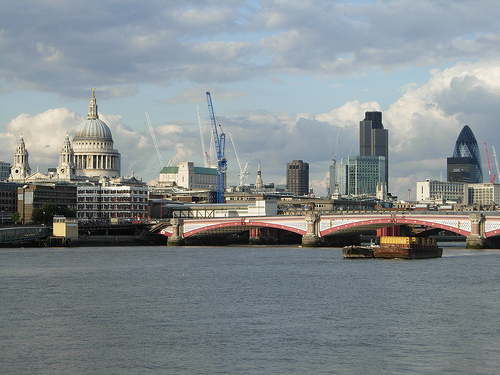
An apt description of London comes from a contemporary directory - The metropolis of the United Kingdom of Great Britain and Ireland extends from Woolwich and Bow to Fulham and Hammersmith, and from Highgate to Norwood, including the cities of London and Westminster, with their liberties, and the towns, parishes..... which cover this vast area. The streets of the city, except for the great thoroughfares, are for the most part narrow and irregular; but the main lines of traffic and communication are wide and noble, as are the more recently built parts of this enormous city... The public edifices are innumerable, and for magnificence may vie with those of any city in the world... The prodigious docks, with their immense bonding-warehouses... convey the notion of wealth and commerce completely stupendous... By means of the river, London ranks as the first port of the kingdom... The squares, which are usually ornamentally planted, are of great advantage to some districts, regarding health. But the parts of the metropolis inhabited by the poorer classes are yet the prolific sources of disease; and the retention of Smithfield market and the slaughterhouses in the very heart of London must also be noticed as a heavy drawback on the health, safety and even morality of the city... The city of London is under the control of a corporation, of enormous wealth whose practical inefficiency and steadfast resistance of all reformation or change are matters of painful notoriety. Population, London (within the walls), 54,626; (without the walls), 70,382. Total metropolitan, 1,873,676."

LONDON administration

Before 1888 only the City of London and City of Westminster existed. The remainder of modern London was part of several counties and administered by the county councils of Middlesex, Essex, Kent and Surrey.

In 1889 London County Council was created comprising the city and twenty-eight metropolitan boroughs including some originally in the counties of Middlesex, North Surrey and north western parts of Kent.

In 1965 the Greater London Council was created (GLC) which expanded to include the old county of London and other parts of Essex, Hertfordshire, Surrey and Kent. The county of Middlesex ceased to exist as an administrative county.

Researching family history in LONDON

Undertaking family history research in London relies upon the same techniques as researching in any other location; however, the only difference is EMPHASIS which will become apparent later.

Before urbanisation took hold, the area now covered by London was a series of villages, often separated from each other by open spaces. It was these “villages” which had their own parish churches, many of which became the focus of religious activity in the modern London boroughs. It is important, therefore, to relate to contemporary maps (of which there are many) to focus your research. Researching in London means that each area is treated as a village and perhaps contiguous searches are needed.

The population 

Some useful statistics to help understand London are as follows:

  • London in 1800 – population one million
  • London in 1900 – population six million
  • By 1900 the population consisted of fifty-two per cent born in London (often 2nd generation migrants), thorty-nine per cent born elsewhere in England & Wales, eighteen per cent born in Scotland, 2.4% born in Ireland and 7.8% born in foreign lands.

The modern London boroughs

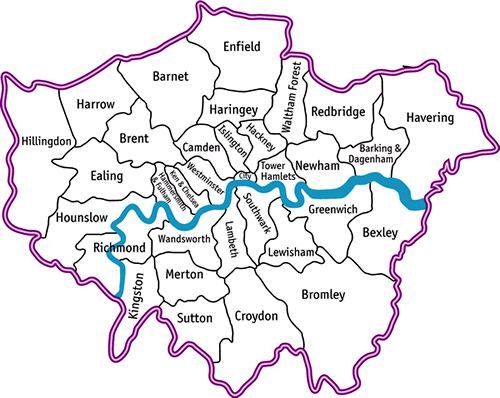
Since 1965, the administration of London has rested with the thirty-one modern metropolitan boroughs:

  •     City of Westminster
  •     Kensington and Chelsea
  •     Hammersmith and Fulham
  •     Wandsworth
  •     Lambeth
  •     Southwark
  •     Tower Hamlets
  •     Hackney
  •     Islington
  •     Camden
  •     Brent
  •     Ealing
  •     Hounslow
  •     Richmond upon Thames
  •     Kingston upon Thames
  •     Merton
  •     Sutton
  •     Croydon
  •     Bromley
  •     Lewisham
  •     Greenwich
  •     Bexley
  •     Havering
  •     Barking and Dagenham
  •     Redbridge
  •     Newham
  •     Waltham Forest
  •     Haringey
  •     Enfield
  •     Barnet
  •     Harrow
  •     Hillingdon

The City of London is not a borough but is still an administrative authority. Civil parishes were also abolished at this point.

One of the major challenges when planning your research is to establish just exactly where your ancestors lived or worked, and then locate it in the new present administrative areas. This is because many records are categorised and catalogued at the London Archives by the modern county borough.
Administrative hundreds in LONDON

hundred is the term used to describe a subdivision of an area like a parish and the area around it; it was also a territorial and administrative unit which existed from the eleventh century until the mid-nineteenth century. Hundreds were used for various administrative purposes, including taxation and taking the censuses. Researching the recors of the Hundreds is as vital as looking at parish registers.

Middlesex

The historic county of Middlesex was divided into the six hundreds of Edmonton, Elthorne, Gore, Hounslow (Isleworth in all later records) Ossulstone and Spelthorne. The City of London was geographically located within Middlesex in the hundred of Ossulstone but was independent.

Kent

Historically, some hundreds were called lathes in Kent. “London” Kent is in the Lathe of Sutton-at-Hone, with the Hundreds of Blackheath, Bromley & Beckenham, Ruxley, Dartford & Wilmington, Little & Lessness.

Surrey

“London” Surrey has the following Hundreds - Brixton, Elmbridge, Kingston, Wallington, Copthorne and part of Blackheath.

Essex

“London” Essex is covered by the following Hundreds of Waltham, Becontree, Havering Liberty, Ongar, Chafford and part of Barstable.

Keeping track of your ancestors in LONDON

One of the challenges of locating ancestors in London is finding when they moved in, how often they moved around and if, and when, they moved out. The general trend was for those in rural areas to move to London. Nearly seventy per cent of those who moved to live in London were from such areas and included working-class domestic servants, labourers, skilled craftsmen and apprentices.

The Industrial Revolution resulted in high employment possibilities in London with the increase in shipping and dock work attracting general labourers. Railways and other industries attracted a labour force which included many Irish. Foreign seamen, particularly those from India and the Far East, also settled in London.

The Great Exhibition of 1851 revolutionised people's perceptions of the capital and so they took the opportunity to move there for a better life.

The evolution of modern transport made movement in and out easy. Commuting began in the mid-1800s. The development of suburbia and the garden city movement meant people returned to the countryside to live whilst still working in the capital.

Effective research

To effectively research your family in London, you will need to plan your research and make sure you know the following:

  • name of parish and the county in which it was situated
  • the hundred
  • registration district
  • he old Metropolitan borough
  • modern London borough
  • probate jurisdiction
  • poor law union
  • S=school district.
  •  

It is also useful to know which family history society covers which area. You can find a list of present FHS from the website of the Family History Federation.

Records associated with moving to London

There is no magic answer as to why people decided to migrate to London, but it could have been some of these reasons;

  • economic reasons
  • to be near to extended families
  • desertion from a marriage
  • to avoid detection because of crime, desertion etc. - In London anyone could be anonymous.
  •  

The best place to begin research is to look at provincial records first. Information in the original area your ancestor lived in often provides good clues. Try school logbooks to find information about a move. All pupils will be recorded as leaving school. They may tell you where the family was moving to.

Look for helpful newspaper reports, articles, job advertisements etc.

Consider other family members who may have moved earlier into London. Many members of the same family moved within a short time of each other and generally lived in the same area.

There are numerous clues to be found from the censuses and the 1939 Register.

For those who have a military or naval connection, discharge information often gives a new residential address which could be in London.

People also moved in to and around London because of job promotion on the railways, within the Post Office and so on.

Research strategy

There is a lot of basic evidence available online so use these records first and then fill in the gaps. However, don’t rely fully on this information and ake sure that you have identified the correct individual or family. Many people in London shared the same name. You could start with the following records:

  • Parish and nonconformist registers
  • Electoral registers
  • Wills
  • Freedom papers
  • Poor law records
  • Confirmation books
  • School admission registers
  • Census returns and the 1939 Register
  •  

Remember that online collections may not be comprehensive. It is useful to read the introductions to ascertain exactly which records are included and the dates of coverage.

It is unlikely that you will be able to undertake comprehensive research without visiting the many archives within London and the various boroughs. The main record offices are:

  • The London Archives (formerly London metropolitan Archives)
  • Westminster City Archives
  • Guildhall Library
  • Other county record offices have records relating to the parts of London within their old counties so you may need to visit these which of course are based outside of London.
  • Essex Record Office
  • Centre for Kentish Studies
  • Surrey Heritage Centre.
  •  

Local borough archives - DON’T MISS OUT!

You will be unable to complete London research without using records held by the local borough archives. The main record offices do not hold every record relating to London. The following are just some examples of records held in local archives which can provide information on your family.

  1. 1

    BARKING & DAGENHAM ARCHIVES

    Ford Motor Company staff magazines

    Barking Jute Works staff records

    Barking Fishing Fleet apprenticeship documents

    Details of Barking people in the London Hospital

  2. 2

    BARNET ARCHIVES

    Hendon Settlement Examinations 1727-1835

    World War Two civil defence records

  3. 3

    HAMMERSMITH & FULHAM ARCHIVES

    Settlement certificates 1738-1837

    Masses of nonconformist records post-1710

    West London Hospital records

    Home Guard logbooks

    Mousell Brothers removal contactors

    W. Chapman Builders records

    Fulham Workhouse Inmates records

  4. 4

    LAMBETH ARCHIVES

    St Peter's Streatham parish magazines

    Old Vic theatre archives

    Different Lambeth Charity records

    1st Surrey Rifles records

    Bon Marche Company records

    Copus & Son, Funeral Director records

    Bowlings Dairy round books from 1881

    South Metropolitan cemetery records

    Dr Barsham - case papers 1848-1873

    Petty sessions court proceedings

  5. 5

    THE BISHOPSGATE INSTITUTE

    London Cooperative Society Records

    Ratepayers' Associations

    London Provident Institution 1821-1864

    Huge number of directories etc

    Oral histories of Thames Watermen

    London Dock Workers

    Family Archives

Using indexes

There are various indexes, particularly relating to marriages, that can assist researchers as initial finding aids. These are important datasets as marriages could have taken place at locations away from your ancestor’s home parish.

West Middlesex marriage index

Details of 84,863 marriages from the sixty-one parishes which can be searched on Findmypast

Parishes covered include: Acton, Ashford, Cowley, Ealing, Edmonton, Enfield, Feltham, Finchley, Great Stanmore, Greenford, Hampton, Hanworth, Harefield, Harlington, Hayes, Heston, Hillingdon, Hounslow, Ickenham, Monken Hadley, New Brentford, Northall (Northholt), Pinner, South Mimms, Stanwell, Sunbury, Teddington, Tottenham, Twickenham, Uxbridge, West Drayton.  

Other London-based indexes

Boyd's Marriage Index

Pallot’s Marriage Index 1780 – 1837 (covers 103 of the 105 parishes in City of London and others)

Fleet Marriages before 1754 (including Holy Trinity Minories and St James' Duke’s Place)

Webb’s marriage index (City of London up to 1837)

Pallot’s Baptism Index 1780-1837 (covers twenty-two parishes of London & Middlesex)

Boyd’s Burial Index 1538-1853 (entries mainly from City of London & Westminster although some Middlesex parishes included)

Boyd’s Inhabitants of London 1200-1946.

Churchyard burials

Burials in all London churchyards had ended by 1854 because of overcrowding. After 1854 the Garden Cemetery system developed around the capital. The main cemeteries in London were:

  • Abney Park – 1840
  • Brompton – 1840
  • Highgate – 1839
  • Kensal Green – 1832
  • Nunhead – 1840
  • Tower Hamlets – 1841
  • West Norwood – 1837
  • City of London - 1854
  • Brookwood Surrey. see below
  • Great Northern Cemetery, Barnet – 1855

Greater London Burial Index

This is a comprehensive collection of burial records for various parts of Greater London, including Middlesex, south London, and the City of London covering 1538 to 1992 and can be searched on FindMyPast. The index entries can include information about the deceased such as name, age, occupation, their religious denomination and burial location. It includes records from the Middlesex Burials & Memorial Inscriptions, South London Burials Index (1545-1905), and the City of London Burials (1754-1855), as well as Middlesex Burials (1538-1992).

Brookwood Cemetery

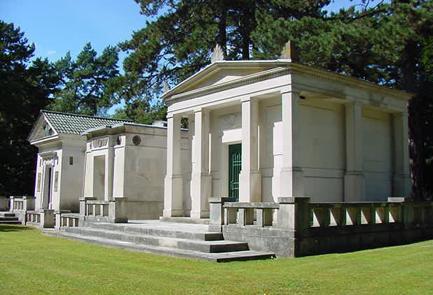
Brookwood Cemetery was conceived by the London Necropolis Company in 1849 as an overflow cemetery to bury Londoners. In 1852 an Act of Parliament was passed which allowed the company to purchase 2,268 acres of heathland near Woking with the idea that the cemetery would cater for all classes and religious faiths.  The cemetery was divided into separate ‘burial grounds’ some of which were allotted to different London parishes and to various religious denominations. Various chapels and railway stations were incorporated.

It was considered necessary because in the 1840s, London's population was still spiralling upwards. Epidemics of typhus, cholera, influenza and scarlet fever meant a higher than average number of deaths. The "Magnificent Seven" garden cemeteries could not keep pace with the demand for burial space, but despite being twent-five miles outside the city, it had the huge advantage of a rail connection.

Finding LONDON wills

Information about the wills and probate is held at the London Archives for those who died between 1507 and 1858 and can be researched online at Ancestry.

The records of the various courts do not always cover the full period.

  • Archdeaconry Court of Middlesex                          
  • Consistory Court of London                        
  • Commissary Court of London                     
  • Archdeaconry Court of London                
  • Peculiar Court of Dean & Chapter of St Pauls   
  • Royal Peculiar of St Katherine by the Tower      
  • Archdeaconry Court of Surrey
  • Commissary Court of the Bishop of Winchester
  •  

These are only original wills only and do not include wills or administrations found in will registers or act books which are only accessible at The London Archives.

Westminster Archives also hold the wills for the Royal Peculiar of Dean & Chapter of Westminster 1504-1829 and the Lambeth Palace Library (Small part of Middlesex and part of City of London) hold wills proved in the Peculiar of Deanery of Croydon and Deanery of the Arches.                 

The Peabody Trust

The Peabody Trust is one of London's oldest and largest housing associations with over 100,000 homes across London. It was founded in 1862 by George Peabody, an American banker, philanthropist and social visionary to provide housing for the poor. The first estate was opened in Spitalfields in 1864 consisting of fifty-seven dwellings and nine shops. By 1885 the trust was housing 50,000 of London’s Poor

The estates were built as model dwellings to provide housing for the working classes. The buildings were blocks around an open square, which was a move away from the dark alleys and the slums that they were replacing. It was hoped that sanitary housing would in turn lower the mortality rates. It is also said that once a Peabody tenant, always a Peabody tenant and many moved between different estates and became generational tenants.

Records of the Trust are held by the London Archives and include:

  • Property and tenant registers
  • Accounting records (rent payments)
  • Tenancy registers
  • Plans

Other useful record collections

  • Middlesex Deeds Registry
  • Fire Insurance Records
  • City Livery Companies
  • Freedom Archives
  • Freedom Admissions
  • Historical Directories
  • Electoral Registers 1847-1965
  •  
  • School Admission Registers 1840 - 1911 organised by London School Districts
  • Camden
  • City of London
  • Greenwich
  • Hackney
  • Hammersmith & Fulham
  • Islington
  • Tower Hamlets
  • Southwark
  • Wandsworth
  • Westminster
  •  
  • London Poor Law Districts – 1834-1926
  • Business records
  • Masses of records of businesses from London & Middlesex are deposited in archives throughout the metropolis. Use “Greater London History Sources” Vol 1 and 2 to identify them.
  •  

Hospitals and asylums

  • Large numbers of London inhabitants became ill and/or were patients in hospitals.
  • Many Londoners worked for hospitals in the medical professions or as support staff.
  • Our ancestors may have been patients in... workhouse infirmaries, hospitals for women & children, special hospitals, psychiatric hospitals or asylums, fever hospitals or charity hospitals.

Street names and numbers

Many London streets changed their names frequently. House numbering altered as roads were extended. Although someone may appear to be living at a different address, they may still be in the same house. This is something to be aware of when plotting moves in London. Always check to see if street names or numbers have altered.

https://www.maps.thehunthouse.com/Streets/Old_to_New_Abolished_London_Street_Names.htm

Alleys and courtyards of LONDON

The whole of London was criss-crossed with many small alleyways and courtyards that are not always easy to identify, even when listed on census returns. To find their locations and any name changes, there is a very useful website:

https://www.theundergroundmap.com/wp/alleys-and-courtyards/

Proving the connection

  • Eliminate or confirm events such as baptisms, burials etc.
  • Develop a family circle – investigate extended family
  • Try to relate back to some explanation for the original move and if necessary, search the local archive where the family originated
  • Look for property records, deeds, rental agreements etc
  • Look at school records and congregational records for the various religions
  •  

Movement out is not always as well documented as movement in

  • Use all resources available
  • Find out what is held and visit local and private archives
  • Think about your ancestor’s occupation and where they worked in relation to where they may have lived, most lived near their work
  • Consider how often they moved - (usually frequently)
  • Few people owned their property, most rented their accommodation
  • Trace them in and out of the Metropolis
  • Don’t just rely on records held by major archives
  •  

In some cases, you may never be able to piece together all the details of your ancestors time in London.

The EMPHASIS is: Knowledge, Persistence, Patience

This article was contributed by Ian Waller from Family History Federation.
Website by Beachshore