

London burial crisis

Up until the mid-1850s London's dead had been buried in parish churchyards which were fast running out of burial space, so the older graves were regularly used for new burials. In the first half of the nineteenth century, the population of London more than doubled although the amount of land available for use as graveyards remained unchanged. Graveyards became very overcrowded with many decaying corpses appearing close to the ground surface thus contaminating the water supply resulting in regular epidemics including cholera, smallpox and typhoid. The risk of disease caused by the situation was a cause of public concern so a Royal Commission was set up in 1842 to investigate the problem. The cholera epidemic of 1848-9 killed over 14,500 people in London and completely overwhelmed the existing burial provision.

A number of new cemeteries opened outside the built-up and usually densely populated areas of London, but these proved to be only a temporary solution. Considering the public concerns after the cholera epidemics and the findings of the Royal Commission, new legislation meant that new burials were prohibited within the built-up areas of London. The seven garden cemeteries became London's main burial grounds and other large municipal or privately owned cemeteries were established.

Brookwood Cemetery

Brookwood Cemetery is a burial ground situated close to Woking in Surrey. It is one of the largest cemeteries in the United Kingdom and was created by the London Necropolis Company in 1849 to provide an overflow burial ground for London because the capital was finding it difficult to accommodate its dead.

Brookwood was conceived with three sections catering for Anglican, nonconformists and military burials. The Anglican section of the cemetery was consecrated by the Bishop of Winchester on 7 November 1854 and took its first burial on 13 November 1854.

In 1858 the London Necropolis Company sold off sixty-four acres of land for the building of the Woking Convict Invalid Prison primarily to hold male invalid convicts who previously had been billeted on hulks. April 1859 saw the first prisoner and formally received the first mass of invalid prisoners almost a year later in March 1860. The prison closed in 1889 due to a decline in the number of invalid prisoners.

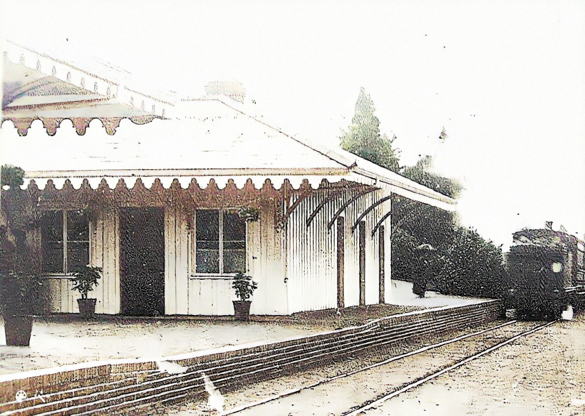
 

The London Necropolis Railway

Brookwood was unique at the time because it was the first cemetery accessible by rail from the London Necropolis railway station situated next to Waterloo station in London. Initially, dedicated coffin trains carrying fifty to sixty bodies travelled in the early morning or late at night with coffins stored on the cemetery site until the funeral. At other times both mourners and coffins would be transported to the cemetery by dedicated trains during the day. On 13 November 1854 the first scheduled train left the London Necropolis railway station. Usually the train ran once a day, assuming that funerals were booked to take place. The Sunday service ceased after October 1900 and by the 1930s they were running at most twice a week. The trains departed Waterloo at 11.20am and arrived at Brookwood one hour later. The return journey departed Brookwood at 2.30pm. They ran non-stop until 1890 after which an additional stop was made at Clapham Junction.

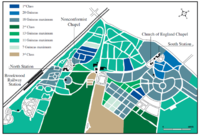
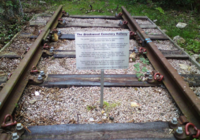
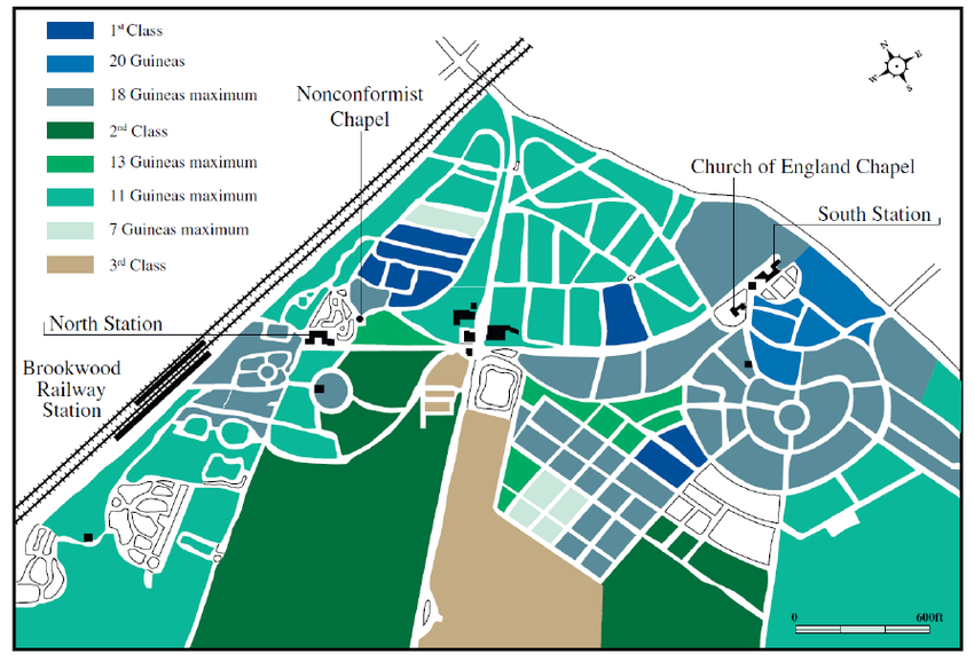
Most of the funeral trains consisted of passenger carriages and hearse carriages for coffins. The trains actually ran into the cemetery on a dedicated branch line and served both the Anglican and nonconformist areas of the cemetery, each with their own stations accessed by a junction just to the west of Brookwood station on the main LSWR line. Passengers and coffins were then taken from the stations to the chapels or graveside. The North station served the nonconformist areas and the South station served Anglicans. Evidence still exists of the location of both stations and there is a short piece of commemorative track but the route of the railway within the cemetery is for the most part clearly visible.

In keeping with the class structure which prevailed in the Victorian period, the London Necropolis Company offered first, second and third-class funeral packages.

Funeral classes

First-class funeral

This allowed the selection of a grave site of choice anywhere in the cemetery but the company levied additional charges for burials in some designated sites. Prices began at £2 10s for a basic grave measuring 9ft x 4ft. It was expected any family acquiring a first- class grave would erect a permanent memorial following the funeral.

Second-class funeral

This class of funerals cost £1 and allowed some control over the location of the grave. The erection of a permanent memorial cost an additional ten shillings, and if a permanent memorial was not erected, the grave could be reused in the future (and many were).

Third-class funeral

These were for funerals of paupers, many of whom were buried at parish expense in the section of the cemetery designated for that parish. The company was not allowed to use mass graves apart from multiple burials in the same plot for immediate next of kin. Those having a third-class funeral were not able to erect a permanent memorial on the site but the families of those buried could upgrade a third-class grave to a higher class if they later wanted to erect a memorial. Few appear to have done so.

A Brookwood pauper funeral was more dignified than a burial which would otherwise have been in an overcrowded churchyard. Travel warrants were issued by Poor Law authorities for mourners at pauper funerals because many of the mourners could not afford the passenger fares. Coffin tickets were also paid for by the Poor Law authorities.

Sunday burials

Brookwood permitted Sunday burials and so became a popular choice with poor families because they could bury their dead without losing a day’s wage. Interestingly, Brookwood was a popular choice for the burial of actors because theatrical performances were not allowed on Sundays. There is a dedicated actors' section in the cemetery located near the station entrance.


A Brookwood Funeral

Funeral parties were met by cemetery staff and escorted to chapel or waiting room; the relevant coffins were unloaded at the correct station and were either loaded onto a horse-drawn hearse or placed on a hand bier and wheeled to the chapel or graveside. Many of the officiating clergy travelled on the funeral train from London. Individual families decided on the type of service and funeral they could afford and most pauper funerals were conducted en masse. In many cases a funeral service was held in the regular London churches which was followed by just a cemetery interment.

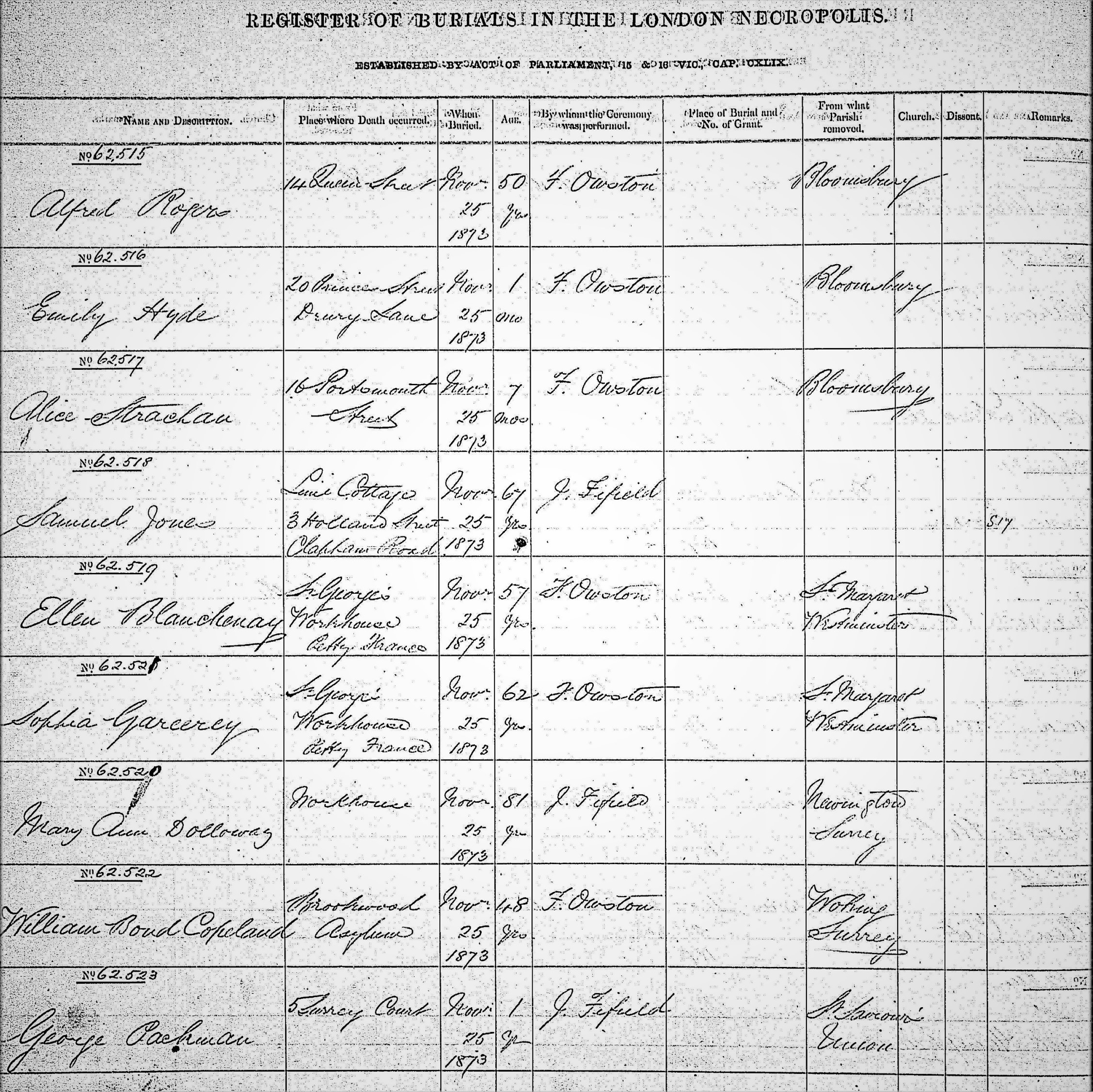
The burial records are available on Deceasedonline.com and show:

Name and description

Grave/burial number

Place of death

When buried

Age

Funeral officiator

From what parish

The number of burials was much lower than the London Necropolis Company expected.  Only around twenty per cent of the graves of the 235,000 people buried at Brookwood have memorials.

Dedicated burial grounds at Brookwood

While the majority of burials conducted at the cemetery were pauper funerals from many London parishes and prisons, there were also burials conducted on behalf of a number of societies, guilds and religious bodies, all of which had dedicated sections in the cemetery. The London Necropolis Company was successful at attracting the various specialist trade groups. The Royal Hospital Chelsea have used Brookwood Cemetery since 1893. The Ancient Order of Foresters and the London & South Western Railway are two examples amongst many, and in the nonconformist cemetery a Parsee burial ground was established in 1862.

Dedicated sections in the Anglican cemetery were reserved for burials from the following London parishes:

All Hallows the Great, All Hallows the Less, Charterhouse, Hanover Chapel, Holy Trinity Kingsway, St Alban the Martyr Holborn, St Anne’s Soho, St Antolin, Sr Botolph without Aldersgate, St Clement Danes, St George the Martyr Southwark, St George Bloomsbury, St George's Botolph Lane, Swedish Church in London, St George in the East, St Giles in the Fields, St James' Westminster, St John Clerkenwell, St John Westminster, St Luke Chelsea, St Martin in the Fields, St Martin Ludgate Hill, St Mary Newington, St Marylebone, St Nicholas Deptford, St Peter Walworth, St Saviour Southwark, St Stephen's Kensington.

Reburials at Brookwood

Due to the construction of railways, the Underground, improvements to London's sewer system and other civil engineering projects, reburials of bodies in disturbed or demolished existing churchyards became necessary. The first major reburials at Brookwood occurred in 1862 when Charing Cross station was built. Up to 7,950 bodies from Cure's College, Southwark burial ground were transferred by the London Necropolis Railway to Brookwood for reburial, together with some of the then existing headstones from the original cemetery.

Other churchyard occupants were also reburied at Brookwood when churches were demolished or destroyed by enemy action during the war. Among them are:

St Michael, Crooked Lane, demolished 1831 although the burial ground was not cleared until 1987.

St Antholin, Budge Row demolished 1875.

All-Hallows-the-Great demolished 1894.

St Magnus-the-Martyr – the remains were removed from the crypt in 1894.

All-Hallows-the-Less was one of the churches destroyed by Great Fire of London but the churchyard was not cleared until 1896.

St Michael Wood Street demolished 1897.

St Mildred, Bread Street was destroyed during the London Blitz although the churchyard was cleared in 1898.

St George Botolph Lane demolished 1904.

St Marylebone Parish Church – the remains from the crypt were reburied in 1987.

The most recent reburials were from St James's Piccadilly when remains were removed from St. James's Garden due to HS2 construction work at Euston Station.

The remains from the Cross Bones Graveyard in Southwark which was not used after 1853 were also removed to Brookwood during the 1860s.

The train carriages and vans  and cemetery stations

Passenger carriages

The passenger carriages used on the London Necropolis Railway were a set of carriages permanently loaned by the LSWR. The same set of carriages remained in use for over forty years. New carriages were supplied at the end of 1899 but this rake (group) of carriages only remained in use for a short period to be replaced again in 1907 and again in 1917. This rake operated for most of the period between the wars and was withdrawn in April 1938. These carriages were destroyed in the 1941 bombing of the London terminus.

Hearse vans

The London Necropolis Company owned the hearse vans outright but their livery was that used by the LSWR as this matched the livery of the carriages and locomotives loaned to them. Each van was partitioned into twelve sections in two rows of six, each holding one coffin. The later vans were of an improved design and carried fourteen coffins. The internal partitions divided first, second and third-class coffins. Unlike traditional Victorian funerals in which the hearse led the funeral procession, the LNC placed the hearse van at the rear of the train - and because trains reversed from Necropolis Junction into the cemetery, the hearse van would then be at the front of the train.

The LNC originally had six hearse vans but only two were initially operational at any one time. It is thought that the hearse vans were conversions of existing carriages. Two new hearse vans were given to the LNC by the LSWR in 1899; these were longer and divided into three levels with compartments for eight coffins on each allowing for twenty-four coffins per van. These remained in use until the closure of the Necropolis Railway.

Cemetery stations

Each station was a single-storey building with a square courtyard.  Each station had first-class and ordinary reception rooms for mourners, a first-class and an ordinary refreshment room, and staff apartments. The refreshment rooms at both stations were permitted to sell alcohol. The train crews would generally wait in these refreshment rooms until the trains were ready to return to London. Early on cellars were dug beneath the stations and the coffin reception rooms were converted into "pauper waiting rooms".

On arrival at the stations, coffins would usually be unloaded and transported to the appropriate chapel and the mourners were escorted to the waiting rooms at the station. On arrival at the chapels, first and second-class funerals would generally have a brief individual service but third-class funerals had a single service in the appropriate chapel for all those being buried. Where the funeral service had already been held at a parish church, the coffins were taken directly from the train to the graveside.

The North station served Roman Catholics, Parsees, Jews and Nonconformists as well as groups with dedicated plots in the northern cemetery. Between 1942 and 1944 large numbers of Allied service personnel were buried in the military section of Brookwood cemetery, also served by the North station. The design of South station was broadly the same as the North station and served the Anglican faiths.

The London Necropolis Station

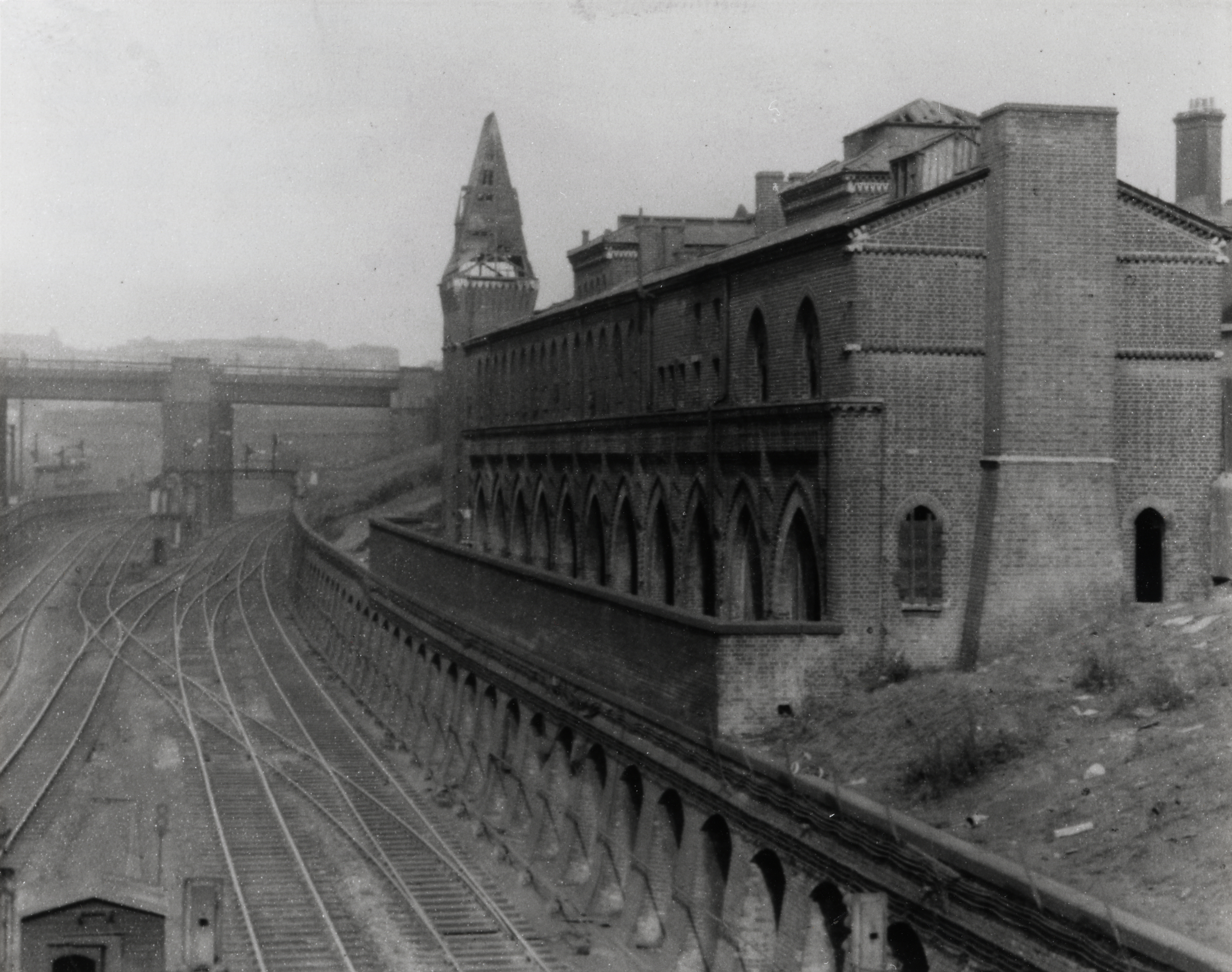
The site near Waterloo meant that bodies could be cheaply transported to the terminus by water from much of London and the station was easily accessed by road. Arches of the viaduct carrying the LSWR into Waterloo were converted into mortuaries. Despite local objections about the effects of large numbers of dead bodies being stored in the area the LNC built a single terminus on a plot of land between Westminster Bridge Road and York Street.

There have been two termini for the Necropolis railway. The first operating between 1854 and 1902, the second thereafter. The building housed two mortuaries, a boardroom and funerary workshops together with separate waiting rooms for those attending first, second and third class funerals. A lift was installed to carry coffins from the mortuaries to platform level.

As the site of the station blocked any increase in the number of lines serving Waterloo station the LSWR in 1896 presented the LNC with a proposal to provide a new station in return for the site of the existing terminus. After some wrangling and a few “unreasonable demands on the LSWR they agreed and a site for the replacement terminus was bought by the LSWR in 1899, south of the existing station. It was completed in February 1902

A four-storey building on Westminster Bridge Road housed offices. a communal third-class waiting room, mortuaries and storerooms, a chapel and workshops. The Chapel was intended for mourners to pay their respects to the deceased if they were unable to make the journey to Brookwood. There were two platforms with waiting rooms and ticket office. The last recorded funeral party carried on the railway was that of Chelsea Pensioner Edward Irish, a Royal Hospital Chelsea pensioner who was buried on 11 April 1941.

The branch line into the cemetery had been almost unused since the destruction of the London terminus and was in extremely poor condition, so the service closed after the end of the war.

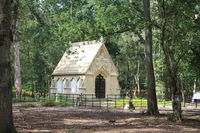
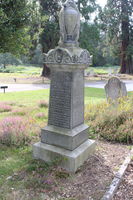
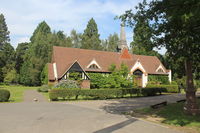
Around Brookwood

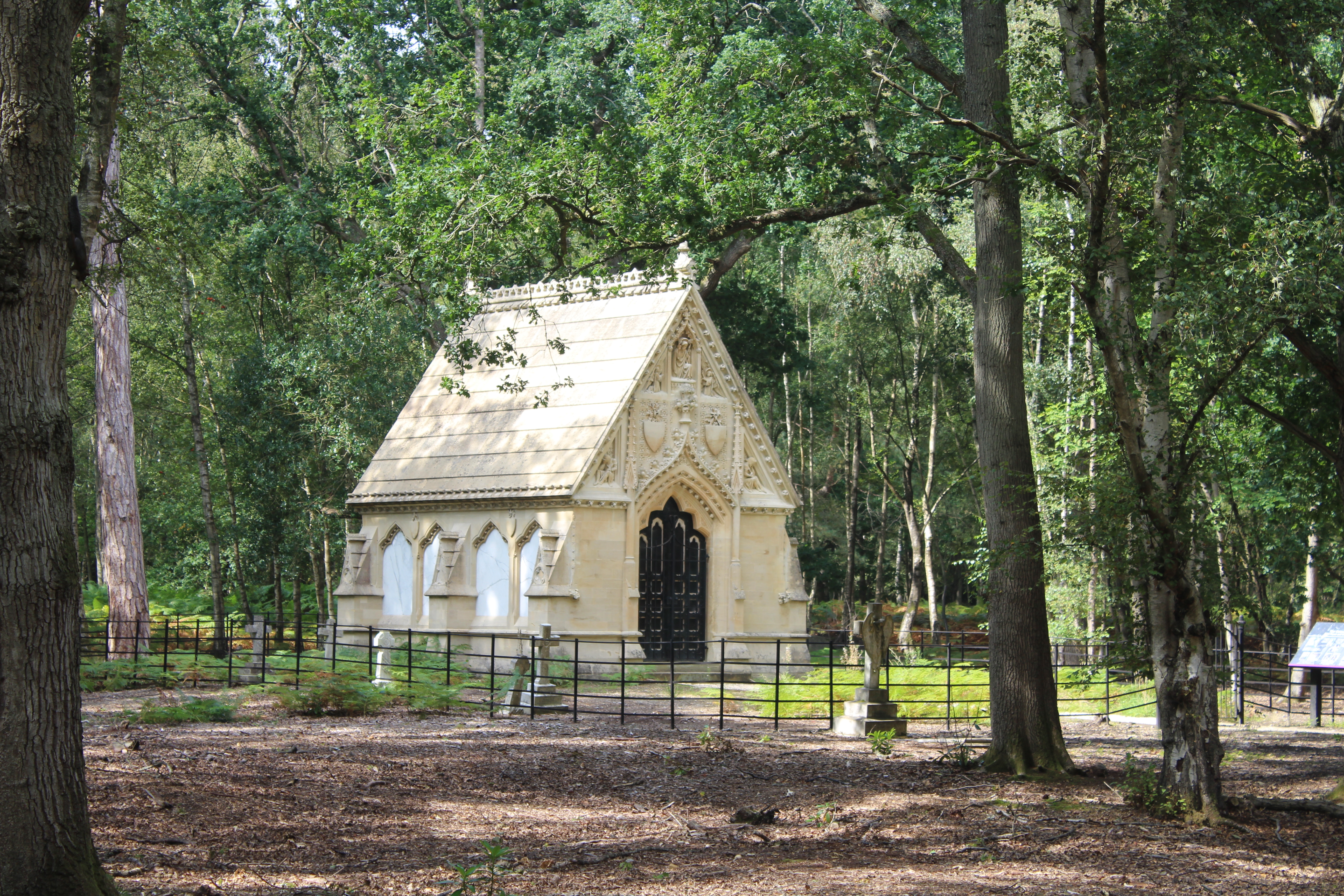
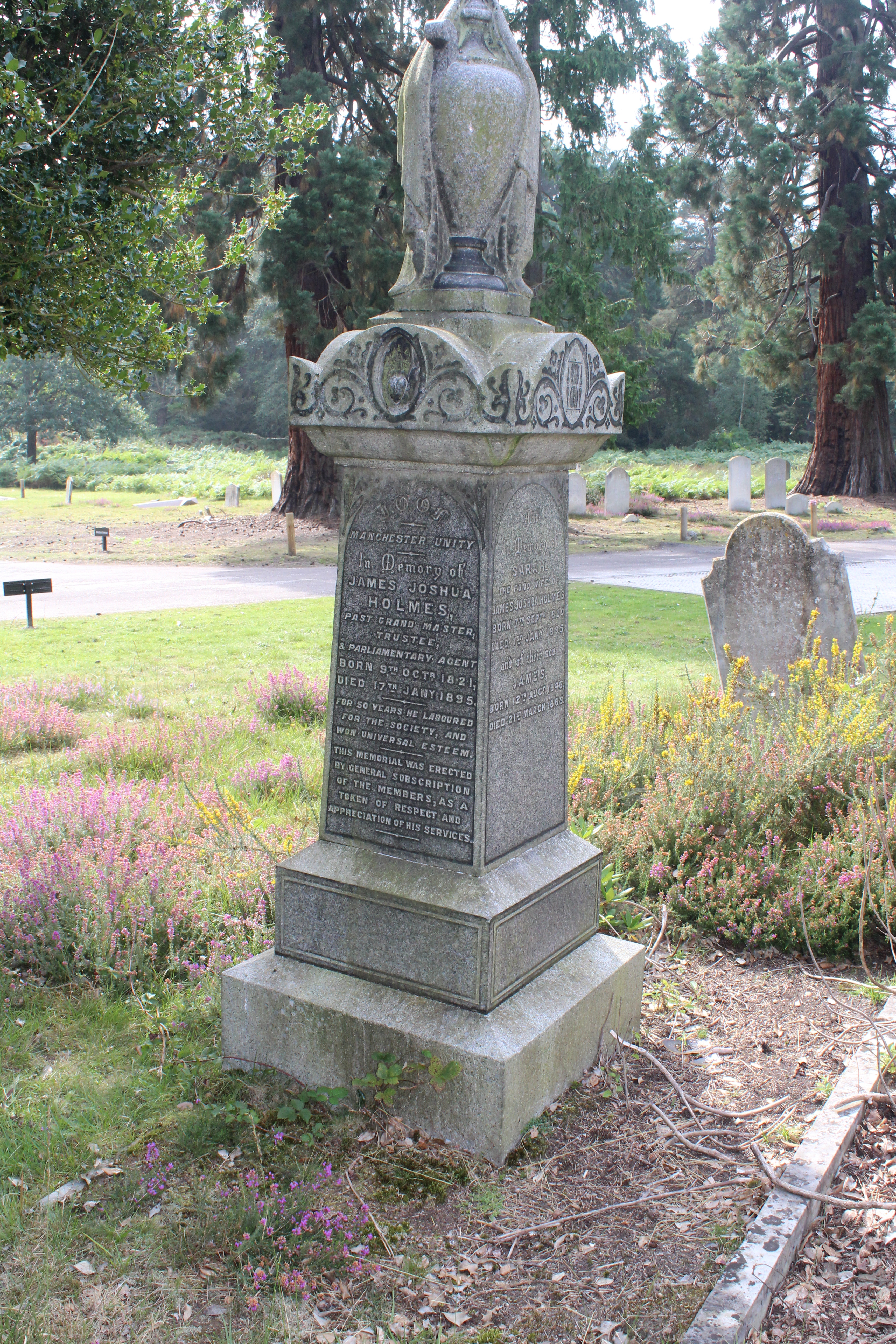
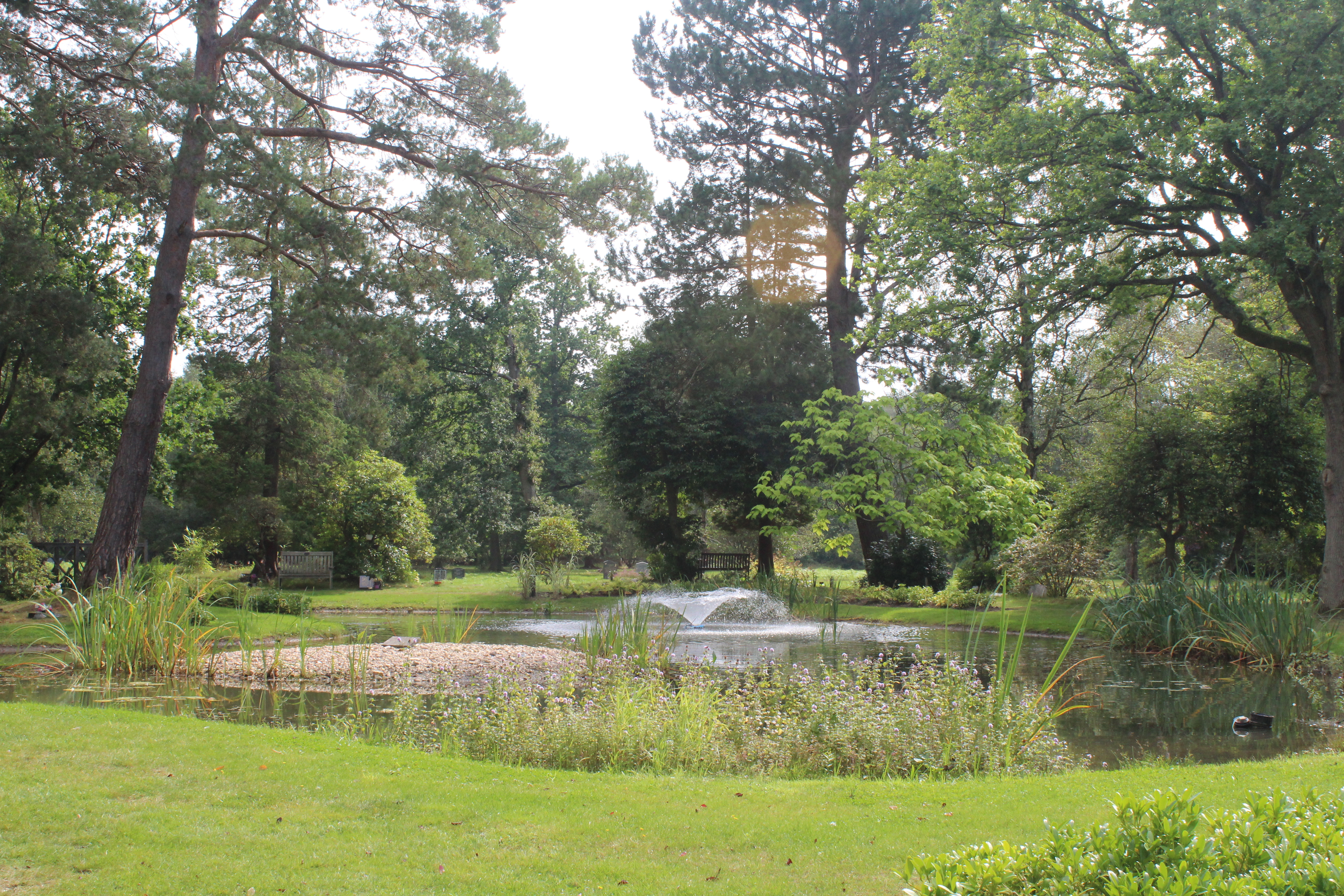
The following pictures show various aspects of Brookwood cemetery

Great Northern Cemetery (New Southgate)

New Southgate Cemetery as it is now known, is in Brunswick Park Barnet. It was established by the Colney Hatch Company and Great Northern Railway partnership in the mid-1850s and became the Great Northern London Cemetery, with a railway service running from near Kings Cross station to a dedicated station close to the cemetery. The cemetery is located about 1 mile to the north of Colney Hatch Station (New Southgate) which is on the Great Northern Railway about 7 miles north of King's Cross station. Its aim was to provide cheap and convenient burial services to the residents of central London.

After the closure of burial grounds in London in the 1850s, there was a movement to establish new cemeteries further from the centre of the city. The Cemeteries Clauses Act 1847 allowed for the creation of commercial cemeteries, expanded upon by the Burial Act 1852. The Colney Hatch Company acquired land for a cemetery near Colney Hatch known as New Southgate. The name was changed so there was no association with Colney Hatch Lunatic Asylum. The cemetery covered around 150 acres with 98 acres allocated for Anglican burials and 44 acres for nonconformist burials.

The Great Northern Cemetery company meanwhile were paid £950 by the Metropolitan Board of Works to remove bodies from a number of old City Churches including:

St Mary Islington

St Pancras

St Matthews Bethnal Green

St James Clerkenwell

St John Clerkenwell

St Leonard Shoreditch

St George the Martyr Holborn

Several other churches used the Great Northern as well as other London cemeteries including:

Holborn Poor Law Union

Many Barnet parishes

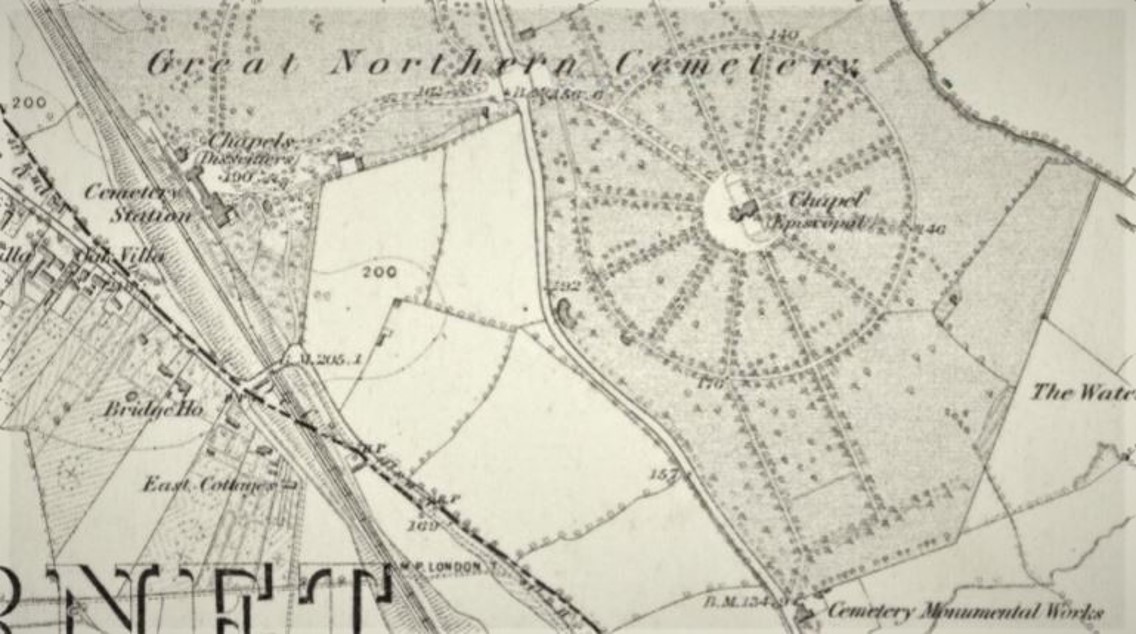
Great Northern Cemetery

Plan showing position of the original cemetery station


Great Northern Cemetery Railway

A similar funeral train service to the London Necropolis Company ran between Kings Cross and Colney Hatch but only took around 15 minutes journey time. A siding was built next to the main line at King's Cross station with a separate station known as the Great Northern Cemetery Station located just outside of King’s Cross at ‘Belle Isle’. The railway line was situated below the station so coffins were placed on a hydraulic lift and transferred below ground to a mortuary where they would await transport. The station included a morgue and facilities for mourners. The funeral train service began in late 1861 and it was intended to run trains on a daily basis but the Idea crumbled, resulting in only two services a week and even then they became irregular. By the early 1870s the funeral train service had ceased.

The Great Northern Cemetery line didn’t run directly to the cemetery itself and as such processions from the station to the cemetery by road prevailed. A fleet of horse-drawn hearses met trains and take the coffins from the platform and then haul them to their final resting place. The Great Northern London Cemetery Company aimed at the lower end of the market, charging 6 shillings to carry a coffin plus a return fare of 1s 6d for each mourner. There was also a fee for burial, starting at 10s or 11s. The reputation was tainted in the mid-1860s as a number of pauper’s funerals were conducted in a disrespectful manner. The Great Northern Cemetery’s most expensive funeral was priced, in 1865, at £8 and 8 shillings the cheapest was £2 and 2 shillings.

Although the rail service ceased in the 1870s the cemetery remained open for burials and became the New Southgate Cemetery. The cemetery was acquired by New Southgate Cemetery and Crematorium Company and now includes sections for Roman Catholic, Greek Orthodox, and Caribbean burials.

This article was contributed by Ian Waller from Family History Federation.
Website by Beachshore