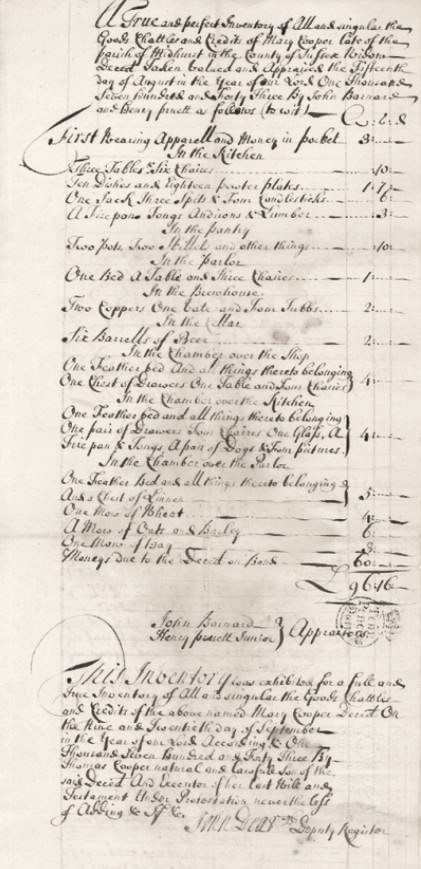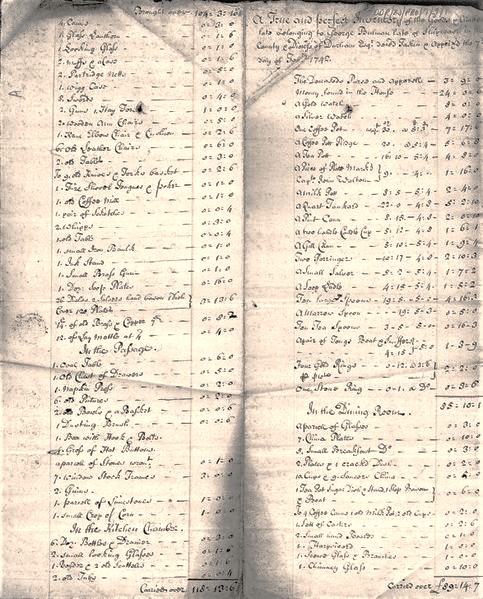





Most inventories look similar although there was no set or prescribed format. After an introductory paragraph including the names of the deceased and assessors and the date the inventory was made, the main body of the document lists all moveable goods and chattels, monies, wearing apparel, tools, merchandise, corn, cattle, leases and debts, each with an assigned monetary value. At the end of the inventory the assessors applied their signatures. Some contained witness signatures as well.
Assessors could exercise discretion over how they described goods and what they included. There was sometimes a dispute among the family over which possessions had belonged to the deceased. The appraiser also had to consider the “second-hand” value of objects.
Some assessors did not list goods in the order they inspected them but grouped goods together that were similar. Financial valuation and appraisal often involved negotiation between them and any family members who were present when the inventory was taken.
By the early seventeenth century it was common to organize details of household possessions room by room although certain customs existed based upon locality and would use local terminology in descriptions, some of which would be unfamiliar to the family historian.
The room-based format was generally only used only for domestic goods; other categories of moveable property were valued separately, including financial instruments, stock and outdoor goods, including animals, crops and farming tools etc. In some cases all household goods were assigned a single value as were the tools of trade, stock.