Infirmaries within workhouses were generally introduced in the nineteenth century although after Gilbert's Act, some workhouses has special areas for the accommodation of the sick. However, they generally developed after the introduction of the New Poor Law in 1834 and were managed under the poor law regime. It all began after the 1832 Royal Commission into the Operation of the Poor Laws which recommended separate facilities for the aged and infirm. Under the Poor Law Amendment Act 1834, lunatics were not allowed to be held in a workhouse for more than two weeks.

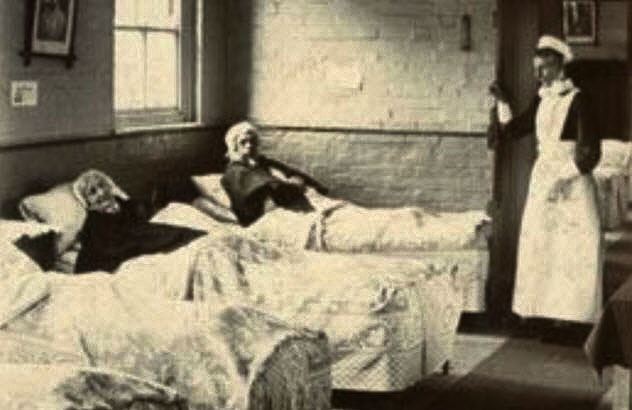
Poor law medicine suffered from an unenviable reputation in much the same way as the workhouse system generally. Workhouses were the main establishments to house and care for the chronically ill although the standard of medical care fell short of that available in the voluntary hospitals. Notwithstanding this, the workhouse infirmaries played a substantial role in medical care for the poor and were vital to the provision of care. Every workhouse had a designated area for use as an infirmary. These were within the existing workhouse buildings and were often lacking in sanitation and unfit for purpose.

Sickness has always been a contributing factor in poverty, particularly when it affected the whole family as it prevented breadwinners from earning sufficient income to survive. The Industrial Revolution saw the decline of rural life so made it difficult to ignore challenges caused by sickness as people began to establish lives in large, unhealthy cities. Such migration often intensified the problem.

The establishment of voluntary hospitals by the middle of the nineteenth century aimed to care for those of the poor who could recover quickly from illness or injury or could even afford to pay for treatment; for many people, this was just not an option. Throughout the Victorian period there were many destitute and poor members of the community who were sick or infirm. Voluntary hospitals often employed moral judgments in determining who they could treat or were charitable cases, but the workhouse infirmaries made no such distinction when it came to assistance under the poor law.

 

The sick in workhouse infirmaries

When union workhouses came into existence in the late 1830s, most inmates were able-bodied, however, by the 1860s there were greater numbers of aged and infirm in the workhouses; many were just exhausted due to their age, suffering from chronic bronchitis or with other diseases and ailments including paralysis or consumption. The death rate in poor law infirmaries was around one in four or five admissions.

In general, more of the inmates were clearly sick and in need of medical and nursing care. Local Boards of Guardians began to classify paupers into groups and accommodate them separately.  

Those suffering from infectious diseases were accommodated in separate wards unless they could be transferred to voluntary hospitals established to treat such diseases, namely specialist fever hospitals. In some locations, the guardians subscribed to voluntary hospitals which enabled them to easily transfer a sick inmate from an infirmary to a hospital. 

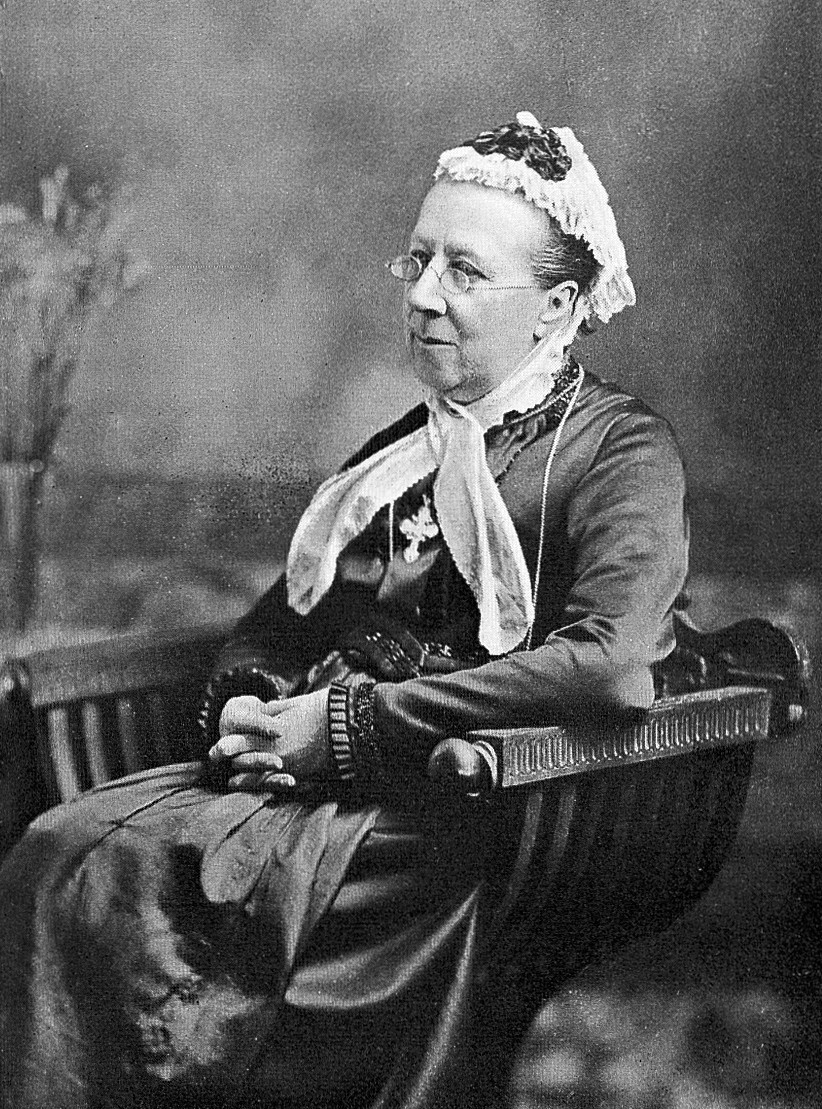
Louisa Twining

Louisa Twining was granted permission by the poor law board to visit patients in the workhouses and was subsequently responsible for the formation of the Workhouse Visiting Society. The purpose of this organsation was to provide comfort to individuals as well as informing the public of conditions within the workhouses, particularly the infirmaries.

Members of the society were the wives or daughters of influential men from MPs, members of the boards of guardians and others in influential positions.

In 1859 Louisa Twining wrote to The Times about the poor quality of workhouse nursing. She also gave evidence to the select committee on poor law relief in which she realted instances of overcrowded wards, inadequate supervision of nurses and a failure to classify patients properly. Twining felt that there should be at least one trained and efficient person to manage the nursing.

Florence Nightingale's influence

Between 1862 and 1865 workhouses were providing more sick beds than the voluntary hospitals. In some cases, inmates with chronic illnesses accounted for around one-third of the total inmates.

Florence Nightingale pioneered the use of trained nurses in workhouse infirmaries. When the Nightingale nurses training school was established at St Thomas’ Hospital, London in 1860, it began preparing nurses to serve in workhouse infirmaries. In 1865 the first Nightingale nurses started work at the Liverpool Workhouse Infirmary. Up until this time the sick inmates in most workhouse infirmaries were cared for by fellow inmates who were able-bodied but with little or no nursing knowledge or compassion.

Nightingale’s passion improved the life of the sick paupers and changed attitudes generally on hospital sanitation and nursing.  Nightingale and the other social reformers slowly began to raise awareness of the need for better conditions in which to treat the sick, and this was eventually taken on board by the poor law board. Eventually as the Victorian era continued, the workhouse infirmaries were assuming the functions of hospitals, rather than just being workhouse institutions.

Progressive changes

In May 1865 the Poor Law Board sent a letter to all boards of guardians pointing out the desirability of employing enough paid nurses and firmly discouraging the use of paupers as nurses.

This progressive change resulted in detached infirmaries with larger rooms and additional facilities incorporated in the later constructed workhouses. These separate infirmaries still fell under the control of the workhouse master and relied upon the infrastructure of the workhouse for food and other supplies.

The Workhouse Infirmaries Association was founded in 1866 and its members included Louisa Twining and the Archbishop of York. This was followed by the setting up of an investigation by the poor law board relating to the inadequacies of provision made for the sick poor in the metropolitan workhouses. Following inspections of the infirmaries, the inspectors submitted reports to the board and these showed that inadequacies existed, but pointed out that the poor, who were used to old buildings and poor light and air, did not like the large and lofty rooms, the bright light and ventilation, the rigid cleanliness and order of the newer workhouses.

A new administration existed after the investigation

  • The workhouse infirmary should always be as near as possible to the union to which it belonged.
  • The infirmary should be separate from the workhouse and under independent management.
  • Ventilation and space standards should be improved.
  • Children, those suffering from smallpox and fevers, and possibly venereal disease should be excluded from the infirmaries and treated elsewhere.
  • The medical officer should have entire control of the infirmary and report annually to the board. He should visit every patient regularly and include his observations on patients' notes.
  • Nursing and management of the infirmary should be the responsibility of a matron with hospital training. Qualified nurses should take charge of the sick, based on one qualified nurse for every fifty patients by day and be responsible for drug administration.
  • A system of uniformity in internal administration of infirmaries should be used.

Finding records of the poor law infirmaries

In most cases records relating to the workhouse infirmaries are found with the records of the poor law boards of guardians and workhouses themselves, and as such are held mainly in local archives. Very often the workhouse admission and discharge registers include those admitted and discharged to and from the associated infirmaries. In some cases, the infirmaries kept separate registers. Patients' records are unlikely to have survived.

Information about infirmary staff and the medical officers can best be located at The National Archives in series MH9 and there are plans and various administrative papers held in other pieces within the MH series.

This article was contributed by Ian Waller from Family History Federation.
Website by Beachshore