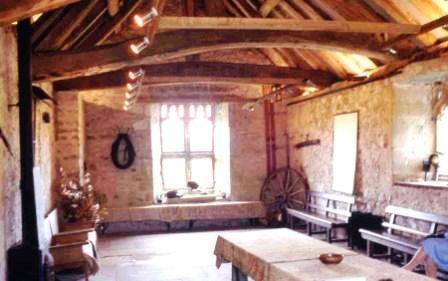
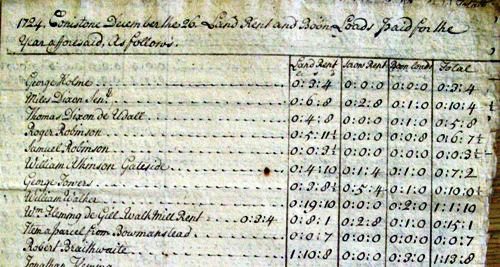
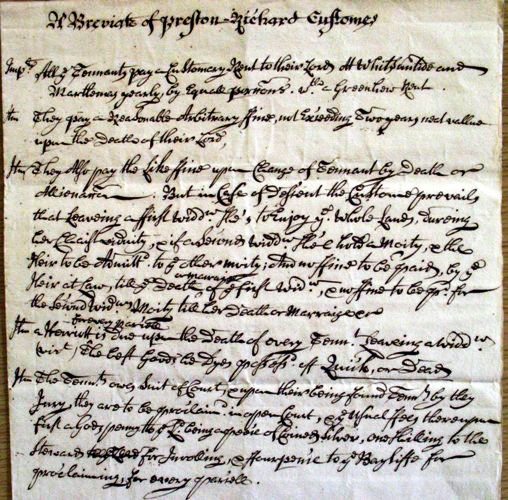
The lord of the manor held manorial courts of which there were two types, the Court Baron and the Court Leet. Courts were generally held at least twice a year (or more regularly in larger manors) and conducted all the business of the manor including admissions and surrenders of tenants. These records are most valuable for family historians tracing the daily lives and movement of our ancestors.
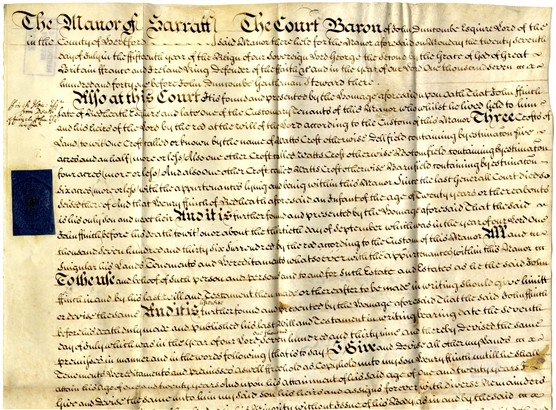
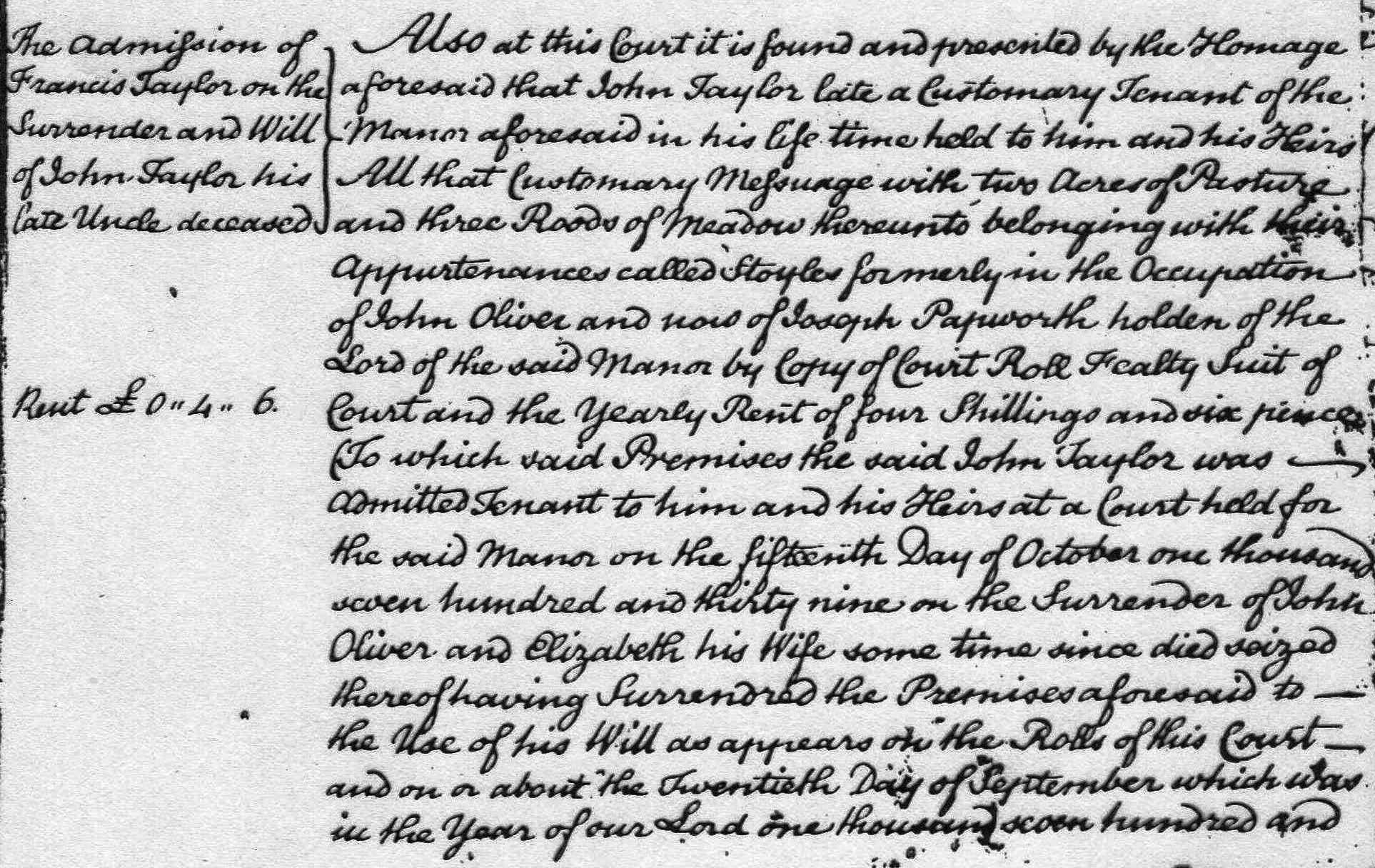
The Court Baron, often referred to as the Small Court, dealt with the general administration of the manor, land transfer (admissions and surrenders), disputes and trespass.
The Court Leet or Great Court included the View of Frankpledge, a Saxon system for law and order.
Groups of about ten households (a tything,) were collectively held responsible for the behaviour of individual members. Each tything elected a head man as spokesman who attended the Court Leet to report on the state of law and order in his locality and account for those he was responsible for. This court also dealt with the election of manorial officers including constables and had jurisdiction on several minor criminal cases.
Court records also contain proclamations on death which relates to the death of a tenant which is announced at court and sets out conditions for heirs to claim tenancy. Up to three proclamations are made (one each time a court sat) and if no heirs appeared, then land reverted to the Lord to be re-let.
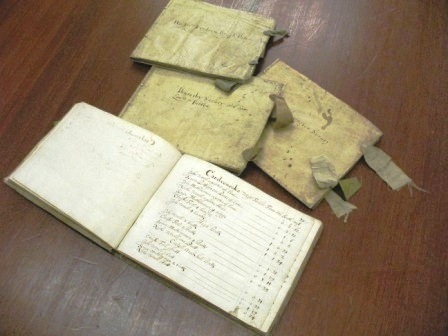
The records of court transactions were recorded in either the court book or court roll. The court books were the formal record of a manor court when written into a volume rather than a parchment roll or loose sheets, whereas the court roll was the formal record of a manor court when in the form of a parchment or paper roll.
Each tenant, according to custom (by-laws of the manor), was required to attend courts and a register or call roll was kept of attendance. Tenants could be fined for non-attendance.