The Mechanics' Institute movement  began in Scotland and spread like wildfire once the many benefits of education for working men became clear.

Mechanics' Institutes emerged in the early nineteenth century and were educational establishments designed to provide adult education, technical knowledge and library services for working-class men. Supposedly founded by George Birkbeck (of Birkbeck College fame) in the 1820s, they provided essential scientific education, libraries, and meeting spaces that supported the Industrial Revolution's need for skilled labour. However, the movement really began with John Anderson's Institution in Glasgow in 1795, which aimed to be a "university open to all".

Purpose and function

Mechanics' institutes were originally designed for artisans, tradesmen and workers to learn scientific principles to improve their trades.

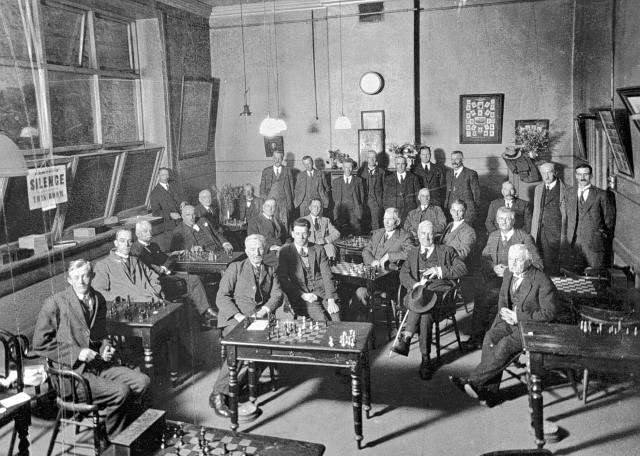
They featured libraries, reading rooms, museums and classrooms for evening lectures on mechanics, chemistry and literature. Beyond education, they also became community centres which fostered social reform and provided other educational opportunities to the working class.

While aimed at working-class mechanics, many institutes were eventually supported by middle-class supporters and patrons who desired education in science and art.

Initially exclusive women were admitted to many institutes by the late nineteenth century. As public libraries, local adult education colleges and technical schools became more widespread in the early twentieth century, the mechanics institutes became less important and many closed or merged into public libraries.

Growth of Mechanics' Institutes in England

The first mechanics' institute in England was opened in Liverpool in July 1823, and this was  closely followed by the second institute in Glasgow in Scotland in November 1823. These were followed by the Manchester Mechanics' Institute, Cooper Street, and Wakefield Mechanics' Institute in 1825.

The London Mechanics' Institute which became Birkbeck College, was opened in December 1823 and the mechanics' institute in Ipswich in 1824. By the mid-nineteenth century, there were over 700 institutes in towns and cities across the UK and overseas, some of which became the early roots of other colleges and universities. The University of Gloucestershire incorporates the Cheltenham and Gloucester Mechanics' Institutes.

Most of us will associate Mechanics' Institutions with the major railway and mill towns. Railway town institutions were vital Victorian-era hubs providing adult education, technical training and cultural facilities for railway workers. They facilitated the spread of skills during the industrial era, though many of the buildings have faced long-term disrepair or even demolition. For example, the Swindon Mechanics' Institute was established to serve the Great Western Railway works in Swindon. In its heyday, it was the centre of social and educational life for the "Railway Village".

The Wolverton Mechanics' Institute was a historically significant educational and social institution established to serve the workers of the London and North Western Railway works in Wolverton. It was founded around 1840 to provide technical education and a library to railway workers. The institute offered evening classes in practical and academic disciplines, allowing young workers in the railway town to advance into technical and engineering roles. It also hosted social events and served as a cultural centre for the community.


Mechanics Magazine

In 1823, the movement gained momentum with the foundation of the Mechanics’ Magazine edited by J. C. Robertsonl this publication  served the nineteenth-century Mechanics' Institute movement by publishing patent summaries, technical letters and inventions to advance engineering knowledge. It ran until 1893.

The magazine focused on "engineering" knowledge, including original letters, notices of novel inventions, patent summaries, and technical Q&As. It was often used as a model for technical publications and worked closely with the London Mechanics' Institute.

Institute Unions and later development

Many Mechanics’ Institutes joined together in regional unions, sharing resources and expertise. New institutions were formed up to the last quarter of the nineteenth century, but these did not always use the term ‘Mechanics’. Many of the original Mechanics’ Institutes also dropped this word around this time.

These later institutions also catered for children as well as adults and became places of entertainment with concerts and dances becoming more common than education and lectures. Their buildings also often incorporated refreshment rooms, public baths and other leisure facilities.

Many of the institutions founded in the late nineteenth century were personal memorials to a wealthy industrialist and bore that individual’s name having been funded by the person during their lifetime or by their estate after their death.

Buildings

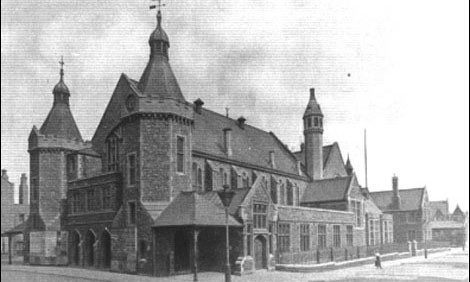
Many Mechanics’ Institutes began by renting rooms in public houses when they needed them; they also used nonconformist chapels or above shops. However, it became necessary for them to find permanent accommodation in which they could hold their classes, house their libraries and their reading rooms. In some cases, institutions chose an existing property and converted it to meet their requirements, but a significant number built their own premises.

Historical records of interest to family historians

Many of the records of the various institutes are held locally by county archives, university libraries and archives to which they eventually became incorporated or by the towns' local railway company archives. Historic England Archives holds documents and deatuls of the rapid spread of the 700 institutes across England, particularly in Yorkshire.

Records which survive for the various institutes include:

  • Minutes of Governing Bodies detailing committee decisions and operational challenges.
  • Annual reports detailing membership, finance and activities.
  • Lecture schedules and subjects including topics such as natural philosophy, chemistry and mechanics.
  • Library catalogues giving records of books and newspapers offered to members.
  • Financial records showing member subscriptions and donor lists.
This article was contributed by Ian Waller from Family History Federation.
Website by Beachshore