Before the national probate system came into existence on 11 January 1858, wills were proved or administrations granted by one of about three hundred or more different ecclesiastical courts around the country. Executing the terms of a will was the responsibility of the executors who were appointed by the deceased and specified in the will. Before they could act, all wills had to be proved by an ecclesiastical court to effectively validate the will. Where a person died intestate (without leaving a will), letters of administration or “admons” were also issued by those courts.

Originally a will consisted of two elements - the will and the testament. In centuries gone by, both were essential under the feudal system because it was not possible to devise any property acquired by inheritance rather than purchase. This was a time when the law stated that land and property land should pass automatically to the heir who was normally the eldest son. The only exceptions to this were “gavelkind” where all sons inherited equally. The testament element dealt with personal property which could be a legacy to anyone, although one third passed to the widow and one third equally to the surviving children.

Legislation affecting wills and inheritance

Over the centuries there were many Acts of Parliament which affected the administration of wills.

Statute of Uses 1535 – Up until this time, the restrictions on devising property meant that real property could be handed to trustees who could alter the law by instigating a trust deed thus allowing other sons to benefit from the will. This practice was made illegal by the Statute of Uses but resulted in a public outcry, so further legislation was introduced to rectify the situation.

Statute of Wills 1540 – This was significant legislation which gave the ability to devise property amongst other sons rather than restricting inheritance to only the eldest son. The Act also allowed males over fourteen and females over twelve to inherit and to make a will; at the same time it prevented lunatics and criminals from making a will.

It was this piece of legislation which also ended the need to have both a will and a testament as it combined them into one document. It only applied to freehold and passed to the common law heir on the death of the holder. Land held by copyhold tenure did not become devisable until 1815. The other far-reaching effect was to allow unmarried women or widows over twenty-one to make a will. Under the law, a wife could only have a life interest in the husband’s property as she could not inherit ,so would rarely be mentioned in the will. The law changed again in 1661 after which all freehold property could be devised without conditions.

Statute of Distributions 1670 - This legislation ensured a fair distribution of property amongst family members and especially the spouse where intestacy existed. The statute stipulated the proportions of the estate which widows and children should receive.

Wills Act 1837 - As a result of this Act, the age for making a will was declared to be ‘full age’ i.e. twenty-one years old. The Act barred traitors, heretics, lunatics, slaves or prisoners from making a will. A third or so of all wills made were oral or nuncupative so the law regulated the making of such wills. Because many oral wills resulted in disputes, the Wills Act invalidated the making of such wills. The only exception related to those serving in the military, provided they were on active service. It did not apply to soldiers confined to barracks.

The ecclesiastical court system

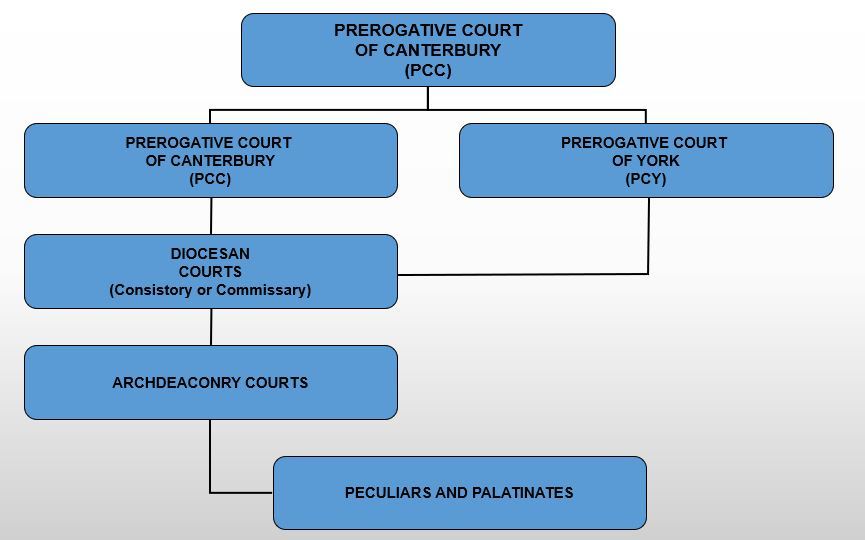
The ecclesiastical court system was a complex hierarchy with the senior courts (excluding appeal courts) being the Archbishops' Courts. The country was divided into two provinces - Canterbury and York - each presided over by an Archbishop. The Archbishop of Canterbury was senior.

The Prerogative Court of Canterbury (PCC) had jurisdiction over the province which covered the south of England and Wales, or when the deceased held property in both provinces, or those resident anywhere in England or Wales who died abroad.

The Prerogative Court of York (PCY) had jurisdiction over the province of York covering the north of England.

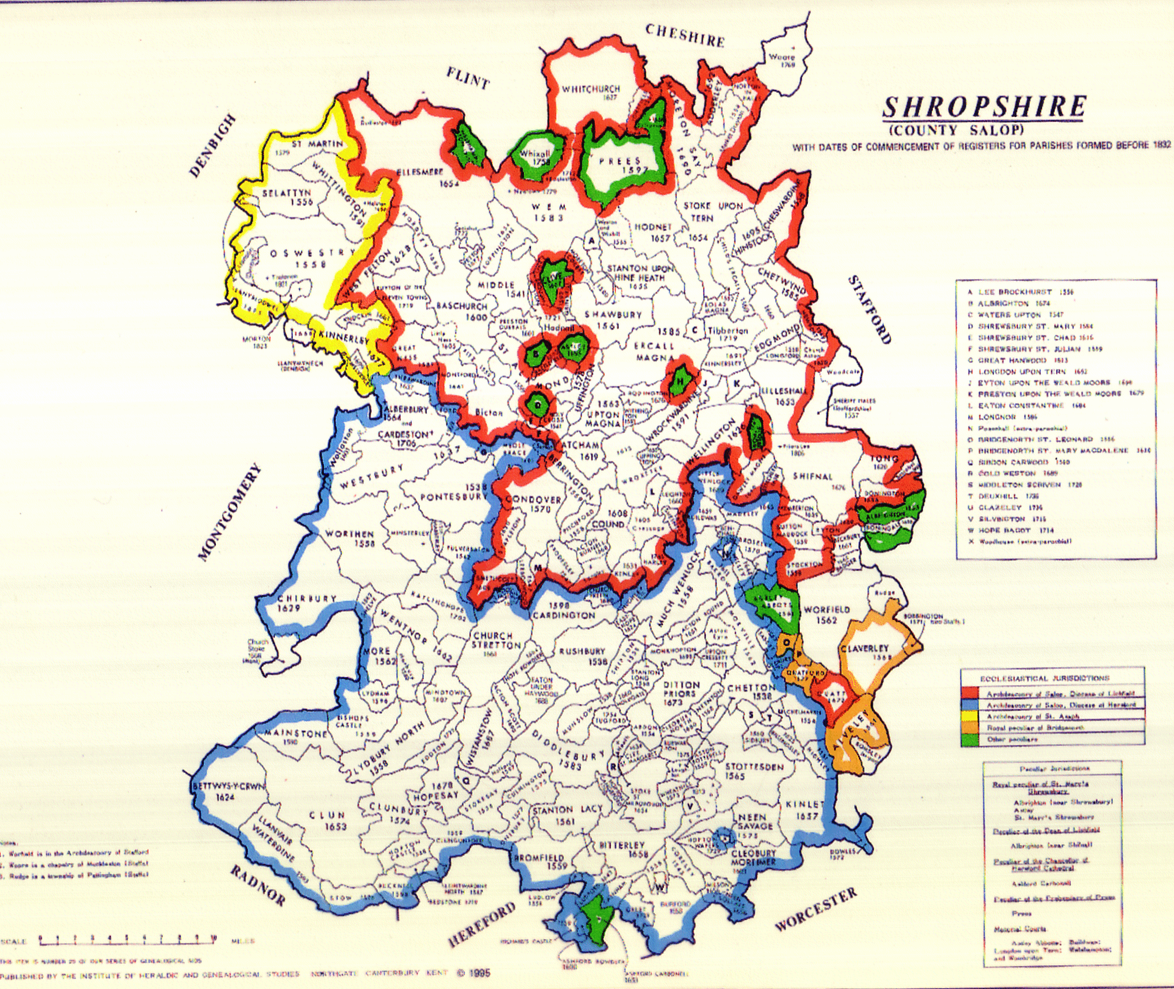
The location of the deceased’s property usually determined where the will was proved. Most probate matters were dealt with at a more local level by the Archdeacons' or Bishops' courts or the peculiars. Some nonconformists and those who held land in more than one archdeaconry in different diocese had the will proved in the Prerogative Courts of Canterbury or York. The Phillimore Atlas and Index of Parish Registers displays county maps showing the ecclesiastical jurisdictions for each parish.

As a rule of thumb therefore...

Where land and property are all in one archdeaconry, wills were proved in the archdeaconry court.

Where land and property are in more than one archdeaconry but within one diocese, wills were proved in Bishops' Courts - either consistory and/or commissary.

Where land and property are in more than one diocese but all in Province of York, wills were proved in the Prerogative Court of York.

Where land and property are in more than one diocese but all in Province of Canterbury, wills were proved in the Prerogative Court of Canterbury.

Where land and property are in both provinces, wills were always proved in the Prerogative Court of Canterbury.

Where land and property was held outside an archdeaconry but in a peculiar, the wills were proved in the peculiar court.

Province of York wills are held at the Borthwick Institute and the Province of Canterbury wills are held at The National Archives

Courts such as the Court of the Dean and Chapter often acted on the bishop’s behalf in probate matters, so records for such cases are usually filed in the records of this court as opposed to Bishops' courts.

It is thought that up to 1857, because of the complex tenures, only ten or twelve per cent of the population held sufficient property to warrant probate. So don’t assume that all your deceased ancestors left a registered will.


Pre-1858 wills search strategy

Search the indexes to the death duty registers online at FindMyPast. If this proves negative then try the following option.

Try the PCC. These can be located online and include over 1,000,000 wills proved between 1383 and 1858.

If your ancestor died in the north of England, try the PCY wills. There are indexes from 1389-1858 at The National Archives, online at FindMyPast and at the Borthwick Institute in York.

Then try locally. Identify the location of the will if held locally – usually the diocesan record offices which are often the same as the county record office, however, some county record offices are not diocesan record offices.

Use the Phillimore Atlas and Index of Parish Registers maps to locate the ecclesiastical court – available on ancestry.co.uk A colour-coded key shows the extent of the various jurisdictions and lists the peculiars.

Most diocesan record offices will hold comprehensive indexes to the wills and may be organised by the Ecclesiastical Court in which they were proved or alphabetically for their total holding. Many hold local indexes.

Above all make sure that you are in the correct place to look for the wills.

Peculiar jurisdiction

Peculiars originated in medieval England and covered an area exempt from the jurisdiction of the bishop in whose diocese it lay and they therefore controlled their own probate matters. A peculiar could be just one parish or a number of parishes, but not necessarily adjacent to each other and sometimes spanning different counties. There were different structures to peculiars with the ecclesiastical system.

  • Cathedrals under the Dean and Chapter
  • Manors
  • Liberties - former abbeys and monasteries
  • Universities
  • Royal Peculiars

Probate inventories

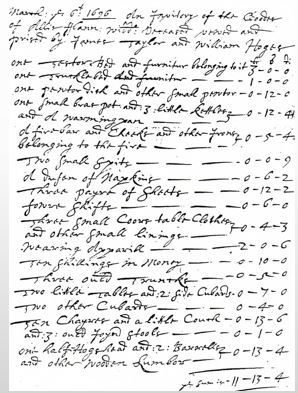
Between 1529 and 1782 it was a legal obligation for the executor to compile an inventory of the deceased’s personal or moveable goods, assets and chattels.

The assessors compiled a detailed listing of the contents of the deceased’s dwelling, tools of trade, stock of goods or animals etc. attaching an estimated value of each item. These were compiled to ensure that any unpaid debts owing at death could be financed.

These inventories, where they survive, form an integral part of the probate records. They are likely to be found attached to the locally held wills at county record offices although some inventories are held in a separate series from the wills. The inventories filed with wills proved at the Prerogative Court of Canterbury are held at The National Archives with some searchable online.

Bank of England will extracts.

These will extracts were drawn up by the bank officials after 1717 in order to keep track of those who held investments in government stock or public funds.

The officials also compiled extracts to record changes of ownership in these investments as a result of sales or transfers, death, bankruptcy or being declared a lunatic.

Most but not all of the wills extracted were proved by the Prerogative Court of Canterbury.

Letters of administration

Letters of administration, commonly referred to as admons, were usually issued if property was valued above £5. They enabled family members to dispose of the estate in the absence of a will.

The administrator drew up an account which detailed the assets and the benefactors of the estate. They do not contain much by way of genealogical value but can name family members and provide other vauable information. This will usually be in the administration act books or sometimes the probate act books.

Welsh wills pre-1858

For Welsh wills, search wills proved in the Welsh church courts at the National Library of Wales. These are available online. These can include other probate records including inventories. If the deceased held land in more than one Welsh diocese, the will would have been proved in the Prerogative Court of Canterbury.

Admon with Will.

This record grants administration to someone else when the executor named in the will is deceased or is unwilling or unable to act as executor. A copy of the will is attached to the administration.

The Commonwealth period 1642-1660

During the English Civil War the probate process was partially disbanded. Parliament abolished the ecclesiastical courts in 1653 but they were restored in 1661. Wills proved during this period were all dealt with by the Prerogative Court of Canterbury.

Guardianship

When a father or widow died leaving minor children, it was usual for close relatives to take in the children without court sanction. Sometimes the courts appointed a guardian look after the children’s interests until they were twenty-one. If a child was under the legal marriage age (twelve years for girls and fourteen years for boys) guardianship was known as "tuition." If the child was of marriageable age but under twenty-one, then guardianship was known as "curation." This terminology is often found in wills.

Appeals relating to disputes over wills

If a decision of a court was disputed, then additional records may be found among later records of the same court or in those of a court of higher jurisdiction.

There were three courts of appeal. If a dispute arose in matters from the Prerogative Court of Canterbury cases were referred to the Court of Arches of Canterbury.

Appeals from disputes involving the Prerogative Court of York were to the Chancery Court of the Archbishop of York and if needed to the Prerogative Court of Canterbury.

Final appeals were to the Court of Delegates until 1831 and thereafter all final appeals were made to the Privy Council.

This article was contributed by Ian Waller from Family History Federation.
Website by Beachshore