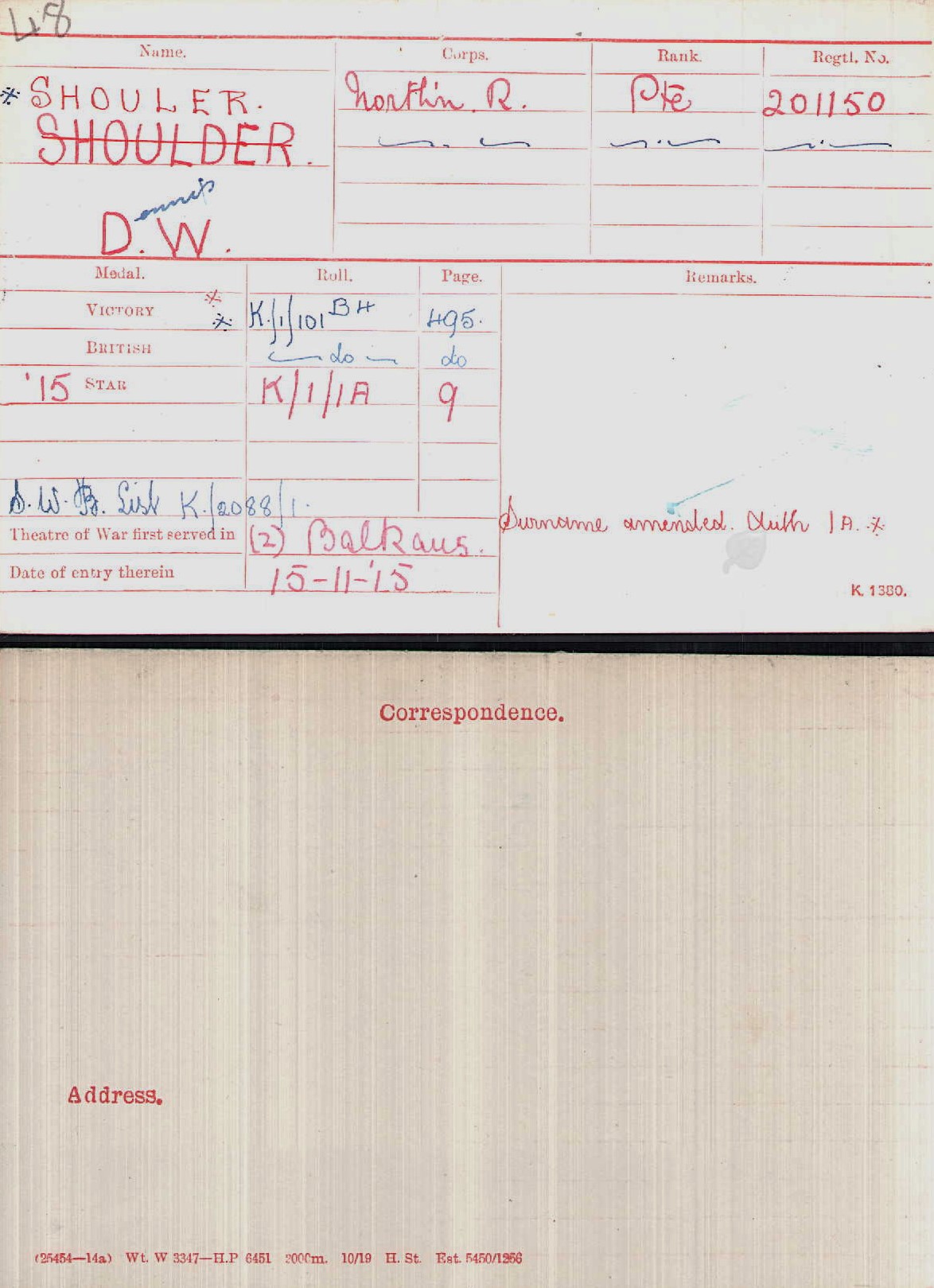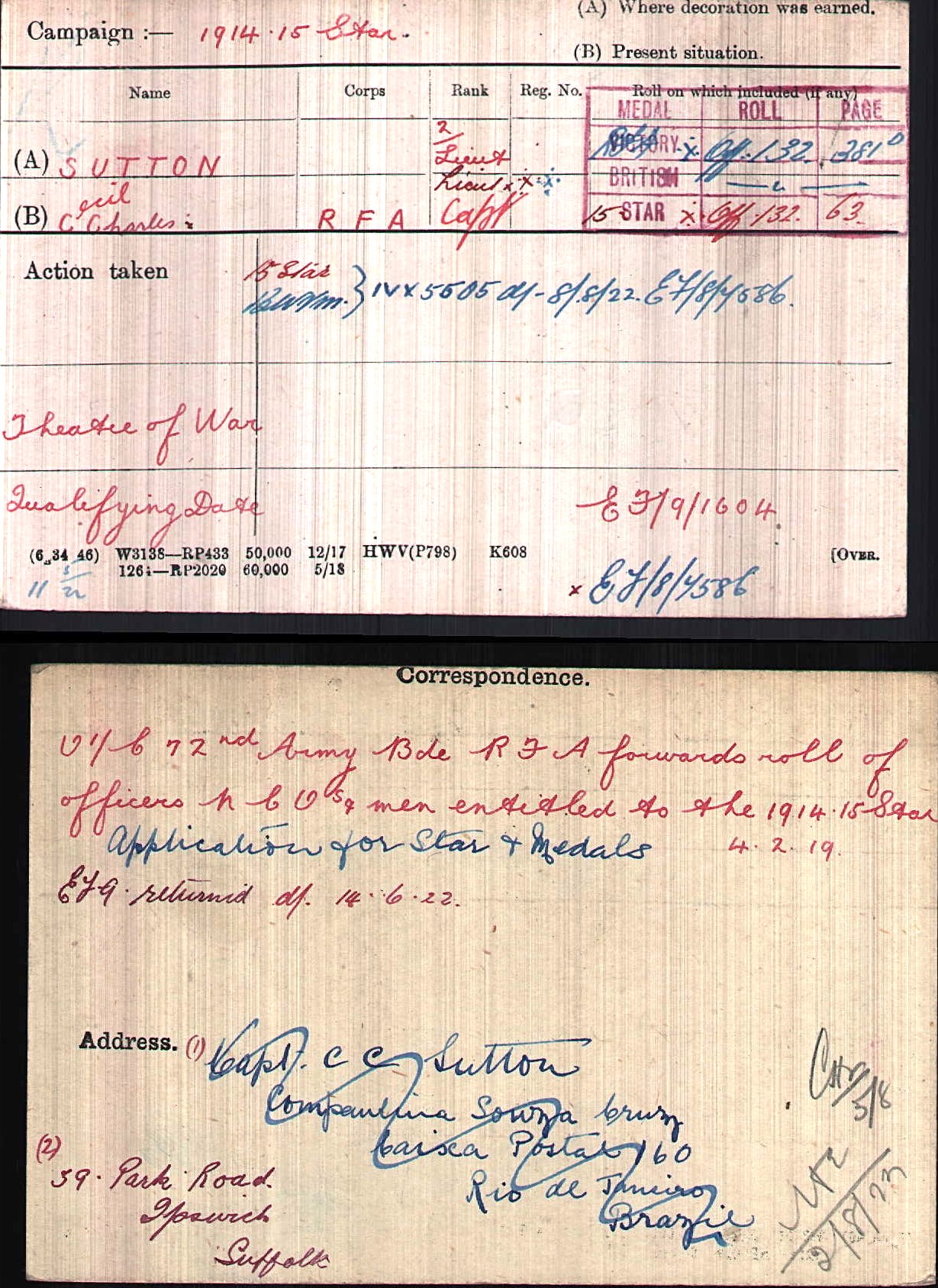





There are two variations of the standard index card. The one found most often includes common details such as the soldier’s name, the regiments or corps and sometimes the battalion or company with which he served and their regimental numbers. This information will be important to further identify other records.
There is often a ditto under the first entry of regiment, rank and number which usually refers to the fact that the person appears on two medal rolls where medals were issued at different times. If there are double entries, it may also show that a soldier changed regiments, something that often happened when battalion strengths were weakened by losses on the battlefield.
The next section of the card shows the medals to which the man was entitled. Most soldiers qualified for the Victory Medal, the British War Medal and a campaign Star. There are references alongside each medal which show entries in the original medal rolls. The Victory Medal and the British War Medal are recorded together on one roll, and the Stars on another. The entries show the medal roll and the page within the roll that provide the details.
It is essential that the rolls are examined, because they include more information about the soldier, particularly if he served in infantry, cavalry or yeomanry. However, this is not always the case, especially if a soldier served in the Royal Engineers, Royal Artillery, Machine Gun Corps, Army Service Corps, Army Veterinary Corps, Army Ordnance Corps and Labour Corps.
Some cards are marked with an asterisk or other symbol which highlight the details that are inscribed in the rim of the medals - usually name, rank, regiment. As was often the case, a man was commissioned as an officer having previously been in the “other ranks" so this is denoted by the reference “Comm”, for commissioned sometimes with a date.
For men who went overseas before the end of 1915, it was normal for the date on which the man first disembarked in a theatre of war. The date is often accompanied by a code indicating the theatre of war.