


Every census return provides valuable family history information. It is important to be aware of the information which each return contains in order to piece together family associations. Interpreting the census returns correctly will help you discover what may have occurred in the family in the ensuing years.

1841 Census

Although the detail contained is not very comprehensive, the 1841 census is invaluable when you reach the transition period in the early 1800s before civil registration and the useful Victorian censuses.

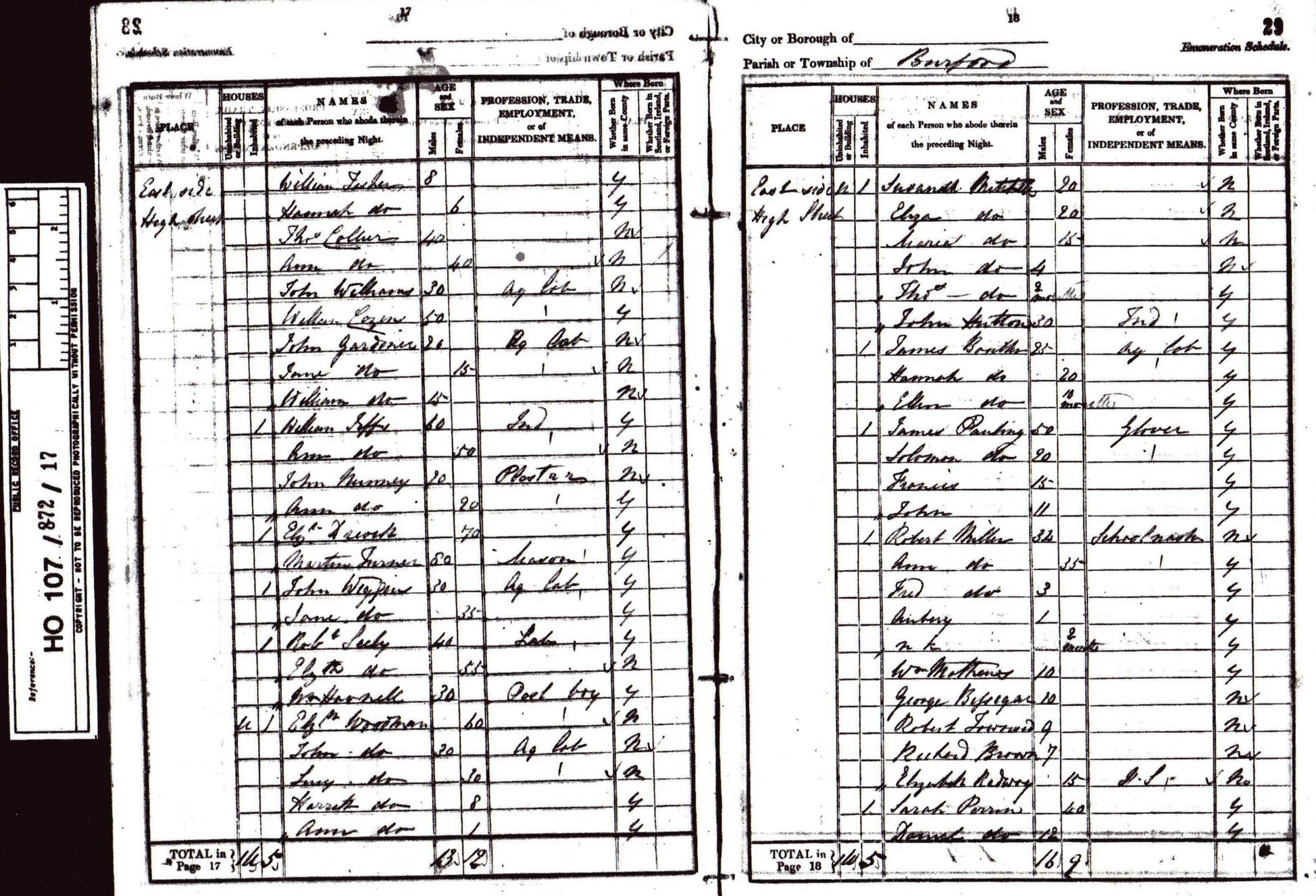
The 1841 census contains the following information.

Name

Age - Children under 15 had their age recorded accurately; for people over 15, their ages were rounded down to the nearest 5 years. For example, someone aged 63 should be recorded as aged 60. This way of recording age is unique to this census - but not all enumerators took notice of this instruction!. 

Sex

Occupation

Birth place - this shows only whether they were born in the county where they were enumerated or whether they were born in Scotland (S), Ireland (I) or Foreign Parts (P).

This census did NOT show any information on relationships, marital status and occupations.
 

1851 and 1861 Census

From 1851 onwards, the census returns follow much the same pattern with slightly differing information. They are much more informative and therefore become more useful in your research.

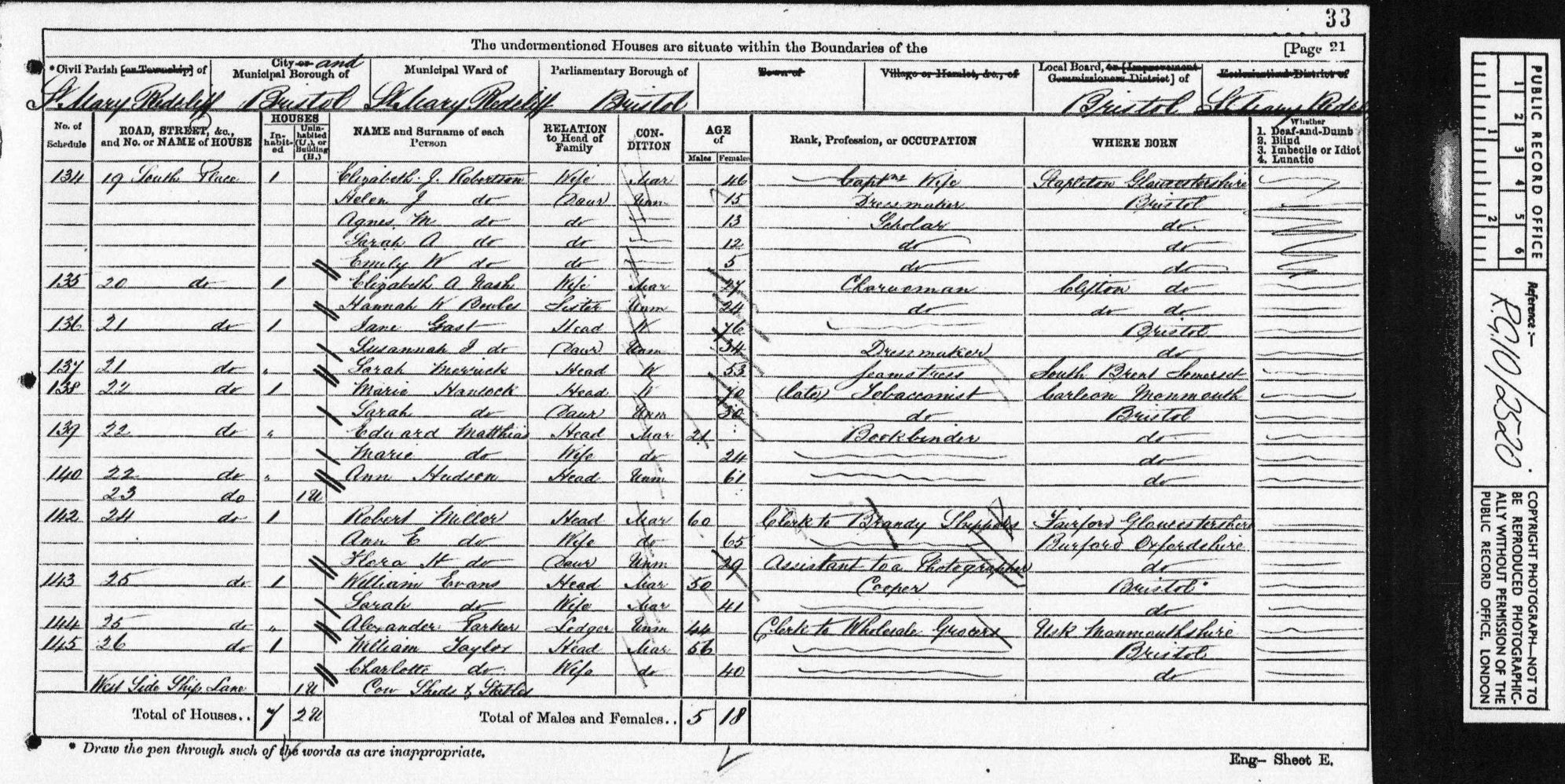
The 1851 and 1861 census returns contain the following information.

Name - middle names are sometimes identified by initials.

Relationship to the head of the household

Marital status

Age

Sex

Rank, profession or occupation

Where born – county and parish if born in England or Wales; country only if born outside England and Wales. Sometimes enumerators only recorded the county for England and Wales.

Whether blind, or deaf and dumb

1871 and 1881 Census

These censuses contain the same information as the 1851 and 1861 census except the medical conditions are expanded. The four categories were Blind; Deaf and Dumb; Imbecile or Idiot;and Lunatic. Remember... definitions of the latter are only loosely defined and leave a lot to individual interpretation.


1891 Census

Basically information is as the three previous censuses with additional information on employment.

The 1891 census would state whether the person was an employer or just an employed worker. 

On Welsh returns the census also asked for language spoken.

1901 census

I

Information as contained in the 1891 census with some enhancement to the employment questions.

Employer, Worker or Own account (self- employed).

Whether working at home.

Manx language spoken (for Isle of Man returns only).

1911 Census

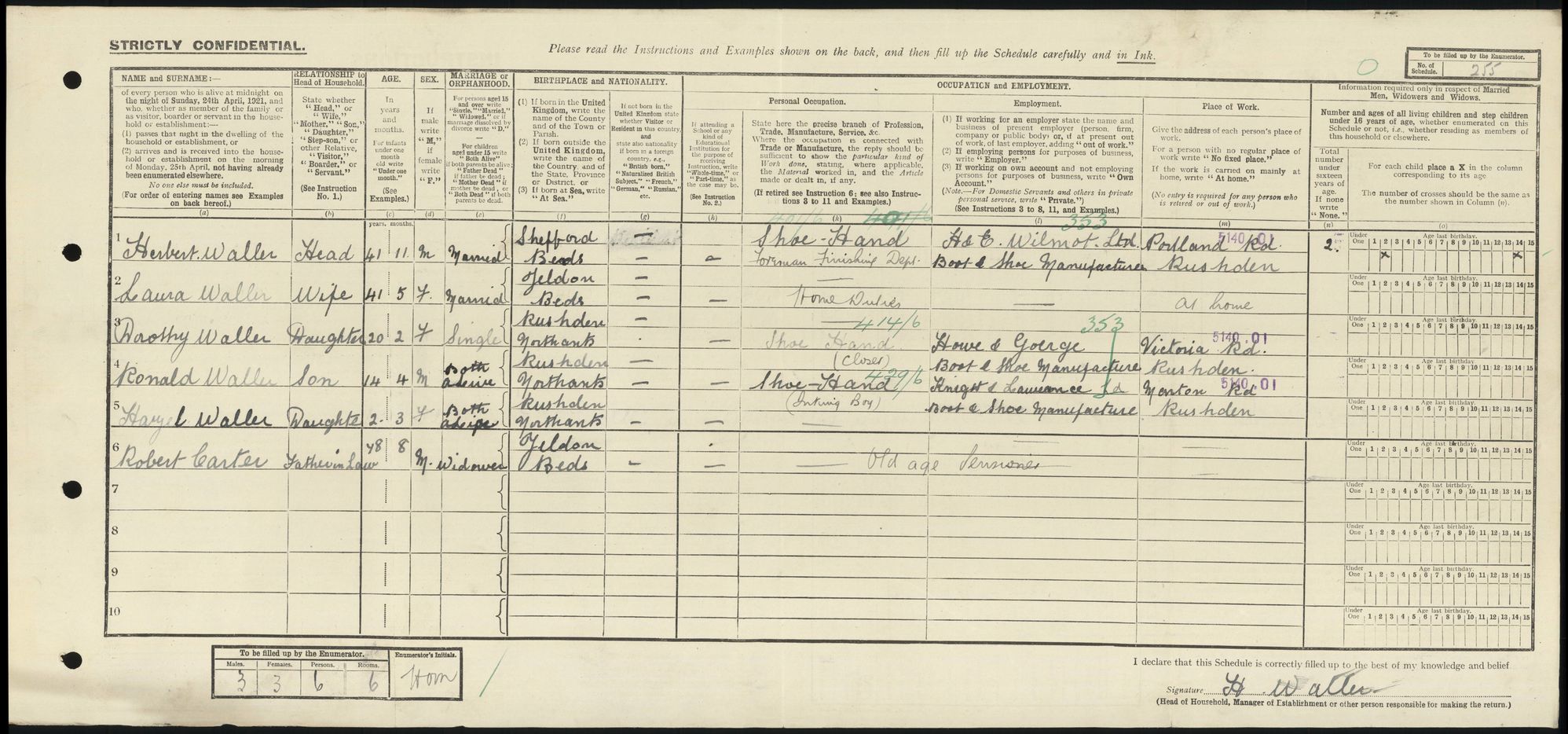
Each household had a separate page for the whole household. There is usually the signature of the person who completed the form. The information seen on individually completed household forms, as opposed to enumeration books used previously, contained the same information as in 1901 plus the following.

For married women only, the number of years of their present marriage, the number of children born of that marriage, the number still living, and the number that had died. This was frequently placed against the husband and included ALL children. (For this reason, sometimes this census has been referred to as the fertility census!)

The industry in which the person was employed, and if employed by a government, municipal or other public body, the name of that body.

Parish and county of birth for anyone born in the UK - this time including all of Ireland and If born in the British Empire which country was their place of birth.

For any foreigner - whether they were resident or visitor in the country.

Nationality of anyone born overseas including those born of British parentage.

Infirmity - the age at which the person had become afflicted.


1921 Census

Name of person

Relationship to head of household

Age - this was now required as years and completed months, rather than just years as in previous censuses

Sex

If age 15 or over, whether single, married or divorced

If under age 15, whether parents are living, "both alive", "father dead", "mother dead" or "both dead"

Birthplace, county and town or parish (or country plus state, province or district for persons born abroad)

If born abroad, nationality

Whether attending school or other educational establishment

Trade

Employer

Place of work - where each person worked, in particular to obtain information about the travelling involved in getting to work.

Number and ages of living children or stepchildren under 16

New questions asked since the 1911 census included whether a marriage has been dissolved by divorce - it was felt that as divorces had greatly increased in the years up to 1921.

For Wales and Monmouthshire, there was an extra question for each person (over three years) on whether they spoke English and Welsh, English only or Welsh only and for Scotland there were extra questions about whether each person (over three years) spoke Gaelic only and also whether they were entitled to benefits under the National Insurance (Health) Acts.


Why use census returns in your research?

It would be almost impossible to do much meaningful family history research without using the censuses. The census returns throughout the years provide so much information.  Names are most prominent together with age and birthplace, and these are all  vital clues needed to create your family tree - particularly if the birth was before civil registration.

Wider family connections may be identified too and you could find a widowed parent now staying with the family. Censuses are also excellent occupational sources; many people with the same occupation, such as railwaymen or miners, will have resided in the same neighbourhood. 

Most people start with the 1881 census and work backwards from there. So do not ingnore the censuses - you will find them immensely helpful in your research.

This article was contributed by Ian Waller from Family History Federation.
Website by Beachshore