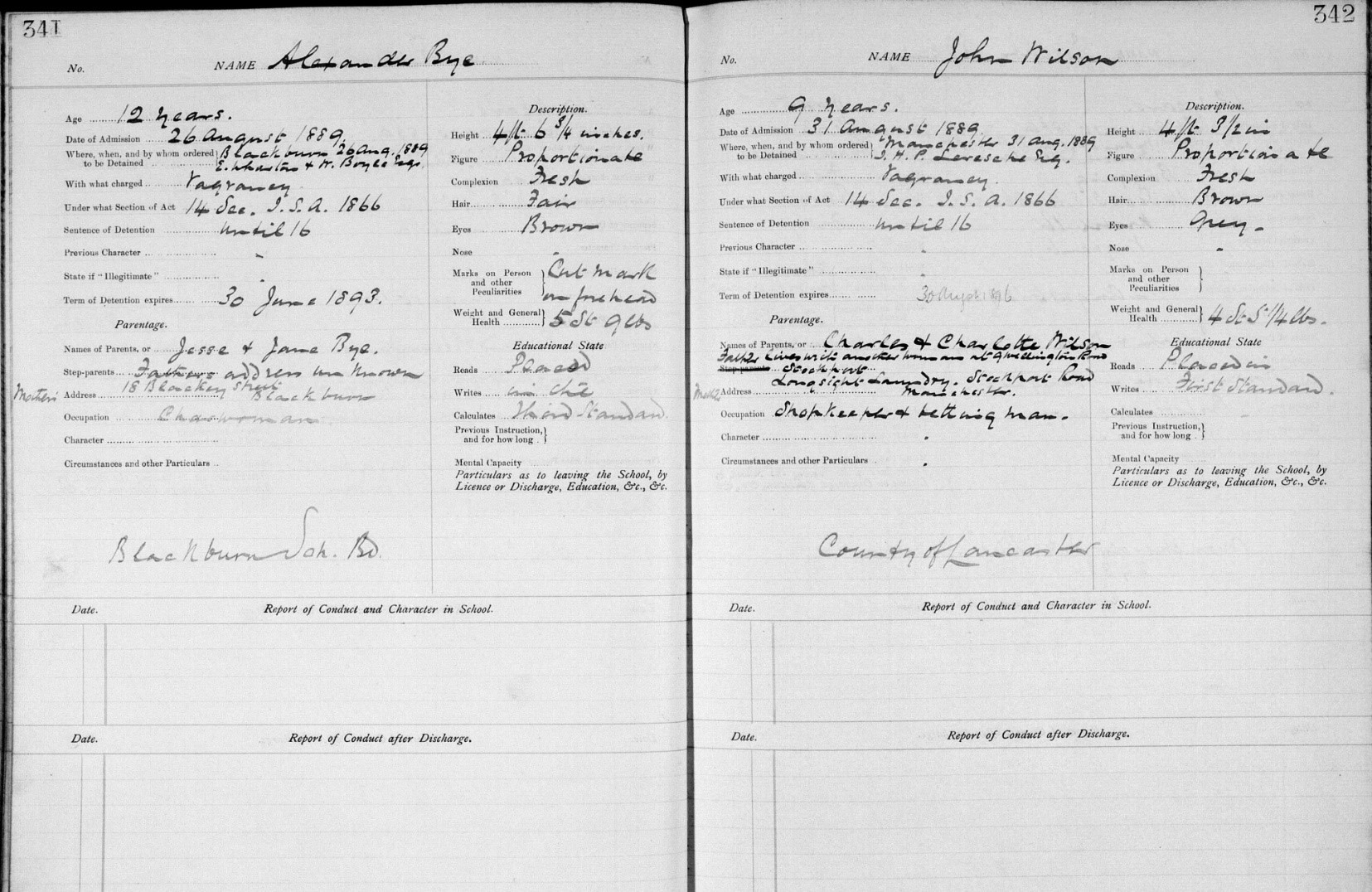



School Boards could establish industrial schools and day industrial feeding schools as a result of the Elementary Education Act 1876. The concept evolved to provide remedial care and training for children failing to attend the ordinary board schools and where their education was neglected by parents, without removing them from normal daily family life.
These schools provided industrial training, basic education and fed them but did not board them. Children had to attend for ten hours a day, usually between 8am and 6pm. Assuming satisfactory levels of attendance, any child would ultimately be allowed to return to the normal elementary schools. These schools were not established everywhere but many major towns and cities provided such facilities.
Industrial schools under the workhouse system
The provision of industrial training was common amongst the poor law unions. Industrial training was usually in the form of handicrafts for boys which quickly expanded to include trades such as shoemaking, carpentry, tailoring etc and various aspects of domestic training for girls. They also offered other secular activities and swimming, brass bands and sports.