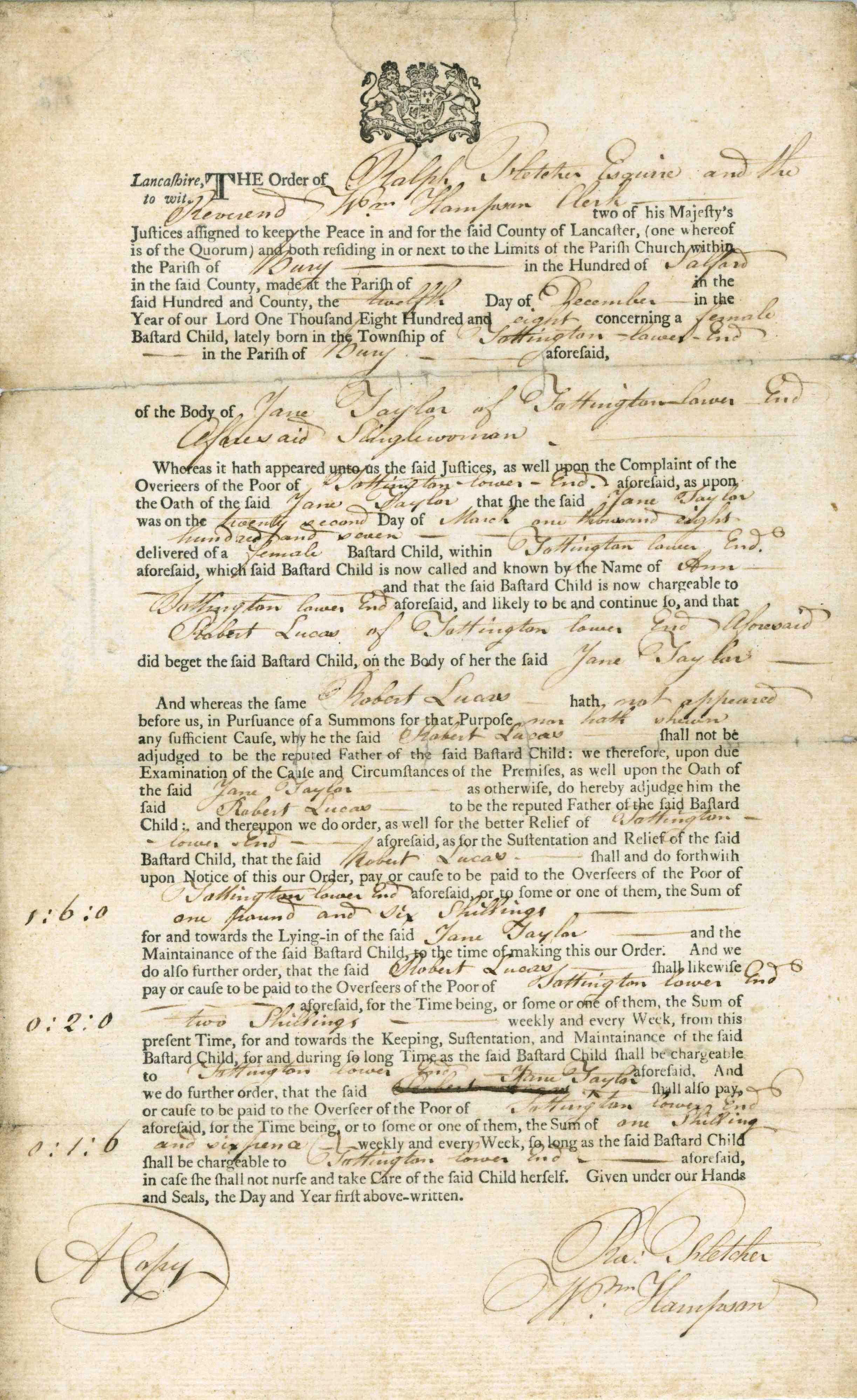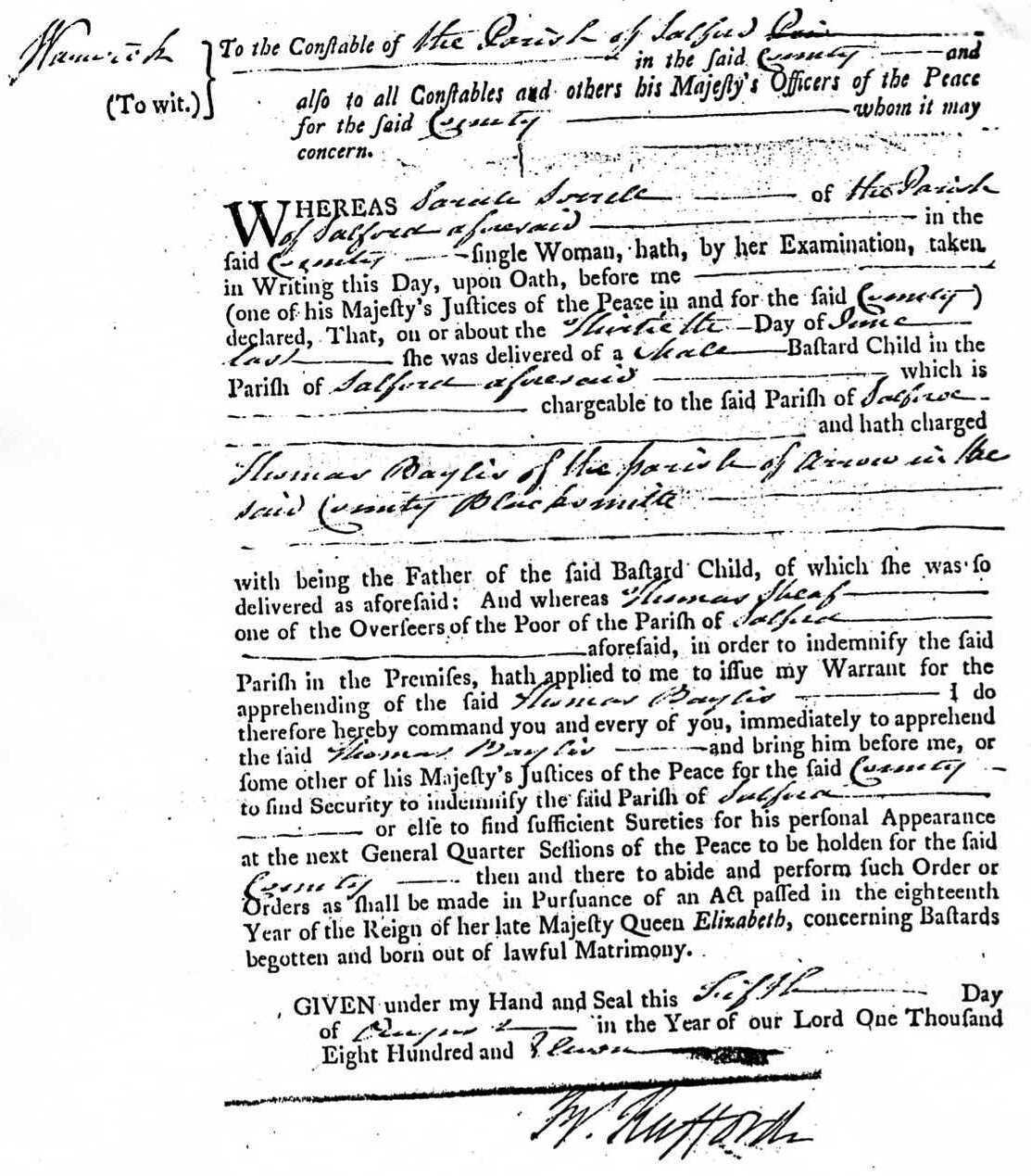





To find a bastardy record you will usually have to search for the mother or the father’s name as most never actually named the child; this was because the bastardy records were intended to identify the parents in order to relieve the parish of a future liability. Most bastardy records form part of the parish chest collections held in local record offices although some examinations can be located in the court rolls or minutes of the local Quarter Sessions court.
Even up to the last part of the twentieth century, births of illegitimate children were often stigmatised; certainly during the nineteenth century, illegitimate children may have grown up in poverty, given up for adoption (legal adoption began in 1927), or were sent to a workhouse or orphanage/children’s home. One of the most common signs of illegitimate is the absence of a father's name at the time of baptism, on their birth certificate or a missing or fictitious father’s name on a marriage certificate.
It is also worth examining census records closely for any anomalies on children’s ages. For example, if the youngest child in a large family is only two tears old and all the other children in the family are in their twenties or if the wife/mother is physically past child-bearing age, then it may well be that the two-year-old is actually the child of one of the older daughters in her twenties but is shown on the census as being a child of grandparents
The scenario that the youngest child is being raised by their grandparents was common and it was done to avoid the stigma. You can also search the census records to find out home circumstances – were they living with an unmarried mother or listed as child of someone else?
In a baptism entry in the register, the officiator was usually fairly blunt and it was common for the baptism of an illegitimate child to be annotated with such phrases as natural child of, or bastard child or base born. Some registers may even name the reputed father in the entry.