A gamekeeper was employed by landowners to manage an area of countryside; one of their main duties was to make sure there was enough game for the shooting parties and good stocks of fish for angling. The gamekeeper also actively managed areas of woodland, moorland, waterways or farmland for the benefit of game birds, deer, fish and wildlife in general. A gamekeeper could indeed be regarded as a multi-tasking man, and very often he was a promoted agricultural labourer.

What does a gamekeeper do?

A gamekeeper undertakes a variety of key roles for the estate including:

Prevention of poaching

Rearing and releasing of game birds such as pheasants and partridge

Eradicating pests

Encouraging and managing wild red grouse

Controlling predators such as foxes

Managing habitats to suit game and monitoring the health of the game

Training and breaking-in dogs. 

Brief history of gamekeeping

Up to the end of the Tudor period, gamekeepers were only employed on the Royal Hunting Forests, but in 1671 an Act of Parliament allowed gentlemen above the rank of esquire to kill game and appoint a gamekeeper to preserve game stocks on his property. In 1683 a further Act of Parliament gave gamekeepers legal powers to obtain a licence from magistrates to confiscate guns and apprehend poachers - but only during daylight hours. By the late eighteenth century gamekeeping had become a specialist profession in its own right and training establishments ran courses leading to qualifications. From 1790 gamekeepers were allowed to import partridge eggs from France to help preserve game stocks.

Gamekeeping traditions and customs

Over time many traditions associated with the gamekeeper have evolved. The gamekeeper, as well as working and managing the land in different ways, would be regarded as a well-respected member of the estate and community, and as such would have fulfilled many roles according to traditions.

Towards the end of nineteenth century it was traditional for the gamekeeper to enter the dining room at dinner and announce the day's bag - the numbers of birds shot that day.

They usually carried a large flask of brandy on shoots to be used as a pick-me-up.

He would turn a blind eye to local agricultural labourers who took the odd rabbit for the pot.  He was not so lenient with travellers or habitual poachers!

Traditionally, the head gamekeeper was always invited to family weddings of his employer's family and he would usually act as master of ceremonies.

Gamekeepers taught the sons of the landowner how to shoot.

The traditional bond between landowner and gamekeeper resulted in close friendships and confidences. Many even benefited from bequests left in wills as they would have been held in high regard by their employer.

The gamekeeper was looked to for advice on all aspects of country lore.

When a landowner died, his body was guarded by the gamekeepers when it lay in state in the landowner's house.

Game laws

Game laws were first enacted in 1671 and were primarily put into place to prevent the poorer people from shooting or snaring all edible wildlife; this would include deer, hares, rabbits, pheasants and partridges. Restrictions were also placed on who could hunt and who could own hunting dogs. The laws varied widely and were constantly changing.

Gamekeeper hierarchy

Many land and estate owners employed just one gamekeeper, but on the larger estates a whole team were required in service. As with all downstairs staff and servants, there was a hierarchy of gamekeepers too.

Head Gamekeeper - in charge of the game department on an estate

Second keeper - his assiatnt

Foreman keeper – the shoot manager

Beat keeper - in charge of the beat section

Under-keeper

Junior keeper assisting the head or beat keeper

Dog boy - trainee learning how to manage the dogs

Single-handed keeper - responsible for the organisation of a shoot

Beater - livening up the game on shoot days.

The gamekeeper's cottage

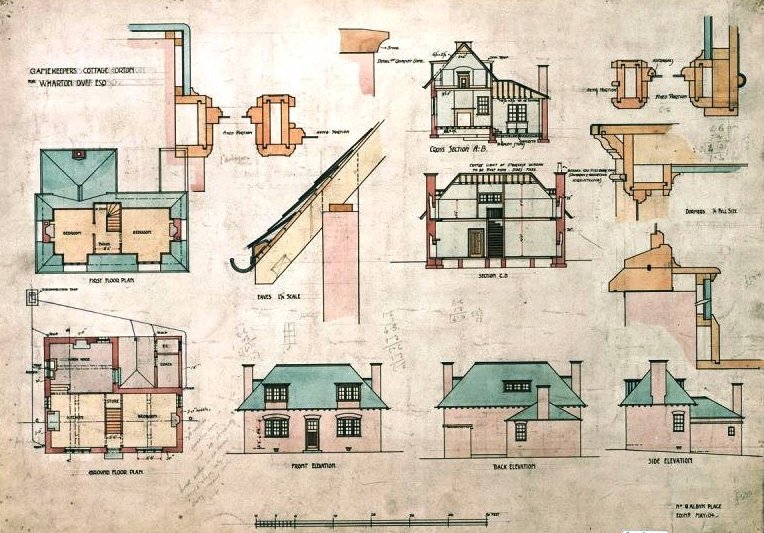
Originally gamekeepers were housed in ordinary estate cottages, usually with land attached for kennels and breeding. Purpose-built keepers' cottages existed from the early 1800s. Their cottages were usually built at strategic locations on an estate and model cottages became popular in the mid-Victorian period. The head gamekeepers were normally provided with a larger house - almost a mini-mansion - close to the main estate house or farm complex.

Moving around

From the early nineteenth century gamekeepers moved around the country, often great distances, to gain experience or seek promotion. Some gamekeepers were transferred by their landowner to a different estate; and some moved to avoid the wrath of poachers.


A gamekeeper’s pay, perks and conditions

The occupation of a gamekeeper was generally not much better paid than that of an agricultural labourer, however, the job had several perks such as a free house, fuel, clothing and transport. The keeper could sell rabbit, moleskins and fox furs as well as birds' feathers, and he also received head and tail payments for killing vermin. Many also received sick pay and a pension.

Female gamekeepers

The first lady gamekeeper was employed in the early 1800s on the Holkham Estate in Norfolk. There is no mention of female gamekeepers in the Quarter Sessions Licences but it is thought that about forty female gamekeepers existed by the mid-1800s. Many females were employed as gamekeepers during the two World Wars. Today approximately eighty-five women keepers are employed.

Game rearing and preservation

Artificial pheasant rearing has existed from as early as 350AD. Gamekeepers watched over the pheasants' nests on the estate and needed to use a pheasantry to breed the birds. An average shoot would bag between 700 and a thousand birds per day. Mechanical incubators, game farms (using broody hens) and wholesale purchase of pheasant eggs from British and French farms was needed.

Partridges have been shot by sportsmen since the Middle Ages but the sport became so popular that overshooting occurred in the late eighteenth century which significantly reduced stocks. Landowners adopted various nest management systems offering sitting money to farm workers. Male and female partridges were penned to mate and incubate the young.

Some estates employed partridge keepers for the specific purpose. Stocks declined even further after World War One.

In the case of both pheasant and partridge preservation, estates frequently prohibited shooting or coursing of game for a whole season. Such action could only occur after due notice in local newspapers and by public advertisement on the boundaries of property. It was the responsibilities of the gamekeepers to uphold this when a notice was operative.

Poaching

The various Game Acts made poaching illegal, initially during daylight; it was later extended to include times of darkness as this was the principal rural crime until the early twentieth century.

There have been cases of gamekeepers being killed by poachers. Gamekeepers were legally empowered to arrest poachers and confiscate their guns, traps and other associated items. On many estates, particularly the really rural ones, man-traps were also used with great effect.

Poachers could be hanged or transported but most of them were just fined or sentenced to a few months of imprisonment. Poaching became really big business at one time, so much so that poachers' clubs were formed to organise poaching and to pay the fines of those club members who were caught.

Gamekeepers were usually named in the court records and local newspaper reports as witnesses in rural crime cases.

Sporting and shooting parties

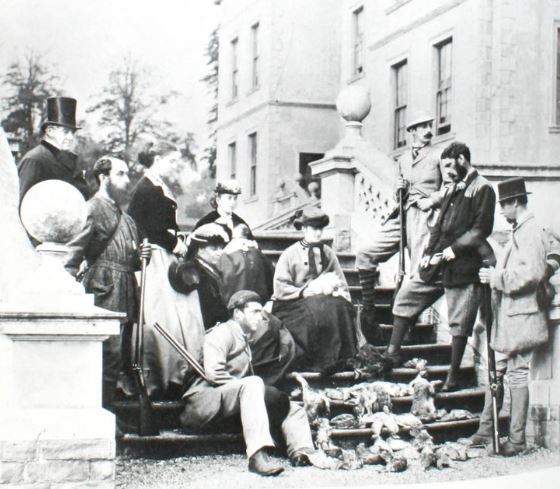
Most large estates arranged sporting and shooting parties about twice a year. They were regarded a big social occasions too. 

Gamekeepers were involved in these events; they helped organise the shooting parties and supervised the game shoots.

During the shoot the gamekeeper was responsible for the beaters and their safety; occasionally, beaters were accidentally shot. The keepers were also responsible for the sporting dogs, safety of the participants and the collection and processing of the bagged game.

Gamekeepers also had to ensure that the transport required was kept in good condition for use on the shoot; this would include the game van, shooting brakes and dog carts. Often the coachman and other estate wrokers were involved in this work too.

On the days of the shoot, gamekeepers were also responsible maintaining the game card.

Tracing your gamekeeper ancestor

There are several useful records which will help you locate your gamekeeper ancestors. Most will be held in local record offices or estate archives.

Begin with basic sources including censuses, certificates, wills (of both the landowner and gamekeeper)and gravestones.

Court records and newspapers often reported cases associated with poaching.

Estate papers including wages' books, stewards' account books, game books, employment contracts/records and photographs are also well worth researching. 

Trade directories

Militia records – gamekeepers were not exempt from local militia service.

Gun licence and game duty records.

Game records - Each estate kept a register of all game killed for the table or on an organised shoot. Gamekeepers were responsible for compiling these records and often signed or named themselves in the records. They also kept personal records, often naming members of shooting parties.

Gamekeeper deputations - These are found in Quarter Sessions records, usually in the September quarter. They exist from 1710 although in some areas the registers have not survived. Landowners with estates worth more than £500 pa had to register (depute) their keepers. A ten-shilling stamp was paid for each county in which the gamekeeper worked. Gamekeepers were often assigned to manors as well as estates. Annual or bi-annual licences were granted by the Quarter Sessions Courts to gamekeepers. It was a licenced occupation because of care of protected species and killing of vermin.

Gamekeeper journals and specialist newspapers - The profession had its dedicated journals including the Gamekeeper and the Gamekeepers’ Gazette. Gamekeepers often appeared in provincial newspapers in connection with poaching trials, usually because they had arrested the poacher. Like everyone else in a community, marriages, funerals and awards were recorded in provincial newspapers. List of Deputations often appeared in or around September of each year.

Sometimes gamekeepers were called keepers. The Keepers' Benefit Society was established in 1886 to protect gamekeepers against the rogue landowner who dismissed them because of injury or who evicted the family in event of an alleged crime. There were two levels of membership: Keeper member (by subscription) and Gentleman member (by life payment). The society provided for widows and families in event of the death of the keeper; they would receive a lump sum and a small annual pension. They also provided benefits where a keeper could prove that he was totally incapacitated because of injury occurring during the course of his work. Incomplete records of the Society are held by the London Metropolitan Archives.


This article was contributed by Ian Waller from Family History Federation.
Website by Beachshore