


Dr David Case (1938–2023) was the Parson Woodforde Society’s former Hon. Treasurer and a leading Woodforde scholar. Whilst a student at Oxford in the 1950s, Dr Case found a copy of his grandfather’s birth certificate, giving the names of his great-grandparents. This sparked a lifelong interest in researching his family history.

In this internet age, so many documents from the past are stored online and there is much help available from organisations such as the Family History Federation for those who are researching their antecedents. However, in the 1950s in order to conduct his research, David often had  to travel to London to visit Somerset House in person (later St Catherine’s House when the records were removed to there), the British Newspaper Library, the Public Record Office (now The National Archives), the Library of the Society of Genealogists and many other august bodies.

In contrast, when seeking to access relevant parish registers, David found these were stored locally under sometimes “less than ideal conditions”. On one occasion documents he wished to see were kept in a box under straw in a garden shed! Progress was slow and there were gaps in the story which were hard to fit together.  Sometimes, however, a little unexpected information from a hitherto unknown source can provide the key to unlocking the full picture.

Case’s son, Robert – A genealogical problem solved?

In his article published in the Parson Woodforde Society's journal in the winter 1978 edition, Dr Case writes: 

I became a member of the Parson Woodforde Society and a devotee of his diary when my amateur efforts as a genealogist led me to Weston [north-west of Norwich]. The diary provides the one tiny clue which allows me tentatively to extend my ancestry through the family line back from 1814 to about 1600.

Forty years later in the society's journal of April 2017, Dr Case went on to say:

I had never heard of Weston, but I quickly discovered Weston Longville, Parson Woodforde and his wonderful diaries.

From evidence found in the diaries and later investigations of records from the parishes of Heydon and Corpusty, a few miles from Weston, Dr Case was finally able to confirm that Parson Woodforde’s yard boy, who came to live at Weston Parsonage on 11 October 1800 was indeed his ancestor. My new boy, Robert Case, came to my House this Morning before Breakfast.

Thereafter, Dr Case enjoyed the numerous references to the Case family in Woodforde’s diaries.

The yard boy - Robert Case

David Case established that Robert was born in 1788. The boy was thus twelve years old when he started work at the parsonage. Robert was paid two guineas a year for his work and Parson Woodforde also bought a length of woollen cloth for four shillings to make a waistcoat for him. At first young Robert proved rather troublesome.  On Tuesday 17 March 1801 Woodforde wrote in his diary:

My Yard Boy, Robert Case, has behaved of late, I hear, but indifferently.  He has been guilty of many bad Actions of late.  A bad return for the waistcoat I lately gave him. It vexed me a good deal to hear of it..

Then on Monday 20 July 1801 Woodforde recorded a theft from the belongings of his manservant, Briton Scurl: 

Our Boy Bob Case was yesterday detected in taking Money out of Briton’s Box, which after some time he confessed the same and returned all the Money to him again very soon. I was very sorry to hear of it, as it prognosticates no very good-look-on in the World.

Fortunately, as time went on, Robert’s behaviour must have improved. He was a great help during time of harvest, when all hands were required. On Thursday 2 September 1802 Woodforde reported with relief: 

As our Folks were carrying a Cart-Load of Barley into the Barn this Morning before Dinner, with the Boy (Bob Case) upon it, the Load or great Part of it slipt (sic) off and fell into the Pond almost close to the Barn. The Barley being so very dry it slipt (sic) all at once and fell off but thank God! No great damage at all sustained, but a little Barley wetted. The Boy not hurt at all.

Robert had become a valued part of the household and completed his two-year contract with no further problems.

He spent his adult life at Acle on the Norfolk Broads just east of Norwich, where he married in 1814. This portrait of his son Robert junior, born in 1815 and painted at Acle in 1835 by Richard William Barnes, is from the Case Family Collection. The former yard boy died in 1838 aged forty-nine and has a handsome headstone in Acle churchyard.
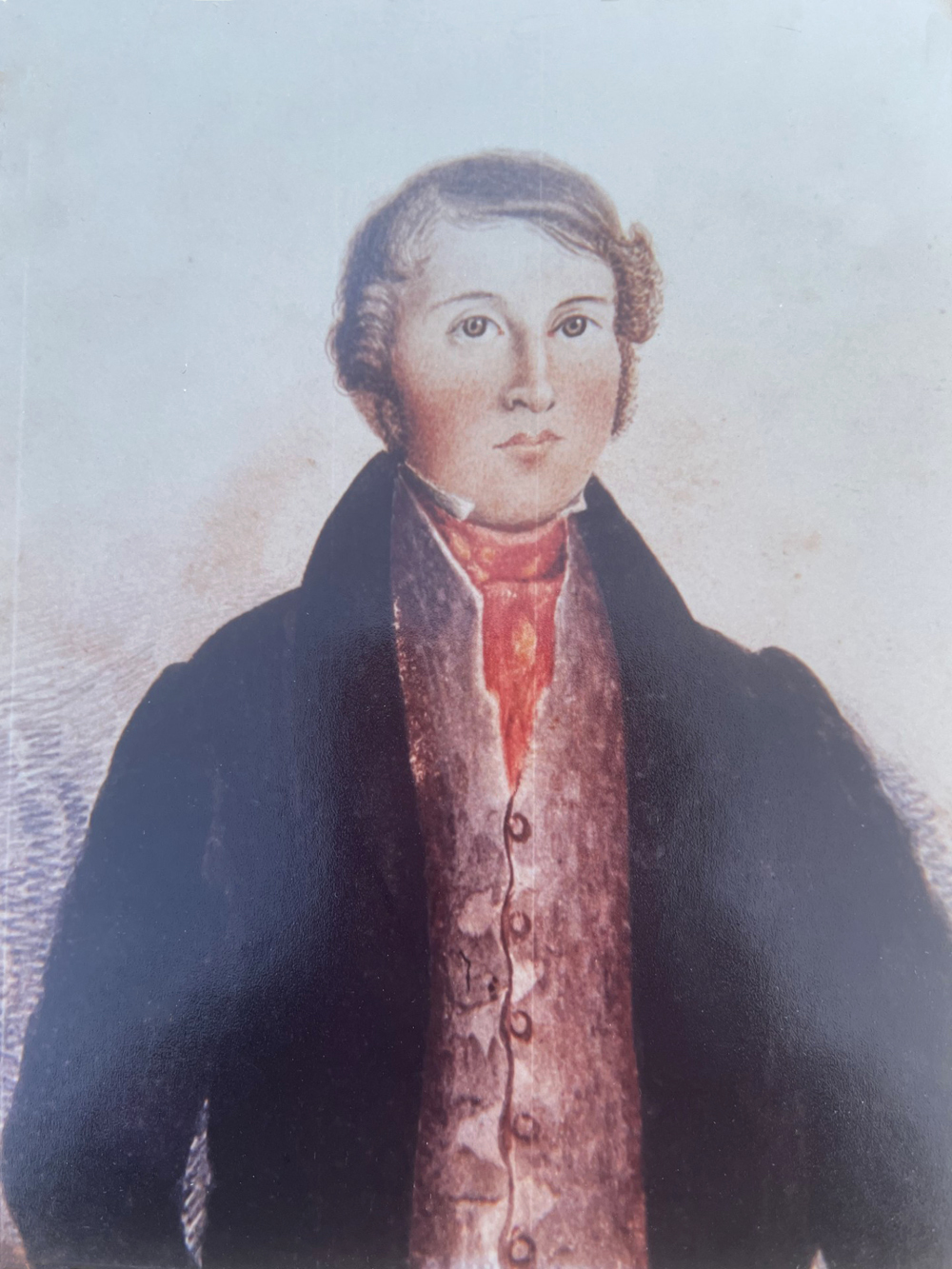
Robert Case (b.1815), the Revd James Woodforde's yard boy
The Rev James Woodforde

Parson Woodforde was born in Somerset in 1740 where his father was Rector of Ansford and Vicar of Castle Cary. On 21 July 1759, he commenced his diary with the entry, Made a Scholar of New College Oxford. 

After taking his BA degree in June 1763, Woodforde returned to Somerset where he was Curate of Thurloxton and then Curate of Babcary. Following ordination as a priest at Wells, he became Curate of Castle Cary. He obtained his MA degree in May 1767 and on his father’s death continued as Curate of Castle Cary and Ansford till 1772. In 1773 he returned to New College, Oxford and became Sub-Warden and the following year Pro-Proctor. 

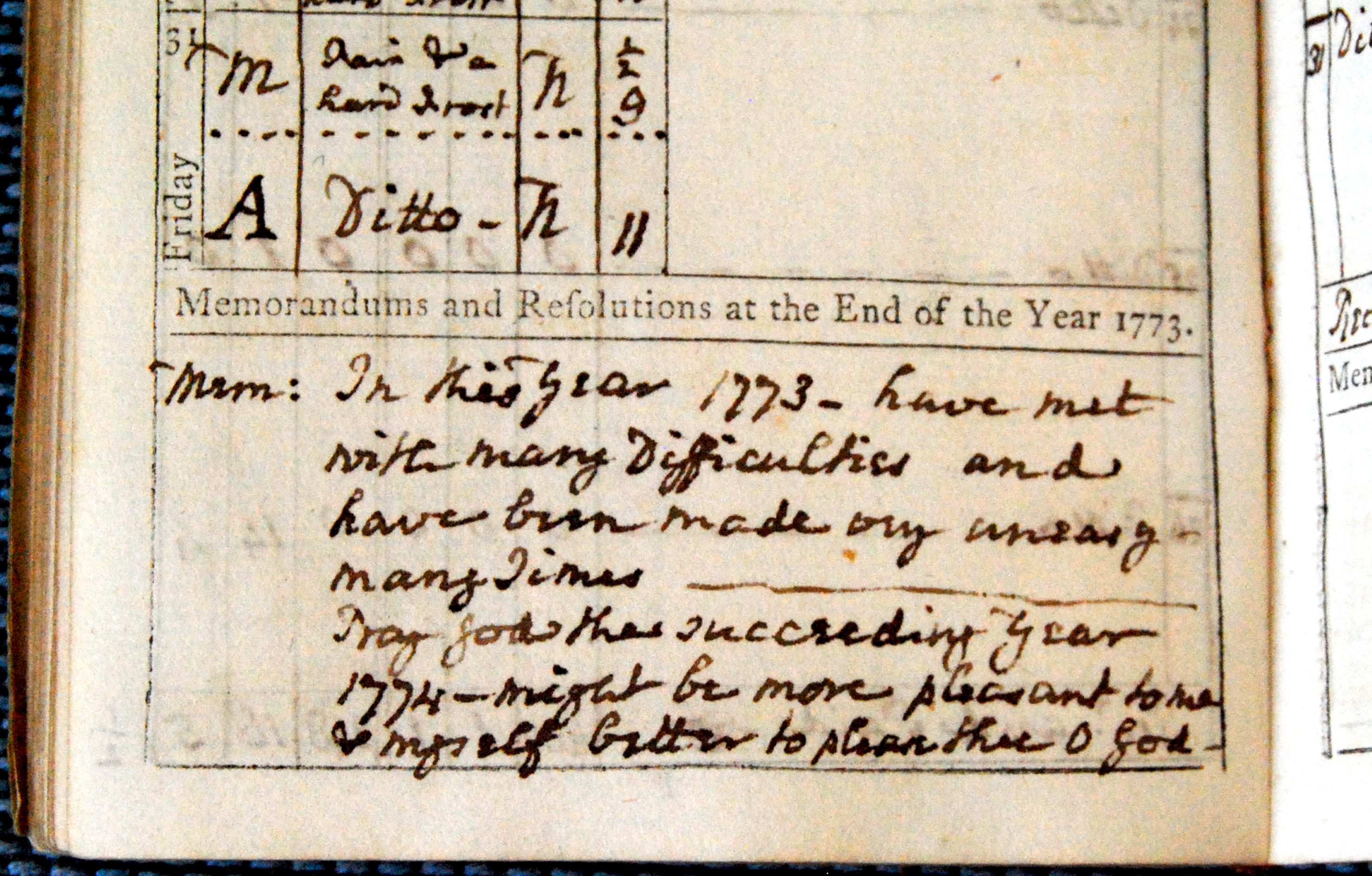
The year 1773 was a most unhappy one for him, as recorded in his neat writing in this printed memorandum book still held in the Woodforde Family Collection. He was jilted by Betsy White in Somerset, and after losing the chance of obtaining his late father's livings, he realised that his future lay elsewhere. 

In December 1774, he was presented to the living of Weston Longville in Norfolk and, following his Bachelor of Divinity degree in 1775, he took up residence in Weston Longville in May 1776.

James Woodforde lived at the parsonage at Weston for the rest of his life and died on New Year’s Day 1803. He kept his diary on a daily basis from 1759 until just before his death.

James Woodforde's unhappiness, recorded at the end of his printed memorandum book for 1773
The value of Woodforde’s unabridged diary

In his introduction to Passages from the Five Volumes of the Diary of a Country Parson, published in 1935, John Beresford writes:

The ordinary life of ordinary men passes away like a shadow.  But by means of Parson Woodforde’s Diary, we are able, for the second half of the eighteenth century, to meet and know individually and personally the very men and women who lived in country villages and country towns in that period – farmers, farm labourers, shopkeepers, attorneys, menservants, maidservants, country squires, clergy, doctors, blacksmiths, pedlars, parish clerks, publicans, merchants and travellers by many a coach.

Those named and recorded by James Woodforde from the various locations in which he lived during his life will be the ancestors of many living today. As a result, Woodforde’s diaries are an invaluable aid to those researching the history of their family. The full text of all seventeen volumes of the diaries, published by the Parson Woodforde Society, is available on the society’s website to members of the society; each volume has an index. The complete index to this edition of the unabridged diary, the only one in existence, contains more than 1,100 surnames.

Some of the Peachman headstones in Woodforde’s parish of Weston Longville, Norfolk, are seen here in 2014. The Peachmans were a farming family. Woodforde’s diary vividly records lives across society - working men and women, children, the elderly, professionals and the leisured class.


Further reading

You can read and download David Case’s articles about his quest for his ancestors from the Parson Woodforde Society’s website:

Journal for Winter 1978 (pages 5–10):

https://www.parsonwoodforde.org.uk/ux/file/ref=35&ty=DOCS

Journal for April 2017 (pages 35–41):

https://www.parsonwoodforde.org.uk/ux/file/ref=188&ty=DOCS

There is more about the Society’s online resources on the Explore Your Genealogy website, under ‘Society Records’:

https://www.exploreyourgenealogy.co.uk/the-parson-woodforde-societys-online-research-resources-1892


Some of the Peachman family graves in the churchyard at Weston Longville, Norfolk
This article was contributed by Jill George from The Parson Woodforde Society (Newsletter Editor).
Website by Beachshore