




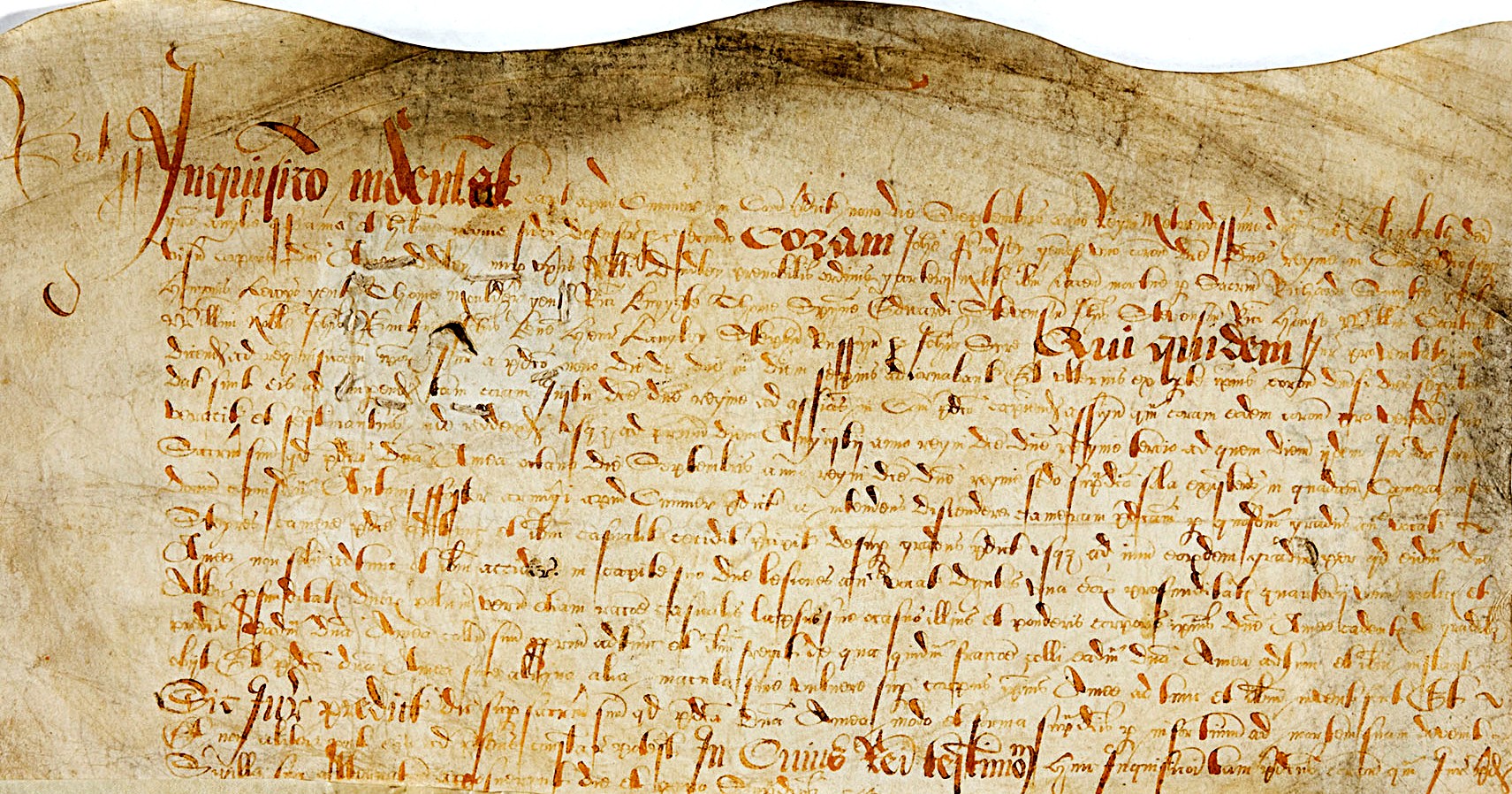
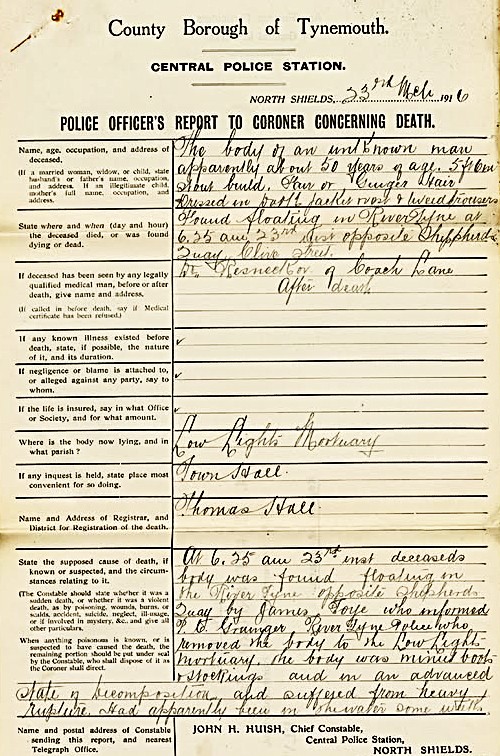
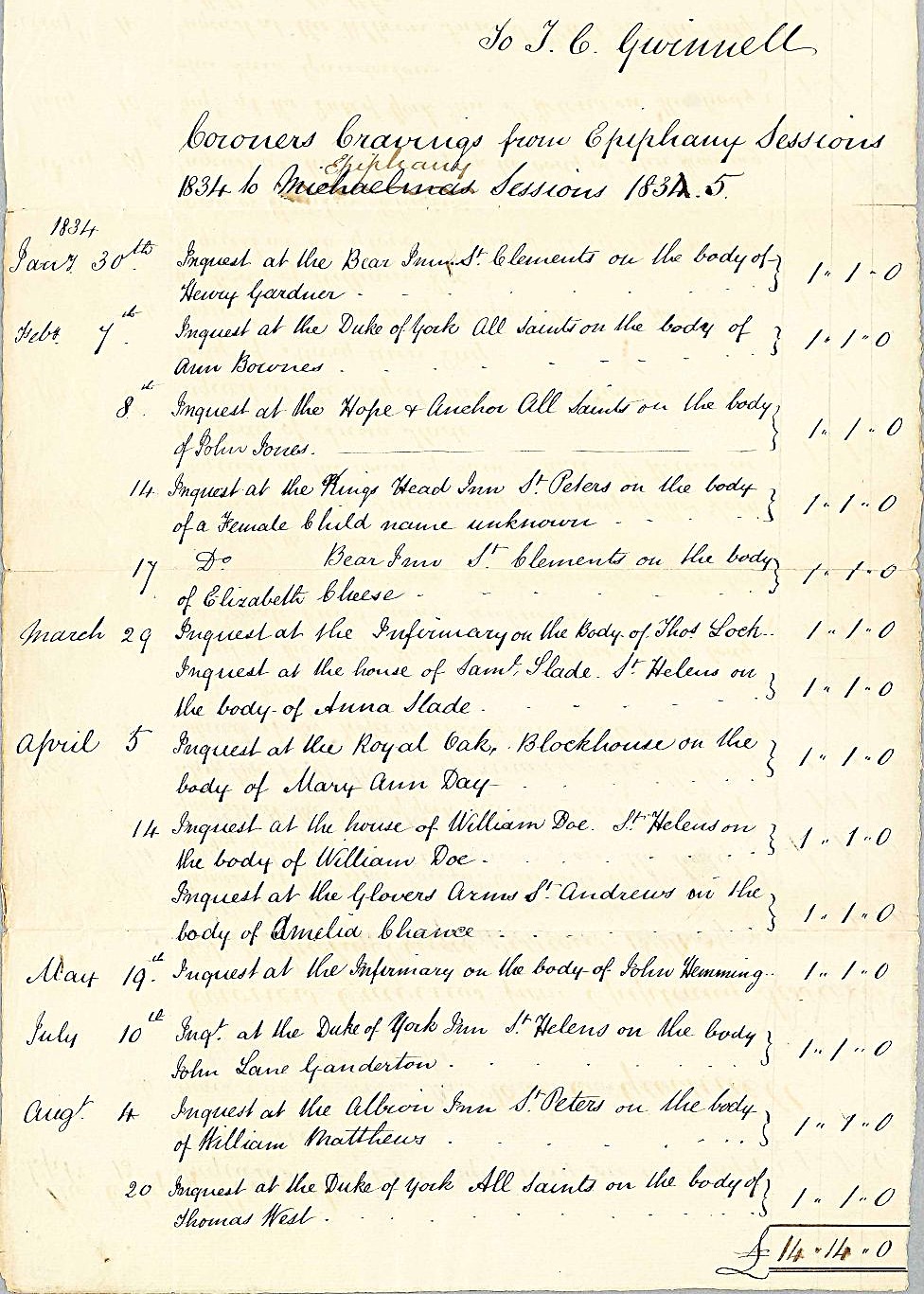
Coroners' records, mainly inquests, are vital for researching information about ancestors who died suddenly, accidentally, or suspiciously, because they will provide details which are not found in normal death certificates. These records can be quite detailed consisting of testimonies, autopsy reports and witness statements as well as personal inventories. They are mainly held at local county archives, although many have not survived. A search of inquest reports in local and provincial newspapers may also provide much needed information.

Early coroners' reports

Coroners' records originated in medieval England after the office of coroner was formally established in 1194 to act as "keepers of the pleas of the crown". Besides inquests into sudden, violent, or suspicious deaths, they also dealt with treasure trove and sanctuary cases.

Originally, coroners were local knights elected to record cases of unnatural deaths; these included homicide, suicide, and accidents. Their duties also included securing crown revenue from forfeited property from felons.

The earliest records are known as Coroners' Rolls, essentially containing findings from an investigative jury, detailing the time, location, weapon and witnesses of an unexplained death.

Between 1487 and 1752, it was customary practice for coroners to hand over inquest records to the assize judges, so the oldest surviving records are now at The National Archives within the King's Bench records as opposed to being in local archives.  Before 1733, verdicts were written in Latin.

The early records focused on legal culpability or homicide, but as time progressed, especially after the introduction of civil registration in 1837, they began to emphasize and examine the medical causes of death. During the nineteenth century, the coroners' procedures struggled to keep pace with the pressures of urbanisation, industrialisation and a growing population. The number of verdicts of suicide, accidental death and infanticide rose significantly between 1835 and 1865.

What are coroners' inquests?

Coroners' inquests are the official investigations into deaths that occurred under the unusual circumstances outlined above. The purpose of an inquest was to establish how, when and where the death occurred, providing crucial details about the circumstances. Inquests were also held for treasure trove finds.

Typical contents of an inquest:

- the inquest verdict on the cause of death

  • - coroner case files
  •  
  • - details of the deceased and date and place of death
  •  
  • - fitness statements or depositions
  •  
  • - coroner's jury findings.

Accessing the records

The first thing to undertake when researching the death of an individual is to find the death certificate as this often provides the inquest date and outlines the circumstances.

Deaths are usually registered by the coroner in such cases but it may be some time after the actual death occurred,

Most inquest records are held at county record offices or local archives where records over seventy-five years old are generally open for unrestricted research; but those records less than seventy-five years old require permission from the coroner. These records can include inquest papers, coroner's personal notes and witness statements.

If the official records are not available, then local newspapers often provide detailed reports of inquests. It is always useful to refer to both when piecing together an ancestor’s circumstances.

Unfortunately, many post-1875 coroners’ records were destroyed, some only after fifteen years, hence the need to refer to local or national newspapers reports. Pre-1875 documents are legally protected, but records may have been previously destroyed before such protection became law in 1921.

This article was contributed by Ian Waller from Family History Federation.
Website by Beachshore