



Until the end of the American Civil War in 1782, English convicts were transported to America. Before 1717, those being transported had to pay for their passage themselves. Men, women and children were transported but the sentencing was not consistent. Most convicts were convicted of larceny. Many of these convicts were instrumental in the early development of what became the United States of America. American colonies held only an unofficial function as a penal colony.

However, after 1783 America did not accept any more convicts, so England had to send their convicts elsewhere and began to send them to Australia - specifically to New South Wales. From 1615 around 50,000 convicts were sent to America and nearly 162,000 were subsequently sent to Australia. For a short period up until 1853, around 18,000 ended up in Bermuda.

Why was transportation used?

The eighteenth century was a time of exploration and trade. There was also a huge increase in crime because life in Britain was very hard. Under the 'bloody code' of the eighteenth century, there were a range of crimes punishable by death. Judges and juries had no appetite to hang those guilty of trivial crimes, so felons were given a sentence of transportation. It is probable that the pressing need to solve the problem of Britain's overcrowded jails was the main consideration in the decision to send convicts to Australia. It was also a further motivation for establishing a colony in New South Wales. City jails like Newgate prison were overflowing and many criminals died of diseases or starvation within the prison system, so even if sentenced to transportation, they may never have left these shores.

There was also social unrest at the number of people being hung for quite trivial crimes. Transportation to penal colonies offered the government an alternative to hanging. British penal settlements were then established in Bermuda 1824 to 1863, Gibraltar 1842 to 1875, Aden 1815 to 1817, Penang 1790 to 1860, and numerous settlements in Australia until the end of transportation.

With the technological advances of the industrial revolution, people moved to the industrial areas where towns and cities became overcrowded. Many people were very poor so stole food in order to survive. Minor crimes such as stealing items worth more than one shilling or stealing livestock were punishable by transportation. To accommodate the transition, Millbank prison was constructed as the National Penitentiary and opened in 1816.

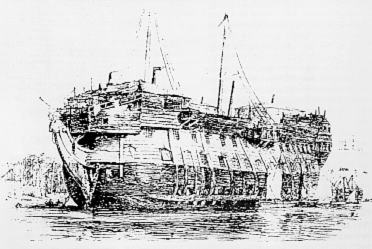
In 1843 Millbank became the main holding prison for convicts but this establishment and other prisons quickly became overcrowded too so many convicts were housed on hulks, old naval or merchant ship, that could not go to sea anymore but could still float in estuaries or harbours.

Prison hulks

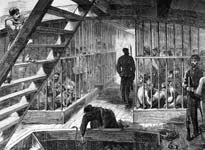
Conditions in these floating jails were untenable. The hulks were overcrowded and cramped. A hulk could be the same size as six buses placed end to end. On board each hulk there were around 300 convicts. Disease was rife on board and between 1776 and 1795, around 2,000 of the 6,000 convicts held on hulks died from diseases such as typhoid and cholera.

The convicts were not fed very well. The people in charge wanted to keep costs as low as possible. The daily diet was often made up of ox-cheek, made into soup, pease, bread or biscuits - and the biscuits were often mouldy. Tobacco was supplied as part of their ration or as a reward for good behaviour. All convicts rose at dawn and worked for up to ten hours a day having been sentenced to hard labour whilst in the hulks.

Although the hulks were supposed to be transitional, with convicts subsequently sent to the colonies, it is known that many convicts served their sentence without leaving English prisons or the hulks. The number of people being sentenced to transportation was high during the eighteenth century but the space in prisons and hulks available in Britain meant that some convicts remained in the county jails. During the later periods, the number of people being transported overseas declined significantly due to a variety of factors.

The main prison hulks were:

  • HMS LEVIATHAN - Portsmouth
  • HMS YORK - Gosport
  • HMS HARDY - Tipnor
  • HMS CAPTIVITY  - Devonport
  • HMS RETRIBUTION  - Sheerness
  • HMS CUMBERLAND  - Chatham
  • HMS EURALUS  - Chatham
  • HMS JUSTITIA  - Woolwich
  • HMS GANYMEDE  - Woolwich
  • HMS DISCOVERY  - Deptford

There were many earlier hulks moored in England, Bermuda and Gibraltar.

Records of the hulks are available both online and at the National Archives in the following series :

HO7 - Hulks moored in Bermuda

HO8 - Quarterly Prison Hulk Returns

T38 - Early Prison Hulk Quarterly Lists (c1800 – c1820)

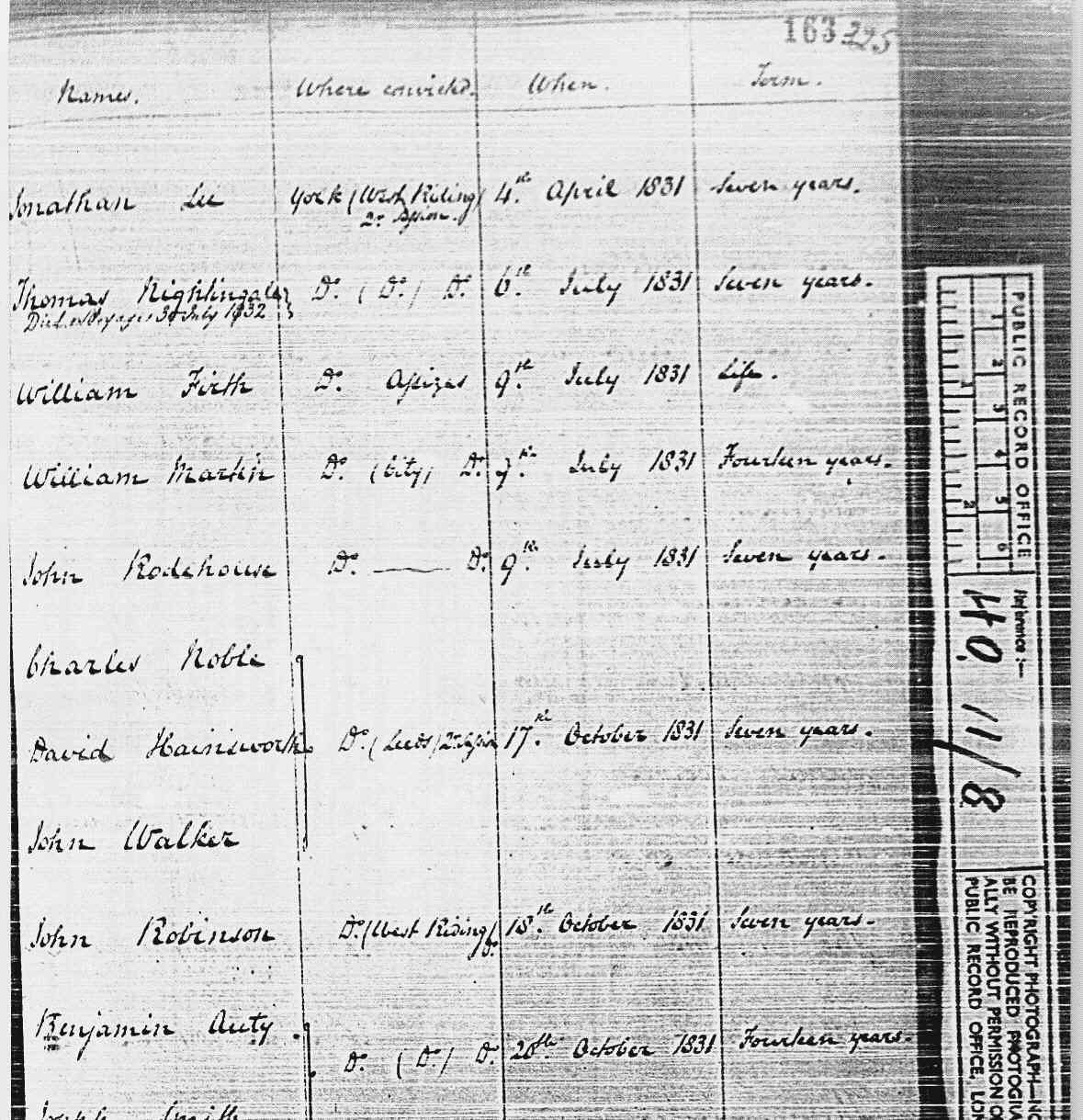
HO9 - Registers of Convict Hulks

The information in the registers includes:

  • name, age
  • offence, when and where convicted
  • sentence
  • character – from jailer and on the hulk
  • marital status
  • trade
  • how disposed of.

Convict transportation ships

Convict transportation ships were merchant ships chartered for the long voyages. The merchant ships transported convicts on voyages, primarily to Australia.

Conditions on board the ships were typically harsh and unsanitary, leading to high death rates from disease.  No specific ship type was built for this purpose; any available merchant or sailing vessel was used.

After 1776, criminal transportation was to penal settlements in modern-day Australia, specifically New South Wales and Van Diemen’s Land (now known as Tasmania). Convicted prisoners could be sentenced to transportation for a set term, seven or fourteen years, or life. Increasingly, during the ninteenth century, criminals sentenced to death had their sentence reduced to transportation.

Convict transportation registers

The Convict Transportation Registers 1787-1867 contain the details of some 123,000 convicts who were transported to the various Australian colonies in the eighteenth and nineteenth centuries.

The amount of information listed varies, but the convict transportation registers usually include a combination of the following information about your ancestor:

  • name
  • year of arrival
  • ship name (usually on first page)
  • year of conviction
  • place of conviction
  • length of sentence.

Additional comments handwritten on the original record are also included. Not all this information may be listed on every record, and in some cases, fields may be blank or missing. The amount of information varies depending on the level of detail recorded in the original source document from which it was derived.

The journey

The journey from freedom to incarceration in New South Wales or Van Diemen's Land could last months and sometimes more than a year despite often being held in prisons or hulks for months before their transportation.

The duration of the sea journey varied. The First Fleet took eight months, stopping at Tenerife, Rio de Janeiro and Cape Town to replenish supplies, but ships ultimately became larger and faster across the period. After 1810, the route of most ships took them to Rio and then straight to Sydney with a journey time of between three and four months.

The crew of convict ships tried to keep them clean and from very early on there were regulations regarding overcrowding which meant that prisoners were to be kept in a healthier situation. On the First Fleet there were only forty-eight deaths amongst the 1,500 convicts. However, not all convict transportation was so successful.

On the Second Fleet (1789-90), many convicts died because of the poor conditions on board some of the ships. Disease could  develop quickly and was exacerbated by cramped, unhygienic conditions, lack of air below decks and unsatisfactory nutrition. Punishments meted out on prisoners could also be harsh, particularly lashes with the cat o' nine tails which removed the flesh from the back leaving the victim vulnerable to infection.

Of the 1,006 prisoners who were on the Second Fleet, 267 perished during the voyage and a further 150 died shortly after landing in Australia. Most of the contractors who organised the Second Fleet voyage had been those who previously organised slaving ships and they manacled the prisoners using the same irons as were used on slaves when crossing the Atlantic.

As a result, many of the convicts could not move from their beds, which became soiled and filthy. Furthermore, one of the Second Fleet ships, HMS Surprise, was old and took on water in heavy weather, leaving prisoners soaked and cold. Disease multiplied in the festering conditions aboard this ship.

Though not as terrible as the Second Fleet, the Third Fleet also had high mortality rates - some 182 convicts died out of a total of 2,057 transported.

For most of the period of transportation, the private contractors shipped the convicts to Australia. They were required to adhere to stringent government regulations. After 1815 each convict ship was required to carry a naval surgeon to supervise sanitary conditions and convict health. After 1832 the Admiralty assumed full responsibility for transportation. During the nineteenth century, the death rate on convict ships rarely rose beyond 1 in 100.

Naval surgeons’ logs

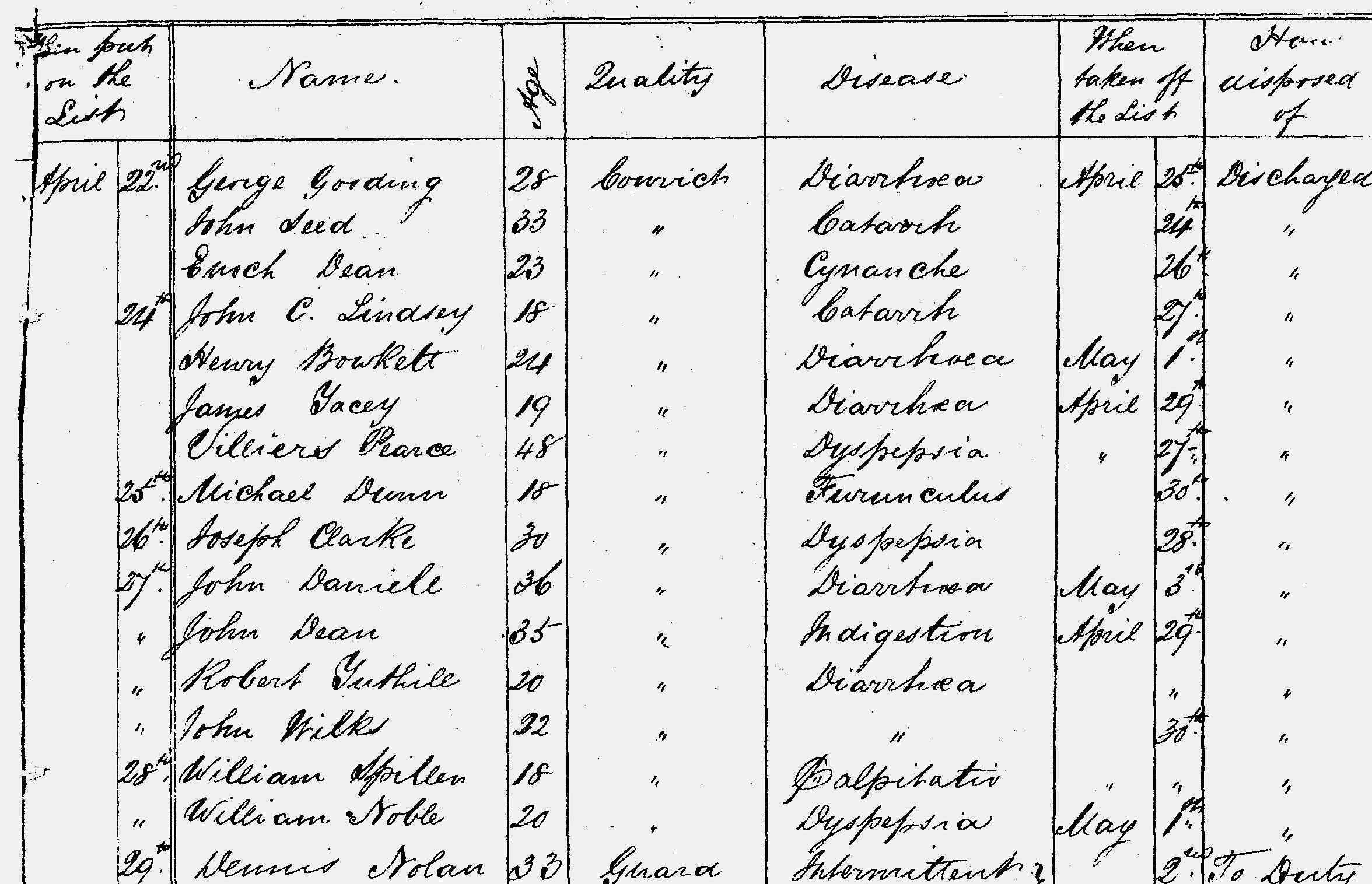
Naval surgeons on convict ships had the job of ensuring the convicts' health and survival during transport from 1815 onwards.  From that time Royal Navy surgeons were appointed to all voyages, and their authority significantly increased. They had the power to enforce better practices and were responsible for the convicts' well-being for the duration of the voyage by overseeing sanitation, providing medical care, and keeping detailed journals which are full of valuable information.

Over time these Royal Navy officers had the power to prevent unhealthy convicts boarding ships; so many remained on the hulks and were never transported. The naval officer were abe to directly influence penal reform through their journal observations on life on board the ships. The surgeons were instrumental in significantly reducing mortality rates on these voyages.

Their prime role was to treat sick and wounded convictsand manage illnesses and injuries that arose during the long and sometimes perilous voyages. They maintained sanitary conditions on the ship, including fumigating areas with sulphur; they also ensured plenty of ventilation to keep the living quarters dry and reduce disease. They implemented measures to prevent outbreaks of diseases like scurvy by controlling rations, particularly the issuing lemon juice and wine and managing the overall health of both crew and convicts.

For family historians who have convict ancestry, it is from these detailed journals that documented the health of the convicts, the diseases they suffered from, and the sanitary steps taken that they can be used to track individual convicts.

The ADM 101 journals compiled by the Royal Navy surgeons on convict ships for the period 1793-1880, are catalogued and searchable using Discovery. The journals can be searched by the name of the ship, surgeon, patient as well as by the disease or ailment. Only a selection of the surgeons’ journals have been digitised. To search for journals that have not been digitised click 'Search the Catalogue' then add ADM 101 in the Department or Series code and include the name of a ship, surgeon or patient in the phrase box. If you do not know the name of the ship on which your ancestor was transported search the Convict transportation registers (as detailed above).

Many of the pages contain diarised log entries. Information found in the entries varies by journal but can include:

  • name
  • age
  • crime convicted of
  • length of sentence
  • point of embarkation
  • native country
  • education
  • death date
  • cause of death
  • sick lists
  • day-to-day happenings aboard ship.

You may also find lists of convicts, punishments, and prisoners who exhibited good conduct during the voyage. Crew members may also be included.

These records can provide a revealing glimpse of life on board the convict ships, from escape attempts to daily rations and routine.

This article was contributed by Ian Waller from Family History Federation.
Website by Beachshore