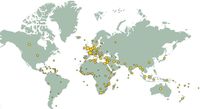
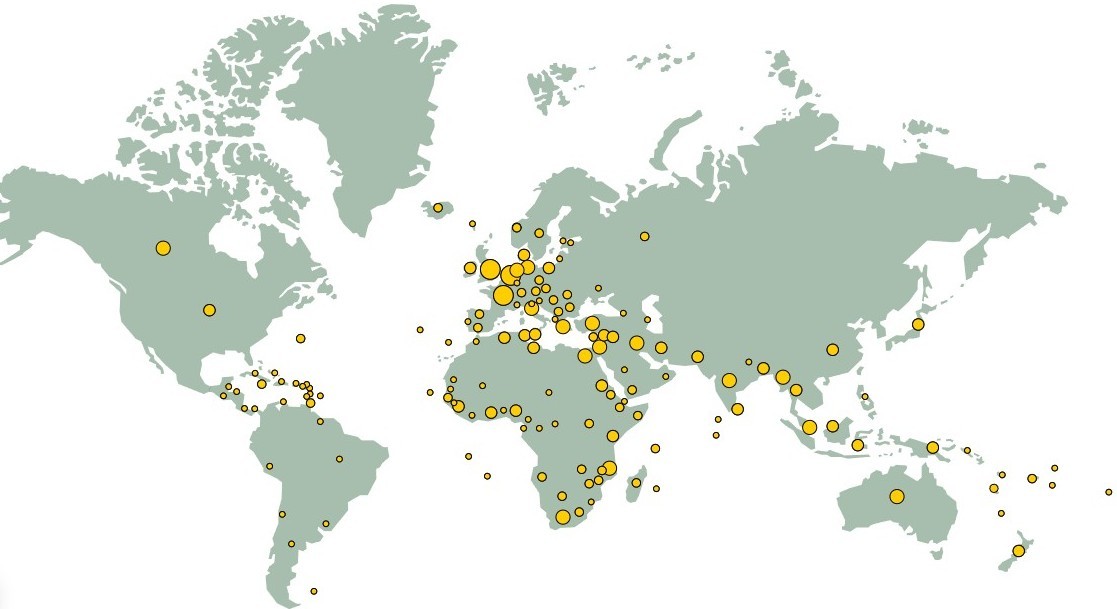
If you have an ancestor who was killed in action or died of wounds in either of the World Wars, then your research will take you to the records of the Commonwealth War Graves Commission. This was established as a worldwide organisation commemorating around 1.7 million individuals, both men and women. The organisation looks after their graves or memorials in more than one hundred and fifty countries or territories.

The commission has its own staff of gardeners and stonemasons who maintain each cemetery or memorial. It is also responsible for individual graves in churchyards and cemeteries outside their own war cemeteries.

The Imperial War Graves Commission

At the suggestion of the army, the British government created a special body to commemmorate the war dead. In May 1917 the Imperial War Graves Commission was established by Royal Charter. It was tasked with formalising the cemeteries and creating memorials to the missing and more importantly maintaining these sites forever.

In July 1917 a working party visited the battlefields of the Somme in order to formulate how the cemeteries and memorials should look.

The purpose of the commission

Within the war cemeteries and plots, standard headstones have been erected at graves If no grave was found or if people were missing, then the names of the dead are found on impressive memorials. The CWGC archives are invaluable to any family historian as their work is ongoing, continually updating records, searching for those who were missing and constructing new memorials.

When the First World War ended, the Commonwealth War Graves Commission began to commemorate the deaths of both British and Empire personnel who had died serving their countries. It was a mammoth task because a vast number of bodies needed to be buried; but more importantly, there were thousands who were undiscovered or whose bodies were not intact, and they too needed equal memorialisation.

At the outset of the First World War the government had not considered the need for an organisation to oversee the burial of the war dead or the recovery of the thousands of missing men or women. So there was no official organisation for this work. Because there was no system, the practicalities of dealing with the dead were not considered. There was no system for recording burials and there were many isolated graves or just small makeshift cemeteries. Initially the commission needed to negotiate sensitive relationships with the bereaved families and arrange the practicalities of commemoration whilst respecting the cultural differences of each country.

Burying the dead

In 1914 a Red Cross mobile ambulance unit arrived on the Western Front. Its leader, Fabian Ware, lobbied the military authorities to allow his unit to become a unit dealing with the dead. The unit was subsequently transferred to the British Army and become known as the Graves Registration Commission; but it was not until 1916 that the unit began to deal with enquiries from bereaved relatives.

It was at this point that the unit took on the dual role of marking and recording existing graves moving isolated graves or burial plots to larger cemeteries and searching for missing bodies. The battlefields were divided into sections and meticulously searched for bodies.  By 1921 thousands of bodies had been recovered and reburied but only around twenty per cent were identified from surviving name tags, uniforms, teeth and sometimes from recovered personal effects.

How the facts were retrieved and recorded

When the First World War ended, war graves existed wherever fighting had occurred meaning that locations and sites of many graves were not known with individuals unburied particularly in locations where there were intense battles. Because of this the majority of the casualty records were established. The Commission was inaugurated to a provide perpetual commemoration to those who had died during the war. To accomplish this aim the Commission had to collect details for each individual and the location of their grave or where they had died. 

The military authorities supplied casualty lists and controlled the work of Labour Companies and Graves Concentration Units which were tasked with searching for the graves and remains of the war dead and conducting the battlefield exhumation and reburials which resulted.

If burials were in established burial grounds with clearly marked graves then the graves were simply recorded and registered. In cases where bodies required exhumation and reburial attempts were made to identify the individuals. Old battlefields were searched for small cemeteries of less than 40 graves, isolated graves and the previously unburied dead. The bodies/remains were taken to 'concentration' cemeteries which were newly created or established within existing burial grounds.

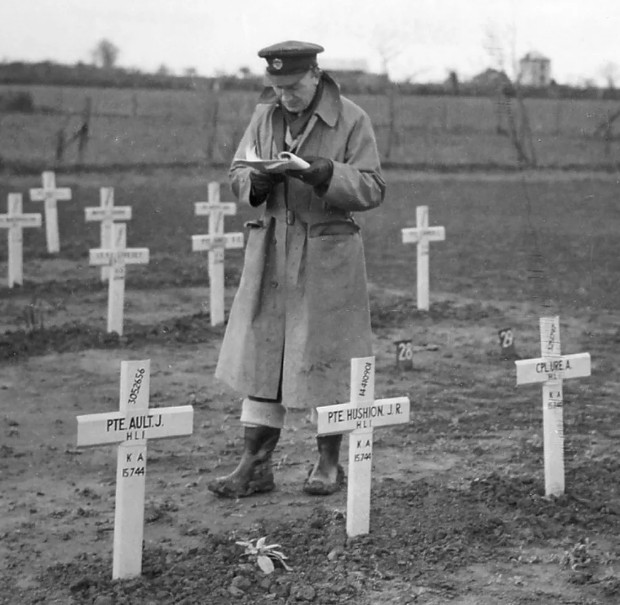
Exhumation squads were methodical in their searches because their search for anything that would help identify a fallen comrade was paramount. Battlefield conditions often meant that vital indicators were already lost because of the circumstances in which the casualty had died, subsequent actions in the same location or environmental and weather conditions which made it impossible to identify the bodies which were located. Details were recorded about each body recovered, including where the remains were found, any regimental insignia or other means of identification. Items which could be returned to the family were recorded by the Effects Branch.

These details were written on a ticket which was then attached to the remains prior to removal and reburial. The cemetery officer on reburial would record all the information that had been written on the original ticket in the cemetery burial return together with the plot, row and grave number. The forms were passed to the Army Burial Officer who sent a copy to the Directorate of Graves Registration The registration officer was then responsible for registering the new graves and for preparing comprehensive reports of the new cemeteries. The grave registration, concentration and exhumation records were passed to the Commission which form the basis of the information they have for everyone commemorated by them.

Nearly all of these documents were handwritten reports produced in the field in all conditions. Some of the records were typed up by administrative staff at base camps in the various locations. It follows therefore that there may have been mistakes so the Commission made every effort to contact the individual's next of kin to additionally verify the records.

After the wars had ended verification forms were sent to next of kin in order to confirm the details held were correct and to solicit any additional information to make sure the details recorded on the original documentation were correct or that corrections were made and the documents annotated as required. The core records enabled register entries and headstone schedules as well as other documents to be compiled.

The Commission then created digital images of the records and scanned the casualty details in the cemetery and memorial registers which form the basis of the searchable database on the website.


Headstones

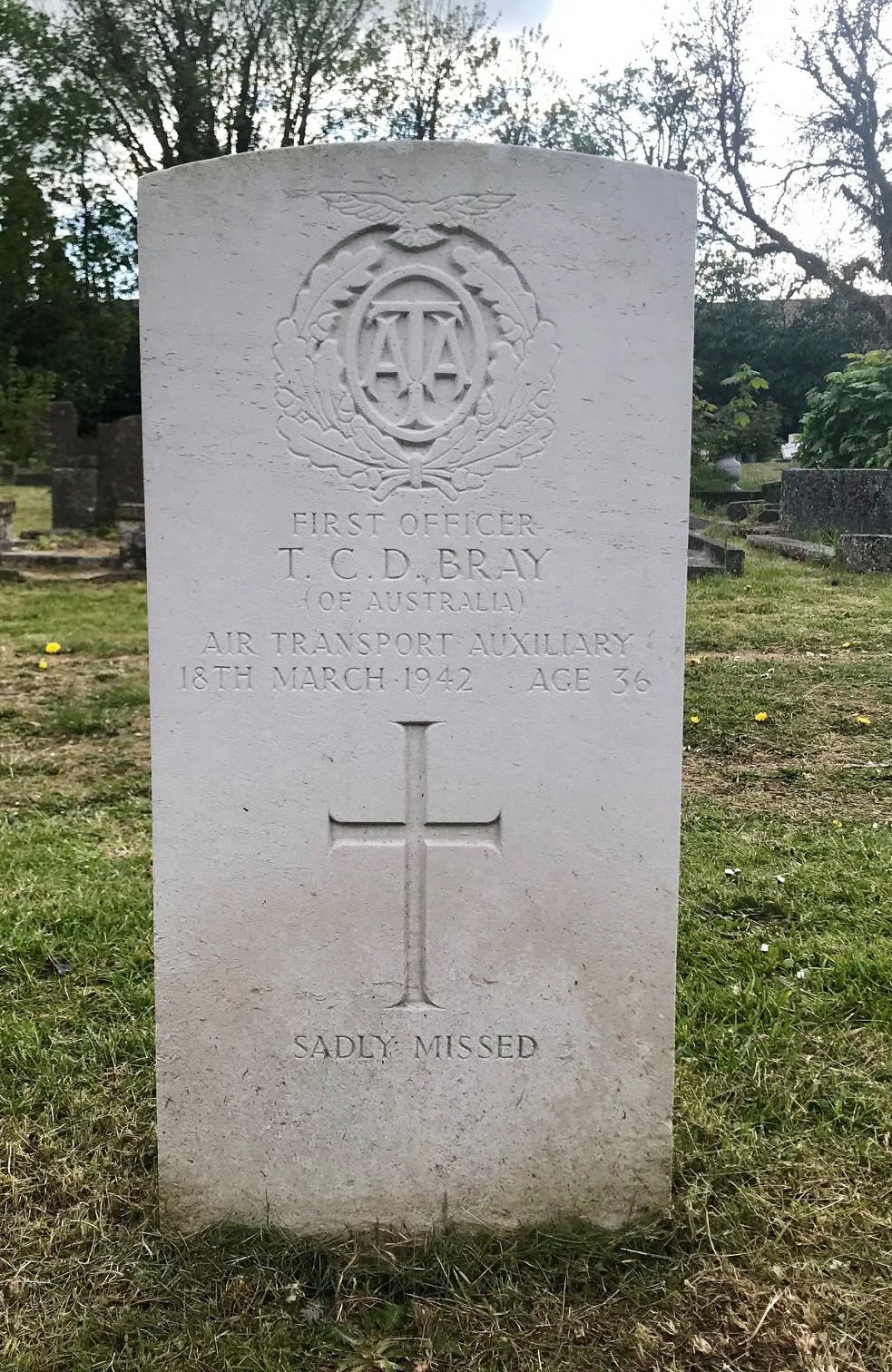
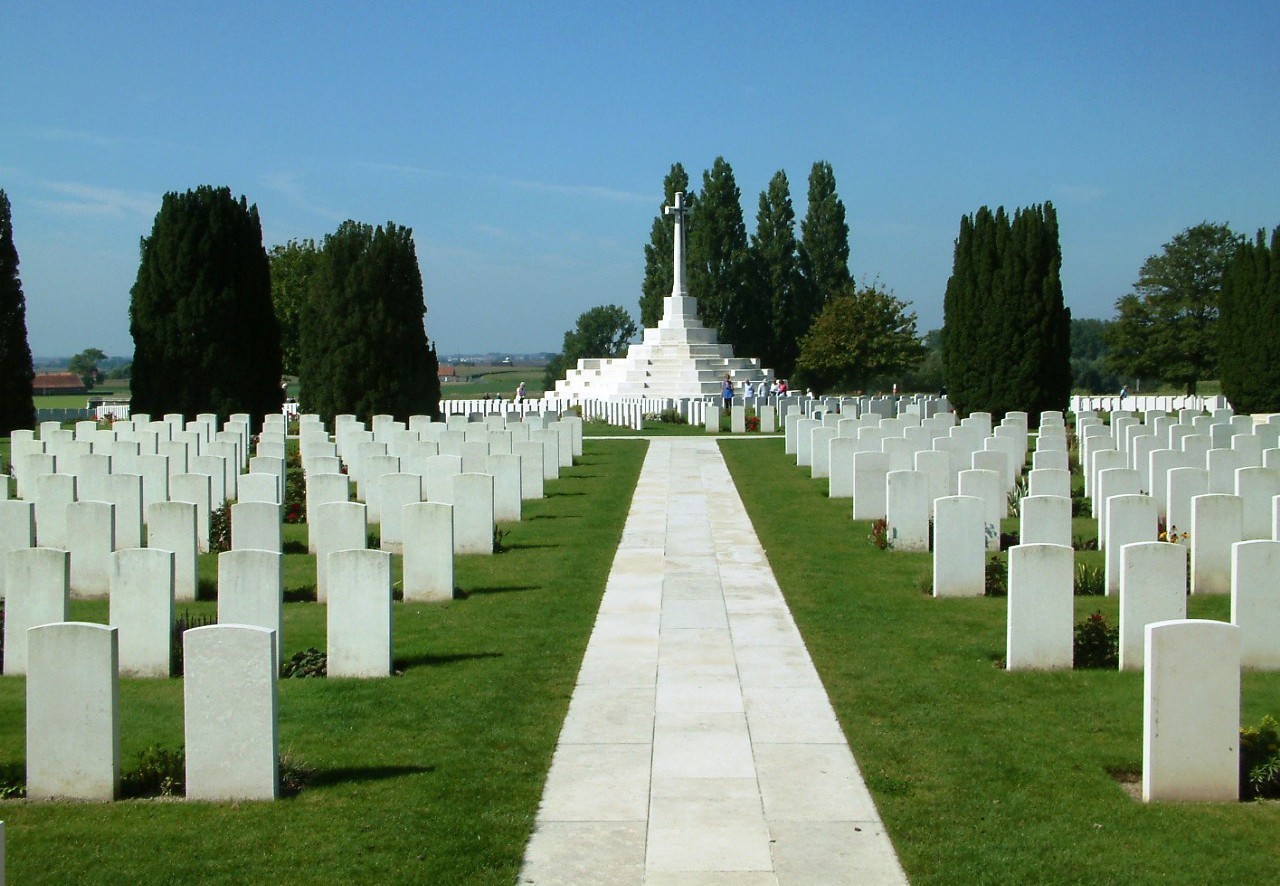
All headstone irrespective of rank were to be of uniform size and appearance. A headstone committee was set up and different shapes and grave-spacing options were discussed. In the end, a simple design was chosen intended to be neutral and allowing for the commemoration of all religious faiths and nationalities.

Because large numbers of bodies were scattered across the battlefields, usually in isolated graves or makeshift burial grounds, it was necessary for them to be exhumed and ‘concentrated’ within the larger cemeteries. It was felt that this may have been distressing to relatives who were looking to identify the location of the grave of a loved one. There was also no consistent design for the memorials to the missing. There are differences between the headstones of each dominion but only British and Indian casualties have regimental badges carved into the stone. Headstones are also inscribed in different languages.

Originally there were two contributions that next of kin could make to the headstones relating to religion and a personal inscription.

Religious emblems

Symbols for major religions feature on headstones, normally the Christian cross. However, where the religion of the deceased was unknown, the cross was included by default. There are many headstones which do not have a religious symbol, usually at the request of the next of kin.

Personal inscriptions

Personal inscriptions give the family historian an insight into those lives lost and also surviving relatives affected by the family loss. A small fee was charged by the commission to have an inscription included and the length of the inscription was also restricted.

Originally the idea was that families were able to contribute to the commemoration. Many considered this to be contentious because it meant that those who could not afford the cost were prevented from adding their personal inscription. If a payment wasn’t forthcoming, many people were still deterred from writing one.

There are around a quarter of a million personal inscriptions for First World War graves which include literary and biblical quotations offering a glimpse into family grieving processes. There were different approaches to personal inscriptions within the different Empire Dominions including Australia, South Africa, Canada, India and New Zealand - although the New Zealand government  ultimately banned such inscriptions..

Cross of sacrifice

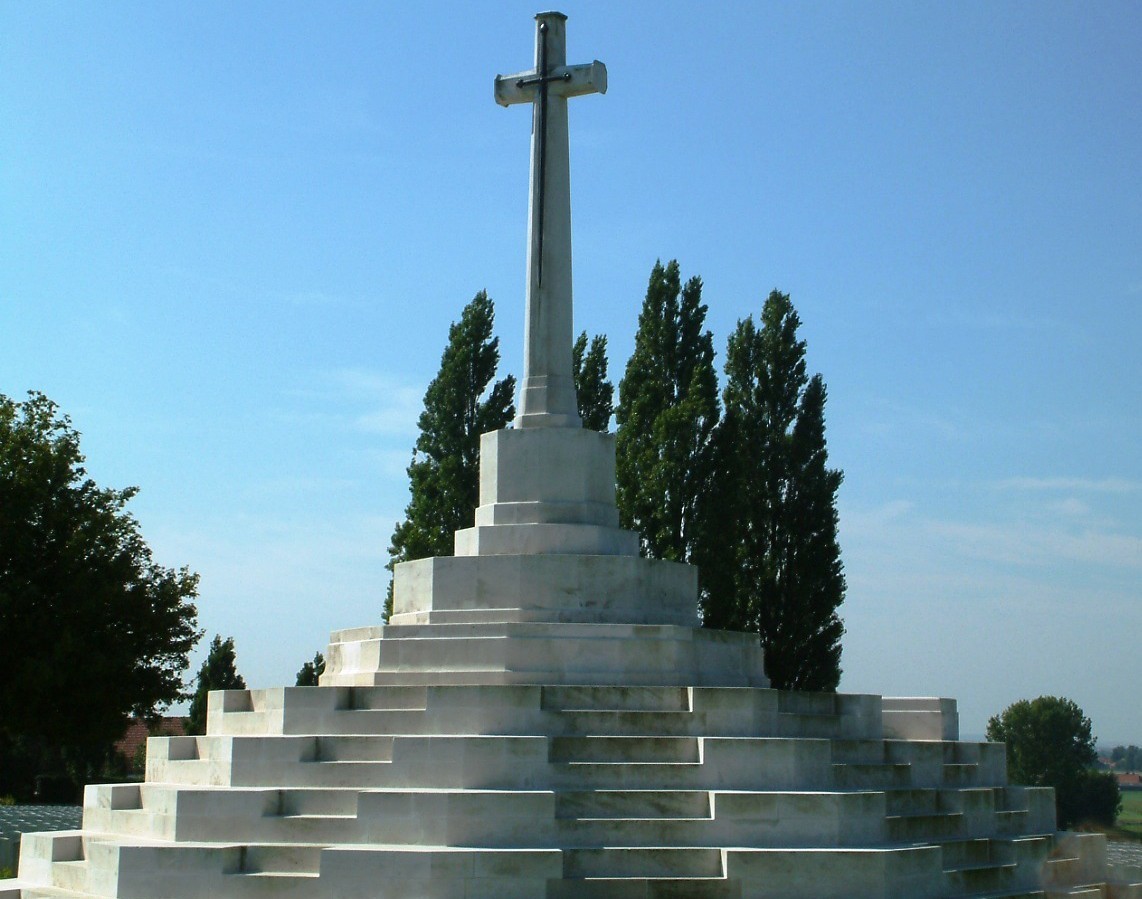
A commemorative focal point in its cemeteries was also designed. The commission devised the ‘Cross of Sacrifice’. This Commonwealth war memorial was designed in 1918 and present in war cemeteries with more than forty graves.

The Cross of Sacrifice is carved from white limestone, Portland stone or granite. A bronze longsword pointing down is on the front of the cross, positioned so that the guard on the sword matches where the cross's shaft and crossarm meet.

The position of the Cross of Sacrifice in war cemeteries varies because some cemeteries were laid out haphazardly during the war. The Cross of Sacrifice was normally the primary feature of the cemetery for visitors. It had to be visible from the road or path. If a road passed directly by the cemetery, the cross was normally close to the entrance to the cemetery but could also be located in a corner of the cemetery. Very often it was incorporated into a wall or benches and the placement of the Cross of Sacrifice often affected other design elements of the cemetery.

There were exceptions when no cross was erected in cemeteries which held a majority of Indian or Chinese graves. Also in Turkey, no cross was erected because of local Muslim influences

Memorials

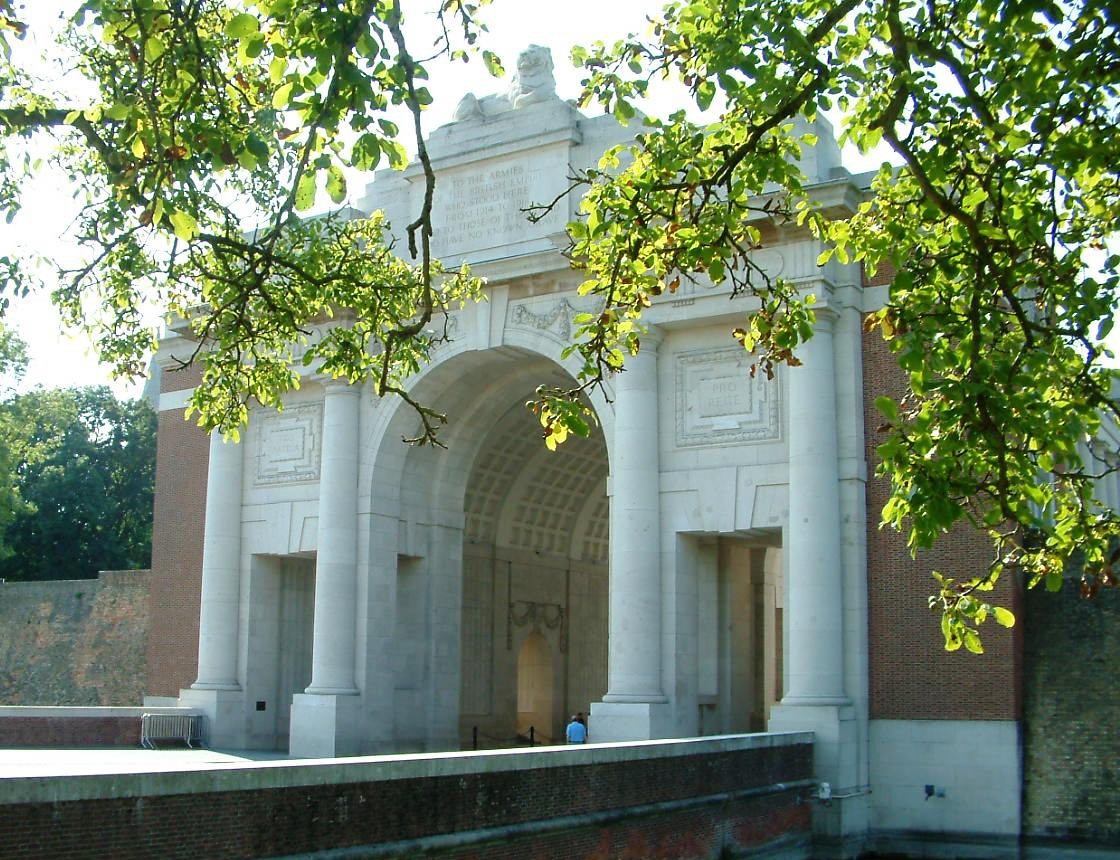
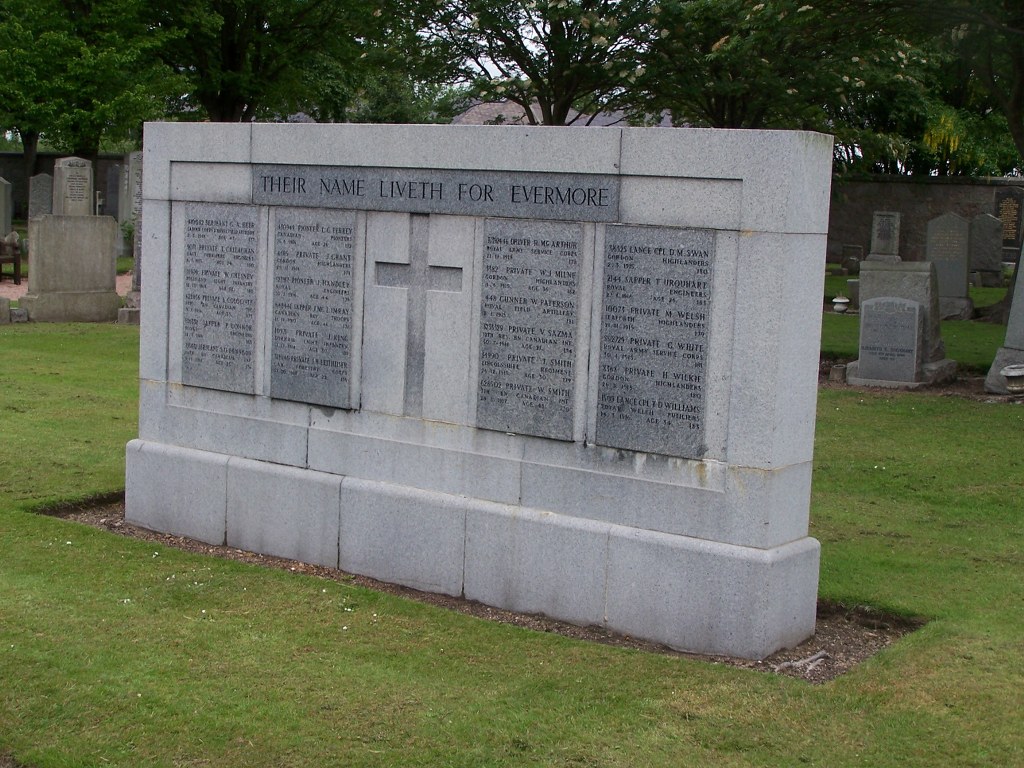
Memorials exist for the missing in both World Wars. There are numerous CWGC memorials to the missing from other battlefields as well as memorials to those lost at sea and in the air. There are also memorials to the missing from other including Germany and France.

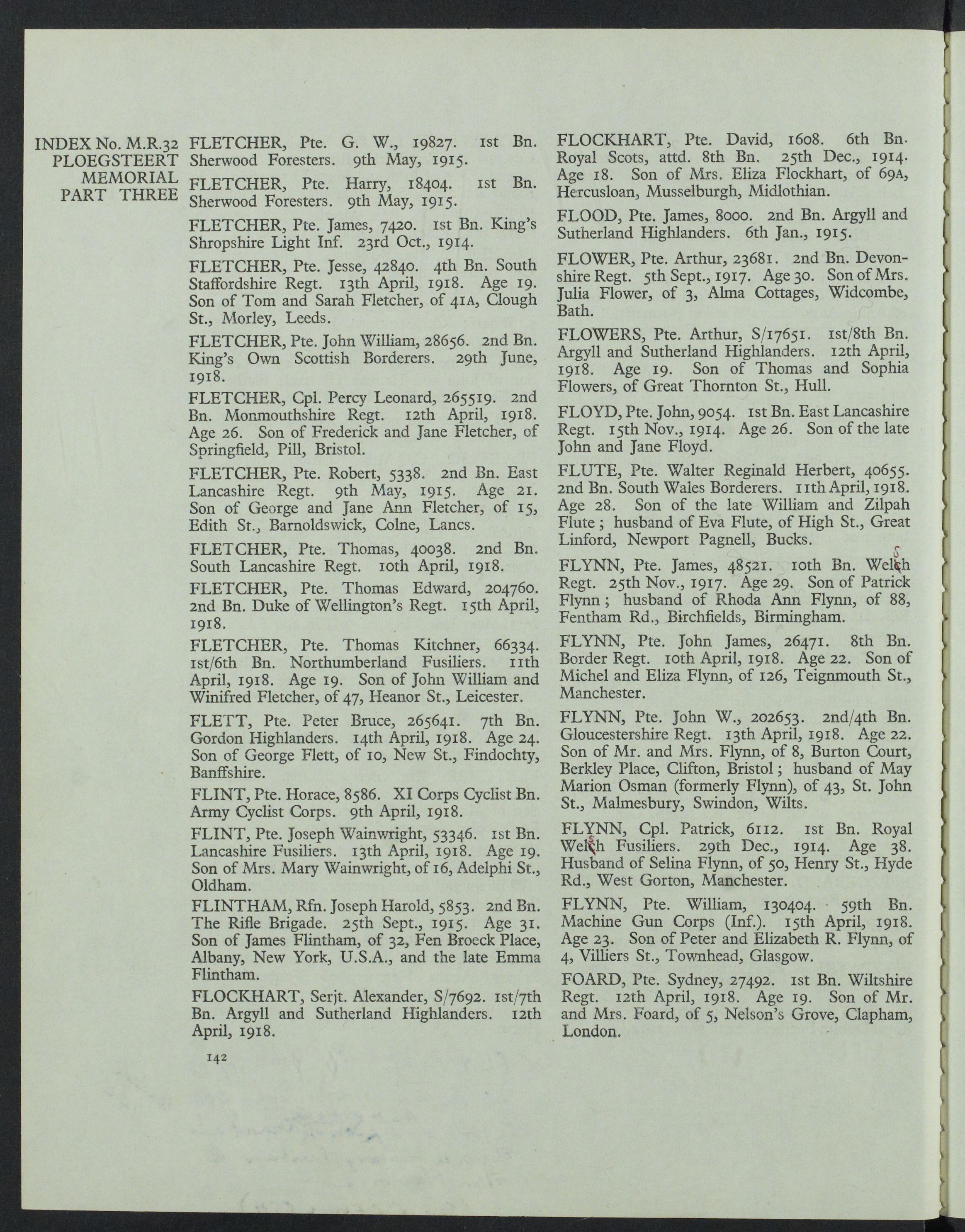
Listing the names of dead soldiers on memorials began with the Boer Wars although the practice was systematically adopted after World War One. The largest number of casualties existed on the Western Front in France and Belgium where over twenty different memorials exist having been constructed between the end of the war and the late 1930s. Over 300,000 war dead are commemorated on these memorials.

Each dominion took a different approach to memorials. Some memorials were organised by nation but most United Kingdom and South African forces are named on memorials designated for the areas where they lost their lives.

Interestingly the South African memorial at Delville Wood does not have names inscribed on it because its missing soldiers appear on the battlefield memorials. The missing war dead from Ireland are among the UK forces although the main memorials to the Irish, of which there is one in France and one in Belgium, are the Ulster Tower and the Island of Ireland Peace Park.

Online search for war dead

The Commonwealth War Graves Commission archive is a lot more than just finding war dead. The online search tool allows information to be located for 1.7 million men and women. The website contains short step-by-step guides to find men and women of all branches of the military services as well as dominion personnel. Theae are downloadable as PDFs.

The first stage of your research starts with the Commonwealth War Graves Commission Casualty Database which will reveal a record of the place of burial or commemoration; this covers all British and Commonwealth soldiers who died in both the First and Second World Wars. A search of the database can be undertaken by entering a range of fields in the search form including:

- surname

- first name and/or initials

- service number

  • - regiment
  •  
  • - country
  •  
  • - division (Army, Navy, Air Force etc.
  •  
  • - which war.

Grave registration

Headstone Reports

These provide details of what is inscribed on an individual’s headstone. The main purpose of these reports was to help manage the enormous programme of headstone production and engraving embarked upon by te commission during the world wars.

Grave Registration Reports

These forms detail the graves within a particular burial site. Each grave is listed by plot, row and grave number. These reports often provide basic details of the individual such as their name, service number, rank, regiment, unit and date of their death.

Concentration Reports

These record details of individuals who were originally buried in smaller or isolated cemeteries, but who, at a later date, were exhumed and reburied in ‘concentrated’ war cemeteries. This enabled the Commission to fully commemorate and look after otherwise unmaintainable graves.

The archives

The archive collects, manages and preserves documentary evidence relating to the history of the organisation, the individuals commemorated, the cemeteries and memorials; we also aim to make these records available for public research. The archive is situated in Maidenhead within the Commission's head office and contains over 10,000 items including personal correspondence, maintenance and  reports, staff records, photographs and press cuttings. The archives are open by appointment Monday - Thursday, 10:00 am to 4.30 pm.

To book email visitarchives@cwgc.org.

There is an online catalogue, searchable by such topics as:

  • Cemetery files
  • Exhumations
  • Repatriation
  • Memorials
  • Headstones
  • Cross of Sacrifice
  • Photographs and plans
  • Enquiry files
  • Annual reports
  • Commission meetings
  •  


Wargraves across the world

This article was contributed by Ian Waller from Family History Federation.
Website by Beachshore