Preventive Water Guard controlled by the Treasury
Riding Officers controlled by the Board of Customs
Revenue Cruisers controlled by the Admiralty
Coast Blockade controlled by the Admiralty






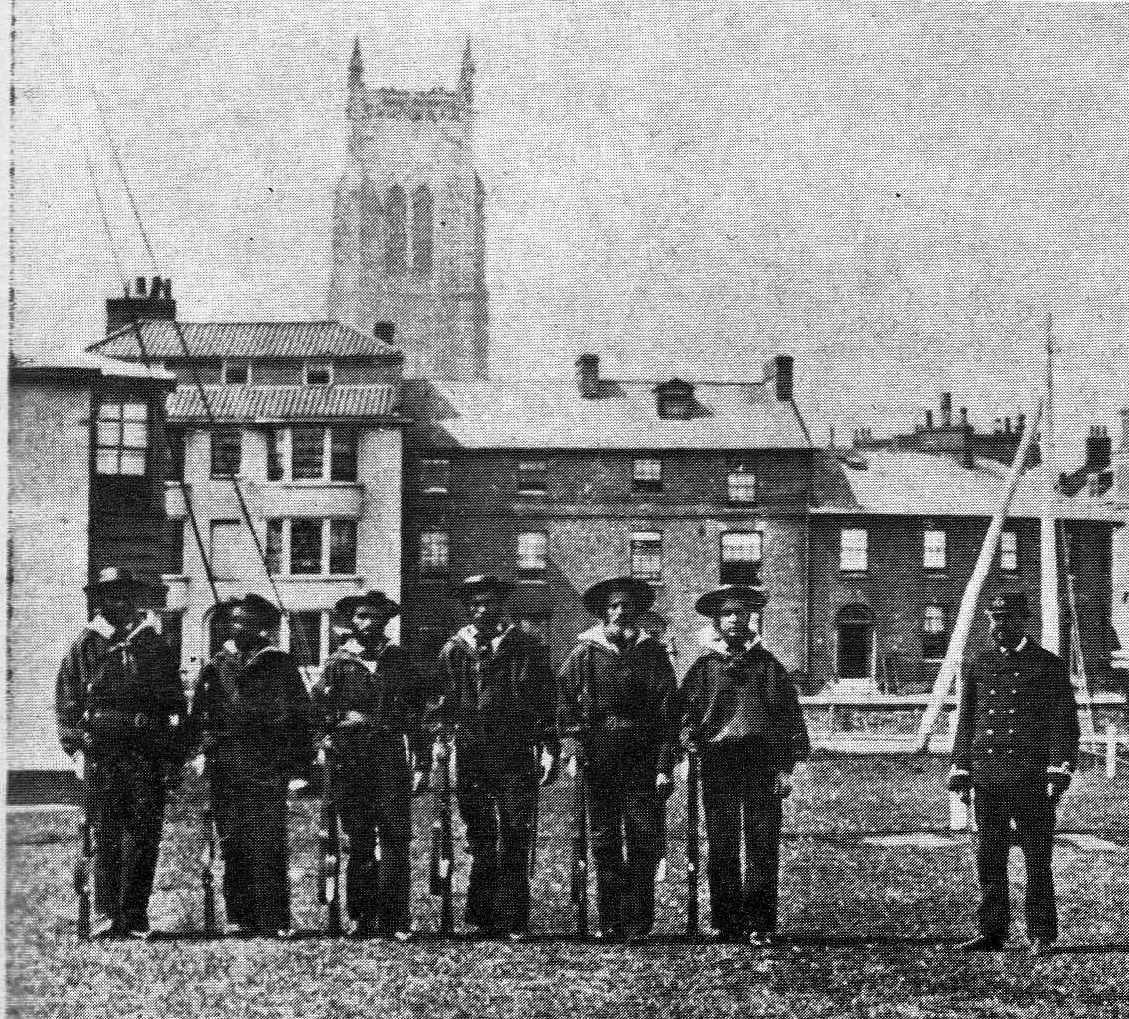
The original coastguard service was set up in 1822 to prevent smuggling around the casts of the United Kingdom The heyday of the service was during the nineteenth century when around fifty per cent of all imported goods were illegal and escaped duty and taxes.
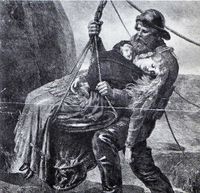
The coastguard was expected to assist ships in trouble and do their best to save lives at sea. It was not uncommon for ships to be driven onto coastal rocks by bad weather and then many people drowned close to shore. But saving lives at sea was only a small part of a coastguard officer's work.
Smuggling was big business. Fishing boats would dock with brandy casks slung under their hulls and some ships even had false bottoms to smuggle in goods - mainly tobacco.
By the mid-nineteenth century smuggling had become less widespread and the coastguard had taken on a role of a reserve naval force, so much so that control passed to the Admiralty from the Board of Customs. The Coastguard Service Act of 1856 defined the role as better defence of the coast of the Realm and the more ready manning of the Navy. During the First World War most of the men were mobilised into the Royal Navy.
The Board of Customs controlled all aspects of evasion of duty (alongside the Excise), smuggling and controlled the movement of passengers. It really began In 1689 when the Board of Customs and the Treasury established a peace time force to guard the coasts of Kent and Sussex.
It employed Riding Officers whose function was to prevent movement inland of smuggled goods which had eluded the revenue cruisers at sea. Men, usually on horseback, patrolled the coastal paths of Kent and Sussex. Alongside the Custom's Riding Officers the Board of Excise also had its own riding officers covering the whole of the country but they were concerned with the collection of excise duty - not the prevention of smuggling. However, both services worked together with the common aim of making sure duty was paid where it was due.
The Revenue Cruisers were small cruisers patrolling the coastal waters off Kent, Sussex, East Anglia and the Thames Estuary; they were crewed mainly by Royal Navy personnel. After 1800 the cruiser fleet was significantly enlarged to cover all the coastal waters of the United Kingdom. Again the Board of Excise also had its revenue cruisers working in river estuaries and inland areas.
The coastguard also used Watch Vessels which were stationary observation points and bases at key locations around the country. The Watch Vessels were normally ex-Naval vessels that were in poor condition and not considered safe enough to sail in the open seas but were suitable for locating in a mud berth in estuaries.
In 1809 the government formalised the service into the Preventive Water Guard with the specific aim of tackling the smugglers who evaded the revenue cruisers. The Water Guard officers also worked on the cruisers and they were also charged with giving assistance where ships were wrecked. Ultimately, they began to oversee the work of the Customs Revenue Cruisers
The Coastal Blockade known as “The Warriors” was a small specialist shore-based service consisting of ninety-two officers and around 1,000 men who were stationed along the coast between North Foreland and Dungeness. Their sole purpose was to capture smugglers as they came ashore. Their headquarters was HMS Severn and they were stationed in Martello Towers around the coast. They overlapped the formation of the coastguard and functioned until 1831.
Preventive Water Guard controlled by the Treasury
Riding Officers controlled by the Board of Customs
Revenue Cruisers controlled by the Admiralty
Coast Blockade controlled by the Admiralty
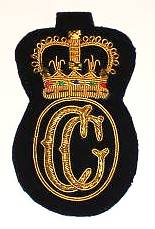
When the Coastguard Service was formed, it comprised the Preventive Water Guard, Revenue Cruisers and Riding Officers. In 1831 they were joined by the Coast Blockade.
Just to complicate things and confuse matters even more, both the Board of Customs and Board of Excise continued to employ Preventive Water Guard (later HM Water Guard – part of Customs), Revenue Cruisers (Customs) and Riding Officers (Excise) but were never part of the Coastguard Service.
After 1822, the existence of many preventive services resulted in the overlapping of duties. Initially operation fell under the Board of Customs but all officers were nominated by the Admiralty. Some 6,700 men were employed at the commencement of the Coastguard Service.
The coastguard establishment was taken from serving Royal Navy personnel, Naval pensioners, merchant seamen, former Customs & Excise Officers and civilians including, shoemakers, tailors, tallow chandlers, gentlemen’s valets and army pensioners.
After 1831 the Mounted Guard replaced the Coastguard Riding Officers. Recruitment for this division was taken from the cavalry regiments. Sergeants were paid five shillings per day, corporals four shillings and sixpence and privates four shillings per day. Each person received £25 to purchase his horse, £25 for saddlery and one shilling per day for forage.
Under the terms of the Coastguard Service Act 1856 and Coastguard Act 1925, coastguard personnel were forbidden from engaging in any sort of trade; nor were they permitted to own or possess a public house, shop or boat or be given prize money for capture of smugglers and seizure of contraband. They were also held responsible for all smuggling in their area.
Frequently worked sixteen-hour shifts during both day and night duty
They assembled in the watch room at the start of duty to be issued with weaponry - pistols for chief officers and cutlasses for other ranks.
Orders were given and shore-based guards marched to the shore where they remained until the end of the shift.
Men on revenue cruisers were sent out on coastal patrol and often assigned to rowing boats so they could get into coves etc.
No man patrolled the same area on two consecutive duties.
Initially the wearing of uniform was not obligatory.
Drill consisted of sixty-two separate movements of the cutlass and these had to be memorised.
Discipline was strict and punishable by fines or dismissal.
Coastguard officers were forbidden to leave their posts.
Each man was given a “one legged donkey” which resembled a modern shooting stick.
Bribery amongst coastguard officers was rife because pay was not brilliant. If caught accepting a bride, they were immediately dismissed.
After the Crimean War and the passing of the Coastguard Service Act of 1856, the administration of the coastguard fell under the Admiralty until 1922 when control passed to the Board of Trade. The Admiralty appointed a Comptroller and various Royal Navy ships were immediately assigned to the coastguard in 1822 including:
Under the Admiralty there were also various forces:
The coastguard was also split into districts:
Under the Admiralty the duties of the coastguard were expanded:
By 1839 each coastguard division enabled the whole of the United Kingdom and Ireland to be covered split into seventy-five districts which varied in both size and complement and consisted of men holding the following ranks:
Each district was under the control of an Inspecting officer who was serving Lieutenant in the Royal Navy. At any one time around one third of the workforce was at sea.
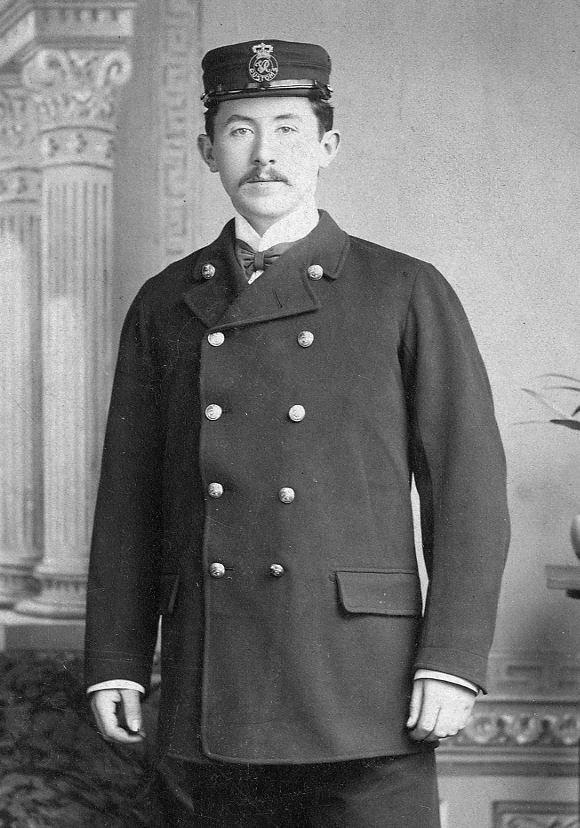
During the Crimean War the coastguard functioned as a reserve force for the Royal Navy. Some 2,300 coastguard men joined naval ships in 1854 and the revenue cruisers captured eleven enemy ships during the campaign.
During the First World War coastguards crewed navy ships. In 1914 German submarines sank five cruisers resulting in the deaths of 1,400 coastguard officers. Coastguard stations became port signal stations sending messages between the Admiralty and ships at sea and coastguards served to render beached mines safe.
During World War Two some 4,500 auxiliary coastguards were recruited to supplement the full time officers who did not serve anywhere else.
In 1831 the coastguard officially became the reserve for the Royal Navy and as such became popular with petty officers and ratings because the men could stay at home with their families having been based at coastguard stations and often having a house adjacent to where they served. The service was, however, not popular with commissioned officers as there was little prospect of promotion and they would loose their naval “seniority”. In the 1931 review, the coastguard service no longer served as a reserve force.
Control of the Coastguard service in the twentieth century underwent further upheaval and the administration changed frequently.
Coastguard Reviews took place in 1922 and 1931 to preserve its role which meant it took on various responsibilities and was answerable to various different government departments including:
Much of the 1931 review was organisational which has not changed since.
Records of an ancestor in the coastguard will not be in one set of records primarily because the coastguard was administered by several different bodies over time.
There is no comprehensive index of names but the coastguard Index and several finding aids are available and there is some published material to help with research.
Coastguard records held at the National Archives include:
ADM175 Records of service. Most of the service records for both officers and men are in various pieces in this series. Between 1866 and 1886 there is an unexplained gap in records. Many Coastguard records post 1853 are in ADM139 and ADM188
ADM119 Revenue cruiser musters
ADM6 Boatman appointments
PMG23 Civil coastguard pensions
ADM23 Admiralty pensions
PMG70 Chief Officers Greenwich Hospital Pensions
MT9 & BT166 Admin files
CUST40/28 Records of the Preventive Water Guard 1816-1825
WORK30 Plans of stations, officers houses and cottages 1844-1914
CUST42/66 Deeds and leases in 1857
ADM7/7 – Thirty-nine registers of repairs and maintenance of properties
CUST 29 Coastguard minute books 1833-1849
CUST 38 and 39 Coastguard statistics
CUST39 Thames Coastguard salaries and incidents
ADM114 Entry books of orders, instructions and memoranda to 1856.
Records of the early coastguard and its predecessors can also be found in the Admiralty & Secretariat papers ADM1 indexed in ADM12.
After 1856 when the East India Company relinquished its Navy, many former members of the Bengal Marine particularly entered the Coastguard Service.
It is often necessary to research records of the Royal Navy to find more details about your coastguard ancestor because of the crossover in service.
Not all records relating to the coastguard are at the National Archives and many local archives will hold records about those serving in the area they cover. It is always essential to find out what is held locally and sometimes actual service record supplements will provide additional information about an ancestor.
Published Materials
Returns of officers and Men of the Preventive Boat Service 1816-1891 provide name, age, place of birth, trade, time at sea, salary, appointments.
Commanders of Revenue Cruisers in Scotland 1822-23
Men of the Coast Blockade killed on Kent and Sussex Coasts 1821-25
Return of Captains and Commanders in the Coastguard Service and revenue cruisers on 1 July 1833
Returns of Chief Officers of the Coastguard with previous service 1857
Where your coastguard lived and worked
Coastguard locations
Coastguard stations
Plans of stations
The Navy List - Coastguard officers and civilians appear in all the Navy Lists since 1822 as do details of Revenue Vessels.
Database from “Coastguards of Yesteryear” covering British Isles and Ireland
Coastguard newsletters and magazines. Many local districts also published newsletters from as early as the mid-1800s. After World War Two a national magazine was published. Local newspapers often contained reports and obituaries of the local coastguard officers and events.


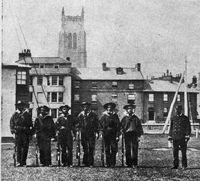

The Society of Genealogists holds the index of coastguards compiled some years ago by Eileen Stage; this can be viewed by members at SOG data under occupations then coastguard tags.
The index can be searched by name and the image of the entry can also be viewed and downloaded. The index is a useful reference tool particularly to series references to view original records, usually held at the National Archives.
The content of the original index was in various forms including individual cards and personal service sheets compiled mainly from Admiralty records, census returns etc. It covers coastguards from the Royal and Merchant Navies as well as some civilians. If you have coastguards in your ancestry then look at this index first.
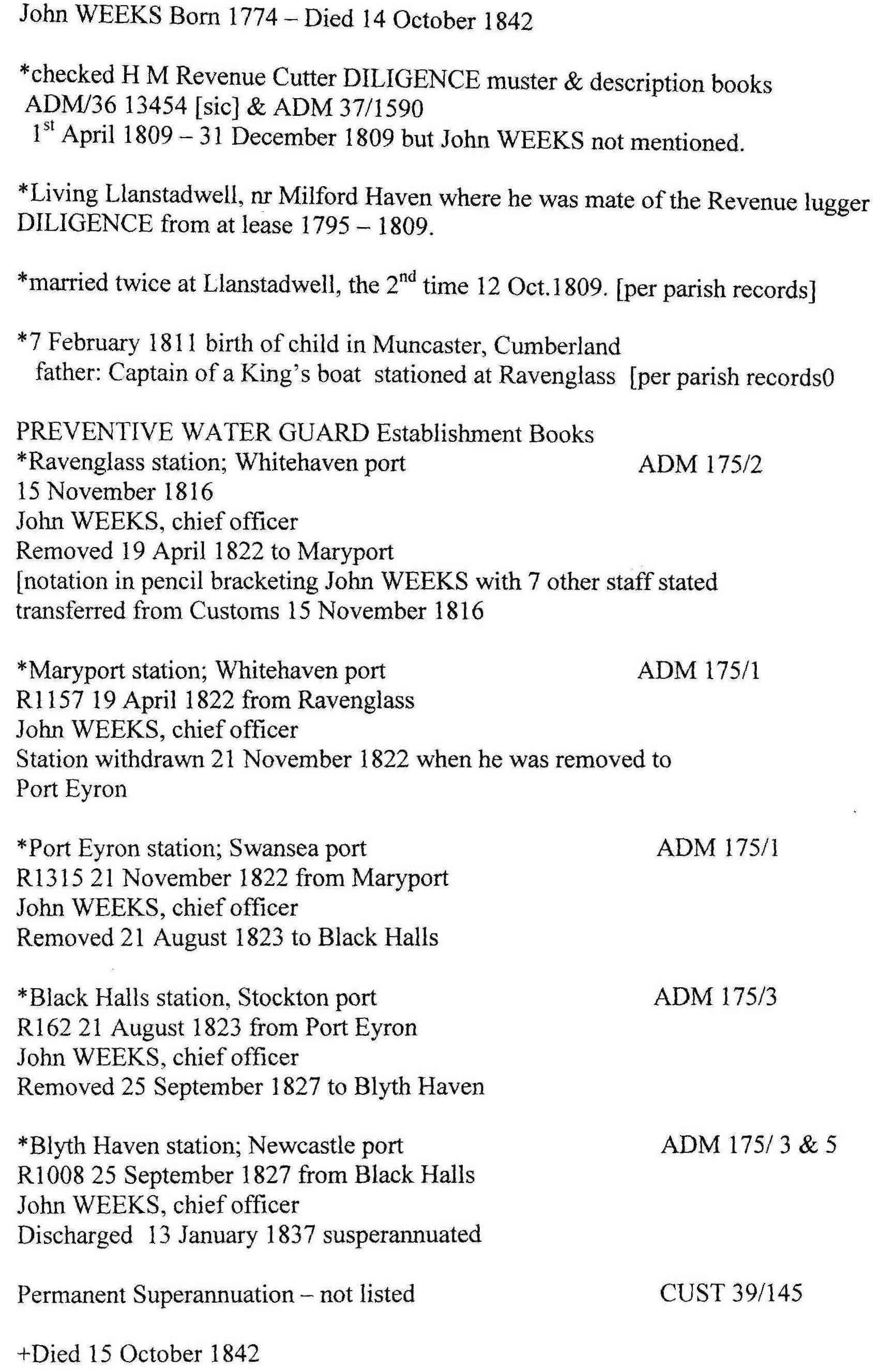
Before 1822 the Coastguard Service did not exist
Customs also had officers with the same titles.
The service has been administered by various bodies and departments.
Unexplained gap of twenty years in records 1866 – 1886
Many service records for coastguard personnel can be found in Royal Navy service records.
There was a significant reduction in establishment after the First World War
Not all records are in one place.
Finding aids and indexes are not complete.






Registered Office: 2 Primrose Avenue, Urmston, Manchester M41 OTY
Email: admin@familyhistoryfederation.com
©2026 Explore Your Genealogy