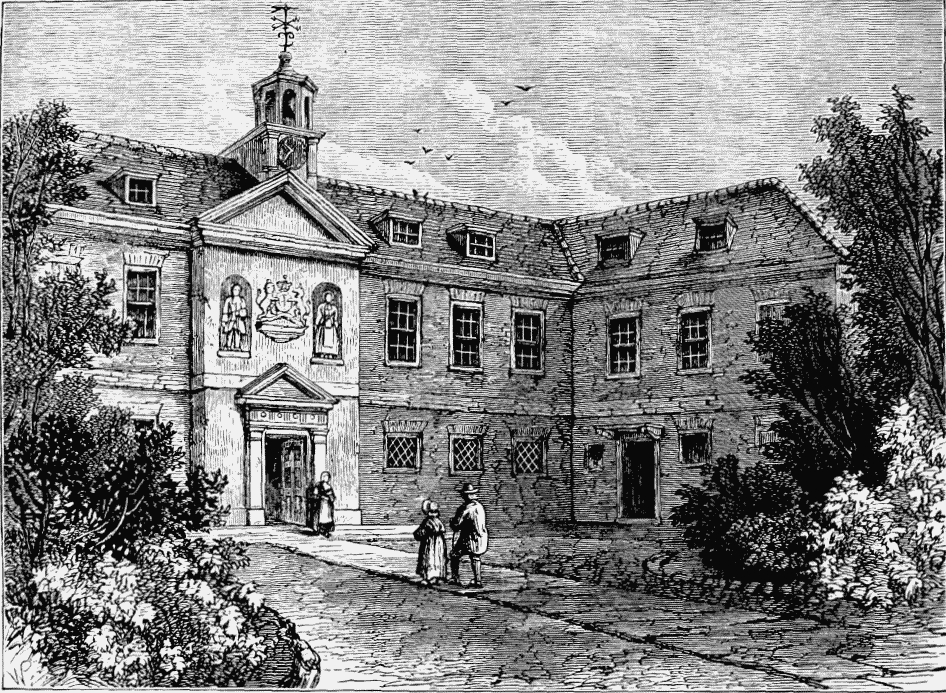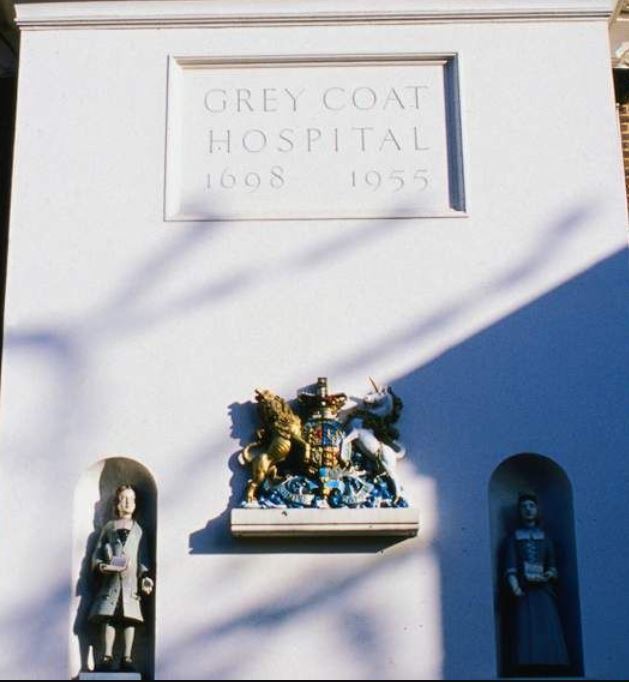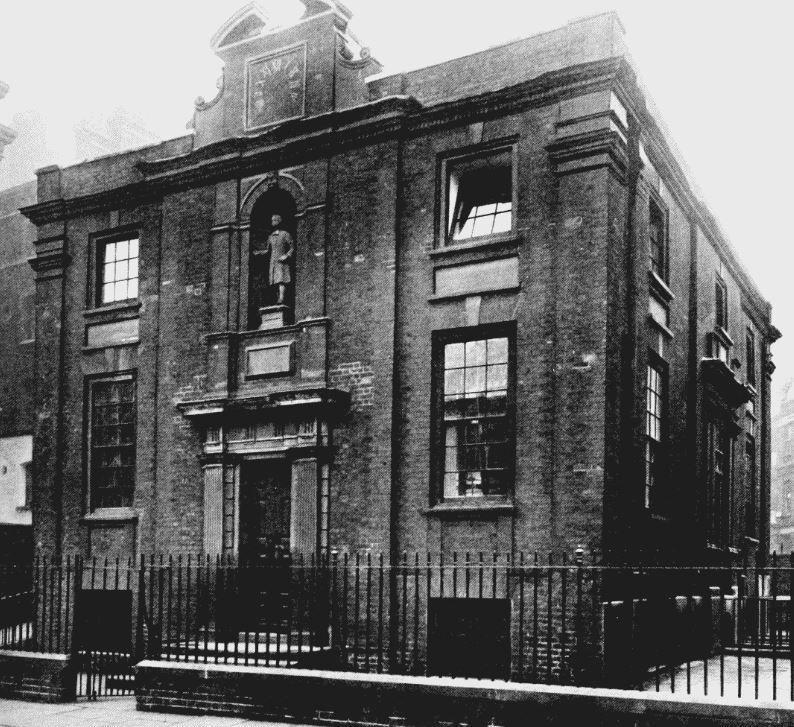





Blue Coat schools are charity schools originally established in the sixteenth century. The name arises because of the blue uniform worn by their pupils. Blue was the colour of charity and was a common colour for clothing at the time; the early uniform was very colourful. Blue and yellow were chosen because those colour dyes were not expensive and blue and yellow distinguished the children in the care of the first Bluecoat School, Christ’s Hospital, from those attending other schools.
The uniform consisted of a blue coat or gown, a red leather girdle round the waist, yellow stockings, a clergyman's band round the neck and a flat black cap of woollen yarn, about the size of a saucer. The buttons on the long blue coat depicted the head of Edward VI.
The first blue coat school was Christ’s Hospital founded in 1552 on the site of the Grey Friars’ Monastery in Newgate Street, London which was originally used as a hospital for poor fatherless children and foundlings. It was granted a Royal Charter in 1553. Following the dissolution of the monasteries, the City of London obtained possession of the hospital and agreements were reached so that control of Christ’s Hospital passed to the city aldermen. Christ’s Hospital opened its doors to 380 pupils but within a year that number had increased to over 500. Around 100 of the first pupils were infants who were sent to Hertfordshire to be looked after by nurses and to attend local day schools. When they were ten years old they returned to London for their education. During the 1665 Great Plague thirty-two pupils lost their lives but no lives were lost during the Great Fire of London although most of the buildings were burned down.
The school curriculum included reading, writing and arithmetic, French, the classics, and mathematics. The school has always admitted both boys and girls but the age of admission has varied throughout its existence. In the early years of the school, those who were not old enough to receive a full time education were put to nurse in the provinces or remained with their parents who received a weekly allowance.
Other divisions of the school were at Hertford from 1653, Hoddesdon and Ware from 1666 (although Hoddesdon closed in1690 and Ware closed in 1760). From 1778 the Hertford school became the girls' school and part was used as a preparatory school for boys. Christ's Hospital relocated to Horsham in 1902 although the girls' school remained at Hertford until 1985 before it moved to Horsham.
Between the sixteenth and early nineteenth centuries many other similar schools were existed throughout the country and, where the pupils wore the blue uniform, they were recognised as bluecoat schools. From its origins as a foundling hospital to help relieve poverty and educate children born in the London area, children were admitted from a wide variety of social and geographical backgrounds.