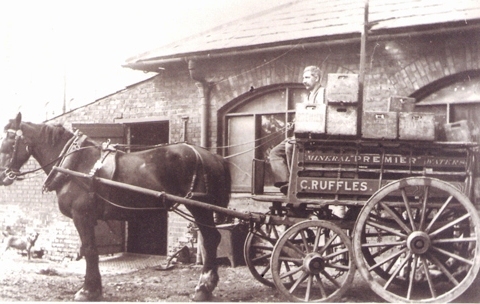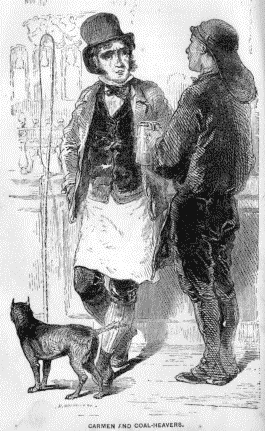




During the Middle Ages farmers generally delivered their own produce to their local markets. But in some cases, rather than drive a waggon themselves, many used their agricultural labourers to act as carters driving simple two-wheeled carts or heavier four-wheeled farm waggons. However, from the sixteenth century, most journeys were undertaken using the farm waggons and local people were often carried as well; some carriers even scheduled a time-tabled journey.
Local carriers developed regular routes most of which were exclusive. For both the farmer and the ag lab, taking goods to market became a social occasion and offered a chance to keep up with local and national news; in addition, perhaps a farmer might meet a potential wife and he would also be able to look for and engage labourers particularly at the hiring fairs.
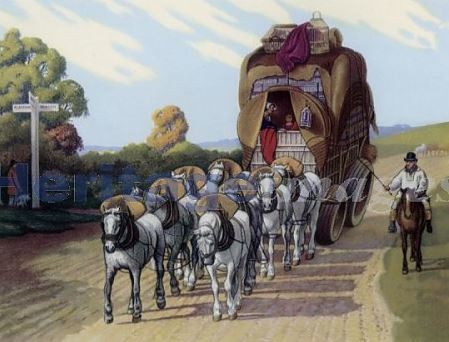
By the early 1600s virtually all of England and Wales was connected to London by weekly services using a published timetable showing days and times of arrival and departure at the staging inns on route and the final destination point.
For many people, going by a carrier was the cheapest form of travel. The local carriers regularly took passengers into the local market towns with the local services despite the advent of the canals and railways. Some rural carriers were still operating into the mid-twentieth century. As early as 1575, the Oxford wagon set off to London each Wednesday returning on Saturday.