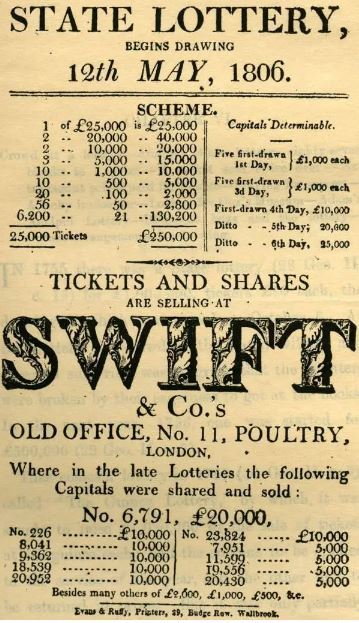
Between 1567 and 1826, hundreds of lotteries were organised, some of which were illegal. The scandals and corruption associated with the lottery system was responsible for their demise. However, the treasury estimated that money raised by state-run lotteries up to 1826 was around £35 million.
The first English lottery took place during the reign of Queen Elizabeth I to benefit the Cinque Ports.
A Royal Proclamation declared that 400,000 tickets would be for sale at 10 shillings each and the prize fund would amount to £60,000. The main prize was £5,000, part paid in cash to the amount of £3,000 and the remaining £2,000 in tapestries and gold and silver plates. The profit was said to be £100,000.
To promote the lottery twenty Surveyors of the Lottery were appointed but the uptake only sold 34,000 tickets. The draw took place between 11 January and 6 May 1569. Two large drums were used in the draw; the process involved the numbered counterfoils being drawn from one drum, and then being paired with a ticket from the other drum, leading to the award of a prize. This process formed the basis of other lottery draws.
Many lotteries were affected by various sophisticated frauds and scandals but some were properly undertaken and remained beneficial. The State of Virginia in the USA received significant financial support from lotteries run in England by the Virginia Company for around ten years from 1612.
Oliver Cromwell banned lotteries but they were reinstated after the Restoration, primarily to support charities.
Parliament authorised its first lottery in 1694 in order to boost funding for the war with France. It wanted to raise £1 million by selling 100,000 tickets at £10 each. It became known as the Million Lottery but tere were many problems - many of those participating did not receive their annuities on time, so further legislation had to be introduced to enable participants to receive annuities lasting sixteen years and yielding £6 over the period with their stake returned.
Private and illegal lotteries inceased and they often cheated many people out of their money so Parliament introduced the Act of Suppression in 1699 which only suspended activity. The government continued to use lotteries but was exploiting the urge to gamble.
State-run lotteries were common during the eighteenth century but this required more vigorous attempts to stamp out illegal operations. Lotteries were taxes in disguise but they invoked excitement. The government tried many ways to make the lotteries more attractive to everyone; they did not sell tickets direct to the public but used brokers who sold tickets. This meant that the lottery reached a wider audience because tickets were more affordable but still retained their tempting stakes. Despite this many still lost out.