



As we research our family history it is more than probable that we will find ancestors who emigrated to America.  Twenty four million British and Irish immigrants entered the USA through the two main New York immigration centres. 

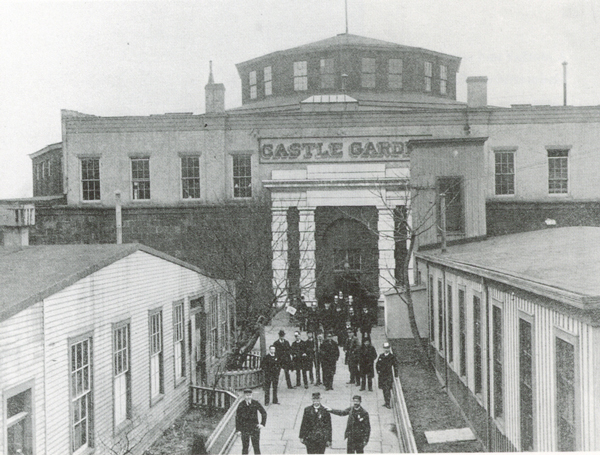
Castle Garden 1855 -1892

Ellis Island 1892 – 1943

People had of course been emigrating to America long before these two centres existed. While most immigrants entered the United States through New York Harbour, others sailed into many other ports such as Boston, Philadelphia, Baltimore, San Francisco, Savannah, Miami, and New Orleans. Steamship companies like White Star, Red Star, Cunard and Hamburg-America played a significant role in the history of Ellis Island and immigration in general.

Ellis Island Immigration Centre

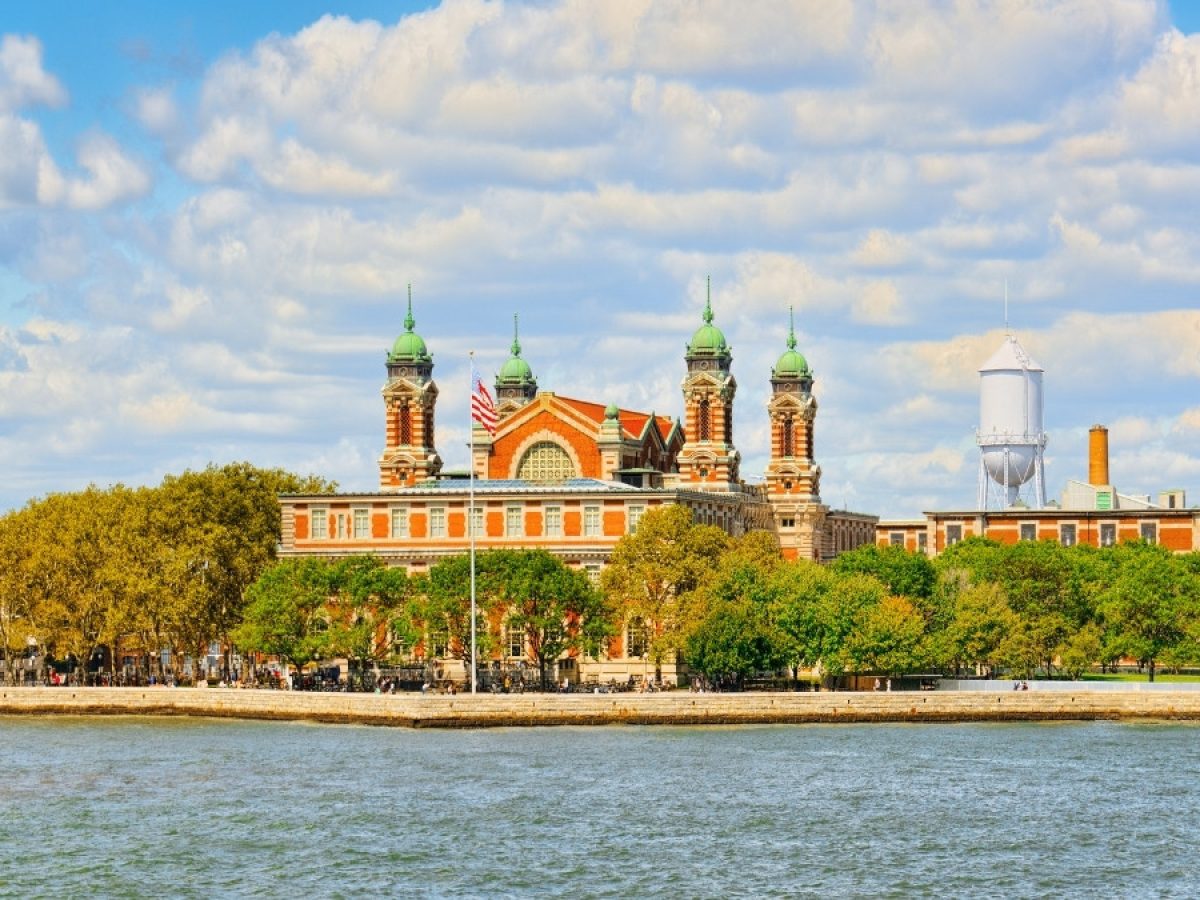
Ellis Island opened in 1892 as an immigration station; it is located at the mouth of the Hudson River between New York and New Jersey. On 1 January 1892, the first day of opening, seven hundred immigrants passed through Ellis Island and during the first year nearly 450,000 followed.

Over 12 million British immigrants passed through the immigration centre. By the time Ellis Island opened, significant changes were happening in regard to U.S. immigration in general. There were fewer arrivals from counties such as Ireland, Britain, Germany and Scandinavia but many from other areas of Europe including Jews escaping political and economic oppression and Italians escaping poverty. The reasons most people immigrated to the USA were wars, famine and religious persecution, and America appeared to offer hope and opportunity in the New World.

After a tough voyage the immigrants arriving at Ellis Island were subject to bureaucratic processes where they were tagged with essential information from their ship and then had to wait in long queues for both medical and legal inspections to ascertain their fitness for entry into the United States. At the start of the twentieth century and up to the beginning of the First World War, an average of 1,900 people passed through Ellis Island immigration station daily. Most were processed in a few hours but for some it meant they were detained sometimes for days.

On 15 June 1897 a fire broke out in one of the towers in the main building and the roof collapsed. Although there were no fatalities the Ellis Island records dating back to 1840 and the Castle Garden era were destroyed. The immigration station was relocated to the barge office. Two new islands were created at Ellis Island in the early 1900s, one housing hospital administration and psychiatric wards and the other housing a contagious diseases ward. In 1906/7 a law was passed excluding potential immigrants with physical and mental disabilities as well as children arriving without adults.

Whilst many immigrants remained in the New York area, others travelled by railroad to destinations across the country. USA legislation passed in 1921 and 1924 limited the number of immigrants allowed into the United States which ended mass immigration through New York so Ellis Island served as a temporary detainment centre. After 1925 until Ellis Island closed, 2.3 million immigrants passed through the centre which was over half of all those entering the United States during that time.

Every immigrant passing through Ellis Island was checked by doctors for diseases and disabilities that might prevent them from entry into the United States. Those suspected of being affected were marked with chalk and sent for a more detailed examination. All immigrants were checked closely for trachoma, a contagious eye condition that caused more detainments and deportations than any other ailment. 

Food was generally plentiful at Ellis Island for the immigrants and a typical meal served in the dining halls was beef stew, potatoes, bread and herring or baked beans and stewed prunes. Through Ellis Island the immigrants were introduced to new foods, such as bananas and ice cream. They also catered for special dietary requirements of the Jewish immigrants by providing a kosher kitchen. Besides the free meals provided, concessions sold packaged food that immigrants could take with them on their onward journey.
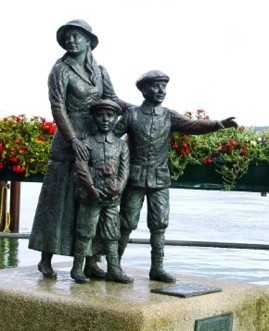
The First Arrival at Ellis Island

After twelve days on SS Nevada, Annie Moore and her brothers were the first to step off of the ship and pass through Ellis Island. As the first immigrant she was awarded a $10 gold piece.

Annie Moore was born in Cork County, Ireland on 1 January 1877. When Annie was twelve years old her parents and Tom, her oldest brother, left for America to find jobs intending that Annie, Anthony and Phillip would join them later on. After a two-year delay, in December of 1891 they received a letter with three tickets for them to go to America on the S.S. Nevada.

Annie travelled to New York with her two younger brothers as steerage passengers on S.S. Nevada, which departed Queenstown on 20 December 1891 and arrived in New York on the evening of 31 December.  After being processed they were reunited with their parents.

Annie never left New York City and she lived at 32 Monroe Street. After three years of working in a factory, she married Agustus Schayer at the age of eighteen, in 1895. He worked in a fish market. They had eleven children. Annie stopped working to take care of her children, only five of whom survived to adulthood. In 1923, at the age of 47, Annie Schayer died of heart failure.

Castle Garden Immigration Station

Before 1855, the United States did not have designated immigrant receiving stations so immigrants who arrived by ship simply disembarked wherever it docked and continued unchecked to their new life. When the United States started to formalise its immigration policies in the mid-1800s, Castle Garden became an immigrant processing centre then known as the Emigrant Landing Depot.

Eleven million immigrants passed through Castle Garden during its existence. With the increased volume of immigrants arriving sick or having died in transit, legislation in 1819 limited the number of passengers on each ship. The US Customs Service was designated to monitor immigration. In 1820, the captain of each ship arriving prepared a passenger list and filed it with customs at the port of arrival.

Between 1820 and 1860, the Irish, mainly Roman Catholics, accounted for around one third of all immigrants to the United States. The disastrous Irish potato famine between 1845 and 1852 accounted for around a million people. There were also a large numbers of Germans fleeing political and economic unrest in their country.

Prior to 1890, individual states as opposed to the Federal government regulated immigration into the United States.

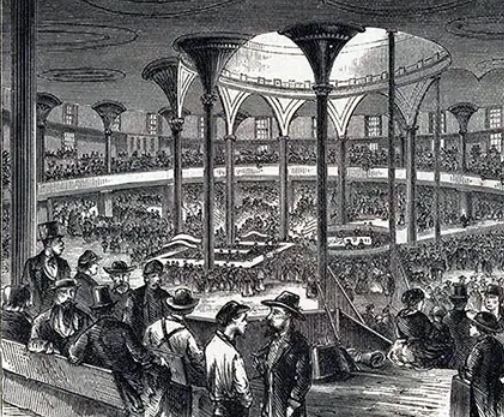
Castle Garden, originally named Castle Clinton, was originally constructed as a fort built to defend New York Harbour aganst the British during the 1812 War. This former fort reopened in 1824 as Castle Garden; then following the 1855 Passenger Act, New York passed its own legislation establishing a receiving station for immigrants. Castle Garden then became America's first immigrant receiving centre which closed in April 1890 to be succeeded by Ellis Island in 1892.

Between 1855 and 1890 all immigrants arriving in the state of New York passed through Castle Garden. The last immigrant was processed on 18 April 1890. After Castle Garden closed, immigrants were processed at a barge office in Manhattan until Ellis Island opened on 1 January 1892. More than one in six native-born Americans are descendants of the eight million immigrants who entered the United States through Castle Garden.

The arrivals process at Castle Garden

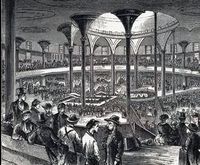
Arrivals were checked for signs of contagious diseases and then registered by clerks who recorded vital information which has turned out to be of huge benefit to family historians as it includes country of origin and final destination. The immigrants were then able to purchase steamboat or rail tickets to their final destinations and could exchange currency and take advantage of the concession stands and bathing facilities. The centre also had a labour exchange for those who were looking for work in the area. Although Castle Garden was helpful to immigrants, some fell victim to corruption and theft. Castle Garden also required everyone to leave by nightfall as it offered no sleeping facilities. 

The registry desk

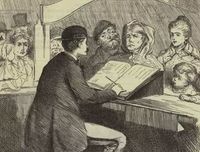
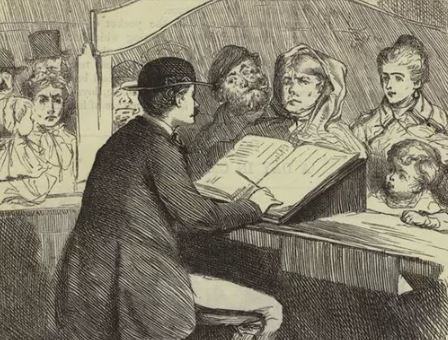
When disembarking and entering Castle Garden, immigrants visited the registry desks - one for English speaking people and one for other languages. Immigrant registration necessitated them answering questions about themselves and their intentions.

 The baggage depot

Initially there was no system to process immigrants' luggage with bags dumped in an unorganised pile. In 1857 a new system of baggage handling was introduced in a new building. The new facility allowed for over 3000 items of luggage to be stored but this was expanded 1869 in order to accommodate 15,000 items of baggage.

When immigrants had insufficient funds to pay for the tickets to their intended destination, they would leave their luggage at the depot until friends and family could fund their travel. Immigrants were allowed to store their luggage at the depot for up to six days. Baggage could be sent for and delivered to any place in the New York area or loaded onto a steamship and taken to nearby rail stations to be forwarded.

 The exchange office

At the exchange office immigrants could exchange foreign currency for American money. The office was required to post the current exchange rate as from Wall Street and update it throughout the day. The exchange rate would often change without warning.

The railroad office

The New York and Erie, the New York Central, and the Pennsylvania Central Railroads operated from the railroad office and were able to sell tickets at the facility. The railroad agents would ask an immigrant where they intended to go to, then calculate the cost including baggage and immigrants then had to pay for their tickets. It was not uncommon for immigrants, unable to afford the fares, to beg from kind strangers. or send messages requesting money from friends or family already established in the United States which meant they had to wait until the funds arrived by mail in order to pay for their trip.

Bathing rooms

Before leaving all immigrants entered the bathing rooms where they were provided with soap, water, and towels; they were required to wash themselves thoroughly before leaving.

Labour exchange

The Castle Garden Labour Exchange existed to help immigrants find work in the city and surrounding area. Immigrants were separated based on gender and further divided according to skills, length of residency and those with and without references. Each immigrant was requested to provide name, ship, date of arrival and type of employment sought.

Castle Garden and Ellis Island Immigration Records and Research

Castle Garden and Ellis Island immigration archives comprise around sixty-five million records relating to both immigrant passengers and ships' crews arriving in New York between 1820 and 1957. Although the Ellis Island fire in 1897 destroyed the ship manifests and immigration records dating back to 1855, the customs lists are still a valuable resource.

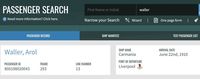
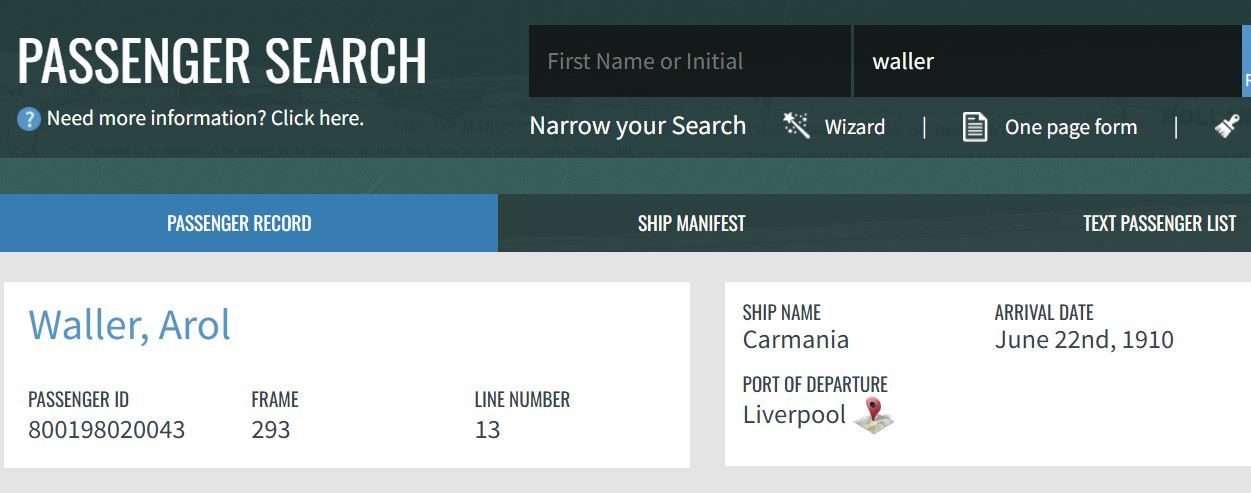
The Ellis Island immigration database is accessible in two places, personally at the Ellis Island Family History Centre should you be fortunate enough to visit and via the Foundation’s own website. https://heritage.statueofliberty.org/passenger

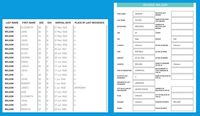
The Castle Garden database allows you to search by name and time period for immigrants who arrived in Castle Garden between 1830 and 1890. Copies of many ship manifests can be found on Ancestry within the New York Passenger Lists, 1820–1957 and on FamilySearch.

Castle Garden immigration records can also provide information about relatives who arrived in New York prior to the opening of Ellis Island. The archive begins in the early 1800s, (around 1802), providing information about immigrants arriving in New York prior to the commencement of the immigration station.

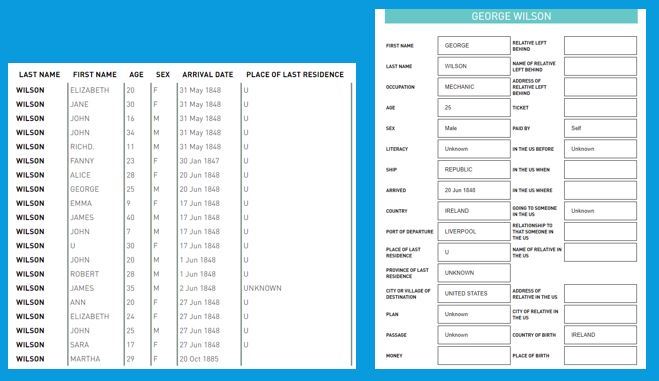
The various records will disclose the name, age and country of origin of each immigrant arrival. The Ellis Island Foundation also has an extensive oral history library and over 2000 such histories are available on Ancestry post-1892.

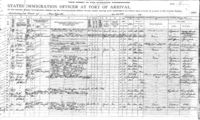
Passenger lists recording each passenger’s name, gender, age, port of departure, ship names, and arrival date and port, physical description and the amount of money a person was carrying, as well as the ship’s crew lists can be searched on Ancestry. 

From a social history viewpoint, the records of immigration at Castle Garden dating back to the 1820s can provide information on where your ancestors came from and their destination in the USA (and sometimes into Canada) providing valuable clues to finding information about them in their destination country. Records form both centres can also provide clues about your ancestors social class.

People who travelled first-class or second-class on ships were not subject to the Ellis Island processing system; since they could afford better tickets they were not considered a risk to public health. However, they were still subject to an immigration check whilst still on board their ship but not the processing at the immigration centre unless they were sick or had previous legal issues. For third-class (steerage) passengers, the assessment process started when boarding a ferry to take them to Ellis Island where they were subject to the health and legal processes to determine their admission to the USA.

The US government began tracking immigrant arrivals in 1820 after the introduction of their Steerage Act. Passenger lists between 1820 and 1891 were known as customs lists which the shipping company completed at the departure port. Customs lists contain limited information including the name of the ship, name of the Master, the port of embarkation, the date and port of arrival. They also provide limited information about each passenger including name, gender, age, occupation and nationality. They are known as “Castle Garden lists”. Don’t forget that the port of departure may not be the port where your ancestors boarded. Ships often called at interim ports during voyages. If your ancestors’ ship originated at Liverpool, they may have called at an Irish port on the voyage and if they boarded at Queenstown they may show on a Liverpool listing.

Castle Garden passenger lists can be researched for free on FamilySearch.

When World War Two began the United States required alien registration by all non-citizens aged fourteen and above. More than 5.6 million individuals registered generating a valuable set of records. This also applied to immigrants who had lived for some time in the United States but had never applied for naturalisation.

Castle Garden and Ellis Island

This article was contributed by Ian Waller from Family History Federation.
Website by Beachshore