


Since time immemorial music has featured in everyday life in Britian. Whether it was the traditional folk songs originating in the medieval period or the popular music of today, music has remained a key part of our culture. One element which has been popular since the industrial revolution is the brass band. It does not matter where your ancestors lived, be it in a village, town or big city; there’s a high probability they will have either played in, or have been entertained by, the local brass band.

Origins of the brass band

The brass band was a tradition originating from unconnected circumstances and events. Brass bands in Britain can trace their roots to the late 1700s when brass instruments first appeared in orchestras. There had long been a tradition of establishing small local community bands around the country, originally as an eclectic group including not just brass but woodwind, strings and percussion instruments too.

Towards the end of the Napoleonic Wars, the invention of the valve revolutionised brass instruments and the origins can possibly be associated with the military marching bands. In civilian life many ex-soldiers still wanted to play their instruments, so bands were formed with the players continuing the tradition of wearing brightly coloured military-style uniforms.

The brass band as we know it today dates to the early nineteenth century. The Industrial Revolution gave rise to upheaval and changes within society - from both an economic and political viewpoint. Urban areas became more populated and living standards began to rise. People gradually lost the opportunity to be involved in traditional rural entertainment and pursuits, so they turned their hands to brass bands. Many owners of local companies like coalfields and mills began to sponsor and finance company-based bands; apart from the musical aspect, the sponsors hoped this would decrease political unrest which frequently absorbed the energies of their workers' leisure time.

By 1860 there were in excess of 750 brass bands across England and today many current bands can trace their origins to the 1800s. The brass bands were made up of non-professional musicians, most of whom were employed by the sponsoring company or their family members.

The popularity of brass bands grew until the First World War when they obviously declined due to the mass enlistment into the armed forces. Subsequent financial restraints meant that the brass bands movement was no longer a local way of life, although some bands, particularly in the traditional areas of the country, thrived and still exist.

Brass bands

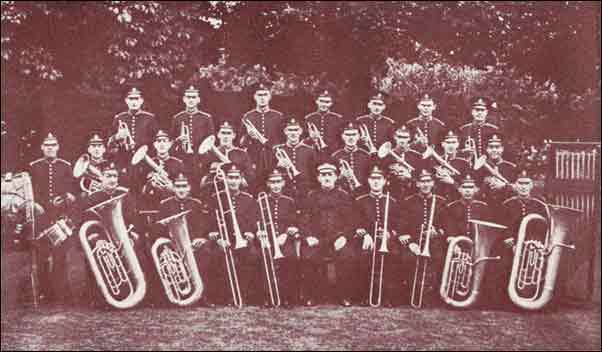
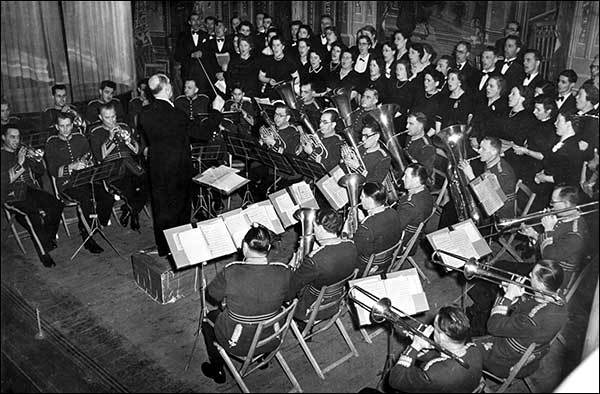
A brass band basically comprises horns, cornets, trombones and trumpets as its main instruments; some of these would have been used previouly in village, church and military bands. Most brass bands also included a percussion section with snare drums, base drums and cymbals. 

The bands generally consisted of about twenty-eight players, although in smaller communities, the number would be less. 

The popularity of brass bands is generally associated with the Victorian era. The bands were often seen marching in all their splendour, preceding sporting events or official occasions; and they entertained the general public on Sunday afternoons at the local bandstand. 

The first “real” brass band is believed to have been established in 1819 in Yorkshire.

The purpose of having a brass band was to create a sense of community during a period of huge change from rural to urban living. It was seen as a matter of civic pride for local communities to have their own brass band.

Bands were considered a cultural symbol of the working class; they were incredibly popular so thousands of people were joining bands each year. They became ambassadors for their sponsors, particularly in the coal, iron and steel and boot and shoe industries.

Since local bands existed in virtually every community, brass band competitions evolved. In 1853. The first brass band championship was held at Belle Vue Zoological Gardens in Manchester, when over 16,000 people attended! This competition continued well into the latter part of the twentieth century. By the 1890s there were around 5,000 brass bands in the country competing in local, regional and national contests.


Influence of the Salvation Army

The Salvation Army bands have existed alongside the brass band movement since the early 1870s. These bands range from small citadel bands to the staff bands which include the organisation's best bandsmen in the area. Their instruments were virtually identical to the brass bands with a couple of exceptions. The Salvation Army bands can be seen in most areas of the country.

Moving to the twentieth century

The late Victorian and early Edwardian era was considered to be the peak period of brass bands.  Undoubtedly, the most popular time for brass bands was the Christmas season when they celebrated the festive season; they were also very popular on Sunday afternoons in the local park.

The National Brass Band Championships were first held in London in 1902 and it is considered that this event gave rise to a period of massive popularity and membership of brass bands from the working class; this in turn led to a significant increase in the number of brass instrument manufacturers. There were also many community brass bands that were not involved in competitions but existed solely to provide entertainment for audiences and enjoyment for musicians of all ages.

The local bandstand

Bandstands were designed to accommodate brass bands performing open-air concerts in a park, gardens or on a pier. They are simple structures usually circular or semi-circular in shape, designed to achieve the best acoustics. They also served as an ornamental focal point.

The parks and recreation gardens where most bandstands are located evolved during the Industrial Revolution when local authorities increased open spaces where the general public could enjoy their leisure time. The first bandstand in Britain was in South Kensington, London built for the Royal Horticultural Society in 1861. By the end of the nineteenth century bandstands had become a necessity in virtually every park.

During the Second World War, the iron railings and other metal fittings were removed from many bandstands; they were melted down and transformed into weapons and artillery. This meant that some bandstands fell into disrepair as they were no longer suitable for use.

More than half the bandstands constructed in parks have been demolished but the remaining Victorian bandstands are still a feature in parks and open spaces today, still providing venues for local concerts.

Rushden Temperance brass band.

Several of my own ancestors were members of the Rushden (Northamptonshire) Temperance Brass Band; they were known affectionately as the musical shoemakers due to the association with the boot and shoe manufacturing industry in the area. Two such ancestors were prominently involved with the band - the deputy conductor, Mr. Fred Robinson and the bandmaster, Mr. T. Robinson. Several others were ordinary bandsmen over time. Brass bands have been associated with the temperance movement since its inception. During the nineteenth century, the protests against alcohol increased the popularity of brass bands being established by many temperance organisations.


The Rushden band had strict membership rules during the early twentieth century including:

That any person wishing to become a member of the said band, an entrance fee of 2s 6d shall be paid, and no instrument to be used until the same is paid. All applicants must be prepared to give an audition if required.

The division of monies arising from engagements with regard to band members to be as the committee may determine.

That any member being intemperate, using improper language, or in any way misconducting himself whenever the band is assembled, on being reported, he shall be summoned before the committee.

No member be allowed to belong to two bands, but no objection would be raised to members giving assistance in case of emergency, provided he gives notice to the secretary.

In no case shall a player change his instrument with another player without the permission of the committee.

That any matter arising not covered by these rules shall be laid before a full committee whose decision shall be final.

Some of the brass bands that started their life as temperance bands lost that association during their life, sometimes due to the band members changing their allegiance because they considered the cause was no longer was appropriate. Few bands in existence today retain Temperance in their names but at their height, there were around 1900 temperance brass bands around the country.

The Rushden Temperance Band was established in November 1875; it was founded on strict temperance principles and developed into a leading award-winning brass band. Initially, each member of the band bought and paid for their own instruments.

As soon as the band was formed, band practices began on a weekly basis. Soon after their formation they entered a band contest at Stanwick, a small village five miles from Rushden, where they won two first prizes; this was the start of many competition successes.

At this point the band decided to engage a professional leader and as a result they began to get engagements which in turn encouraged them to obtain new and better quality instruments; these were paid for in part by the members to the tune of a sovereign each, the balance being raised by concerts, fetes and other fundraising ventures. Having won prizes locally, the band took part in the 1886 Belle Vue Contest but it was not placed. This did not demoralise or deter further contest participation.

In order to make their mark, in 1890 the band purchased Beeson instruments, considered to be the best! Their investment paid off because they came second in the championships at Crystal Palace a year later. At the Belle Vue competition in 1908 the band came second, only losing by three points.

As a direct result of this success, the band was offered an engagement at the Victoria Embankment Gardens in London to an unusually large crowd. The band also became a regular performer at the Sandringham Royal Flower Show.

They were regular guests of the BBC radio band programmes from which they gained significant fame alongside another Rushden brass band – the John White Footwear band.

The band reached its centenary year in 1975 after which it was disbanded and was absorbed into the Rushden Windmill Band.


Brass band archives

The brass band archive is held at the University of Huddersfield and is the largest archive dedicated to preserving the brass band heritage.

Its records cover over a century of British brass band history. The collection includes information about the relationship between bands and industry, band contests, collections of photographs, uniforms and other ephemera. The library houses brass band publications and an extensive collection of music scores.

The archive material has been arranged into various sections and relates to both bands and individual bandsmen.

Records and archive material relating to specific bands and their clubs can usually be found in local record offices and there is a useful research guide - Researching the History of Brass Bands at:

http://www.ibew.org.uk/GH063-researchguide.pdf


This article was contributed by Ian Waller from Family History Federation.
Website by Beachshore