This article gives a brief overview and history of the trade since the 17th century and is followed by a list of resources for you to find out more.

Shoemaking pre-1770s

In 1642 during the Civil War thirteen shoemakers, led by Thomas Pendleton, obtained a contract for 600 pairs of boots and 4,000 pairs of shoes; this was followed in 1648 for another order of 2,500 boots as well as for troops in Ireland.

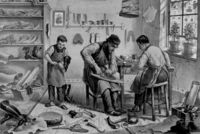
At this time, a town shoemaker would have worked by himself, using a room in his house or a small outbuilding. In a rural parish he would probably only have made goods for his local area and undertaken repairs.  Early apprentice records show this was already a dominant trade in the county.

Shoemaking 1770 to 1857

Rural area

Even after factories became established, there was still a need for the village shoemaker to make boots and shoes for the agricultural workers. Some may have had a small shop within part of their home.

Urban areas

The 1777 Militia lists for the county record 697 shoemakers, mostly in Northampton, Wellingborough Irthingborough, Raunds, Earls Barton and Wollaston.  Demand grew during the American War of Independence (1775-83) and Napoleonic Wars (1793-1815).  Many learnt the trade as apprentices. Advertisements in the Northampton Mercury show that the town was the centre for shoe factors, leather merchants and wholesalers. From 1812, some of the London shoemasters employed Northamptonshire workers because labour costs were cheaper. The 1841 Census gives 1821 shoeworkers in Northampton, almost triple the number in 1777.  

Other areas

In Daventry, the trade became more established and army footwear was stored at nearby Weedon Barracks. In Kettering the major manufacturer was Gotch who benefited during the Napoloenic Wars. In 1857 when the railway came through both Wellingborough and Kettering, it stimulated growth there. In Raunds the first shoe factory was founded by William Nichols in 1826.

  • Shoemaking workshop
    Shoemaking workshop
  • shoemaker
    shoemaker
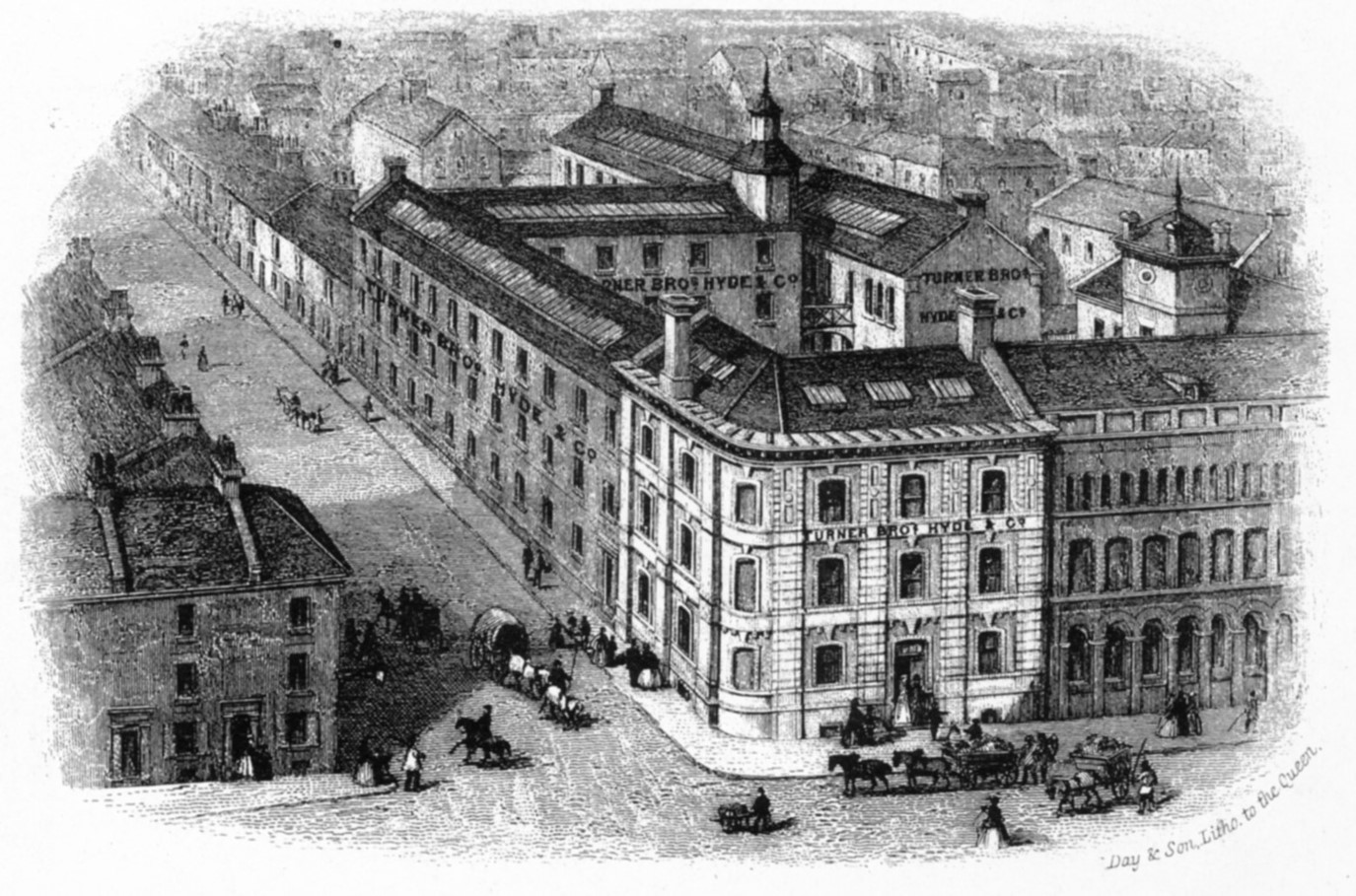
  • Turner Hyde factory
    Turner Hyde factory

Shoemaking 1857- 1914

Urban areas

From 1857 all shoemaking processes began to be taken over by machinery, notably the Singer sewing machine, Blake Sole Sewer, Goodyear Welter and the standard Screw Machine.   

Northampton

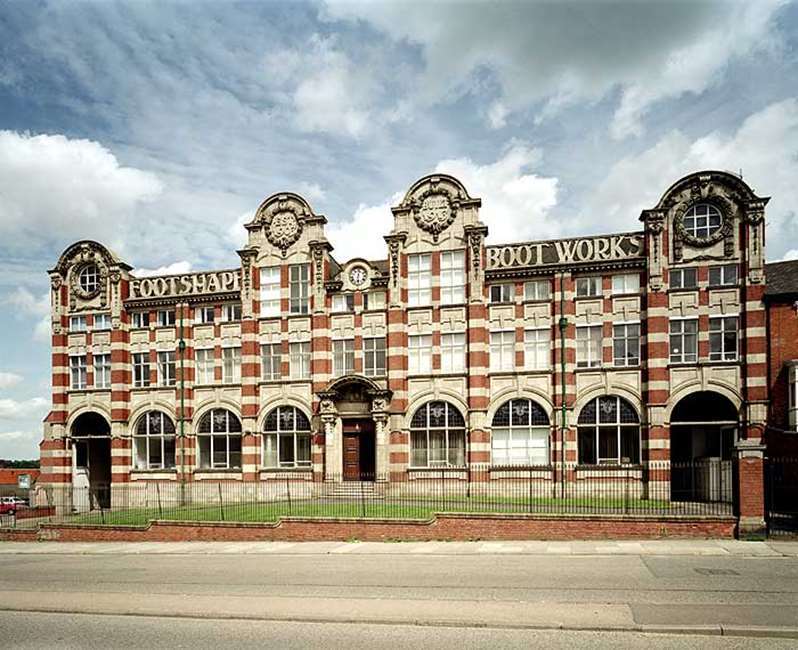
In 1857 the first factory was built in The Mounts by Isaac, Campbell and Company of London with Moses Manfield next door.  In 1861 Turner Brothers took over the buildings; they employed 400 people in the factory and 1,600 off the premises. By 1865 Turners were producing 100,000 pairs of shoes a week using steam engines.

Northamptonshire manufacturers initially relied on independent retailers to sell their goods.

Other towns

Wellingborough had grown by a third between the 1861 and 1871 census, although the trade never quite reached the extent of Northampton.

From 1870 onwards expansion continued in other towns like Wollaston, Earls Barton,  Rushden, Raunds and Irthlingborough.   Between 1861-1901 Kettering rose in prominence including Rothwell, Burton Latimer & Desborough; this partly coincided with the collapse of the silk weaving trade.  Daventry and Long Buckby were also important, if smaller, shoemaking towns.

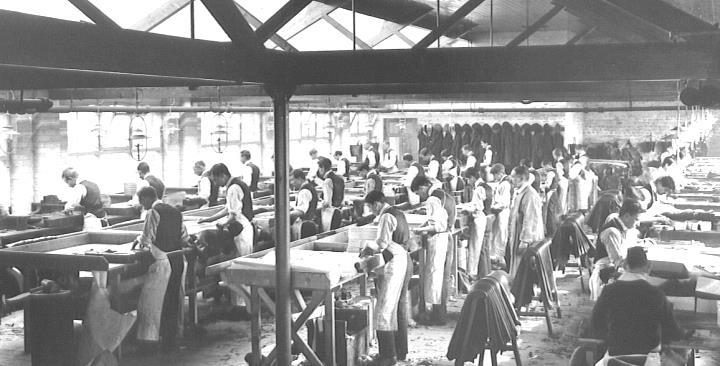
  • shoe factory
    shoe factory
  • hand clicking
    hand clicking

Shoemaking after 1914

During the First World War, nearly 50 million pairs of footwear were produced for the Armed Forces and its allies in Northamptonshire. After the war, the industry went into a gradual decline. 

But this was not the end as today Northamptonshire still has many companies producing high quality handmade and machined shoes.  

  • Barrett shoe factory
    Barrett shoe factory
  • Hawkins shoe factory
    Hawkins shoe factory

Resources for researching your boot and shoemaking ancestors

Abbreviations used:
NRO - Northamptonshire Archives,    NMAG - Northampton Museum & Art Gallery,
NLIS – Northamptonshire Libraries and Information Service  (predominately Local Studies)

General sources

It is not always possible to find individual occupational records about an ancestor.  A visit to Northampton museum is recommended as they have permanent galleries dedicated to the history of the shoe trade. It includes examples of footwear, machinery, tools, a mock-up shoemaker’s shop and other material associated with the trade.  Other local museums may also have information.

Prnted sources

NLIS has many books, pamphlets and trade directories on shoe trade. You can also search the library catalogue for more references.

Manufacturers and wholesalers

Northamptonshire archives online catalogue lists the records they hold for shoe companies.. Most date from the late 1880s onwards. NLIS and NMAG have biographies of many of the manufacturers along with company histories.

Newspapers

Many of the manufacturers were important civic figures within a town so appear regularly in the local newspapers (NLIS/NRO) as do details of the factories, company bankruptcies and notable events.  

Miscellaneous records

You ancestor may have served as an apprentice (NRO) or become a freeman of the town (NRO).  Many shoemakers were exempted from military service during World War One due to the demand for army footwear. You can search the records for the military tribunals on FindMyPast.

Further research

www.northamptonmuseums.com/
www.westnorthants.gov.uk/northamptonshire-archives-service
www.historicengland.org.uk/images-books/publications/built-to-last/

This article was contributed by Angela Malin from Northamptonshire Family History Society.
Website by Beachshore