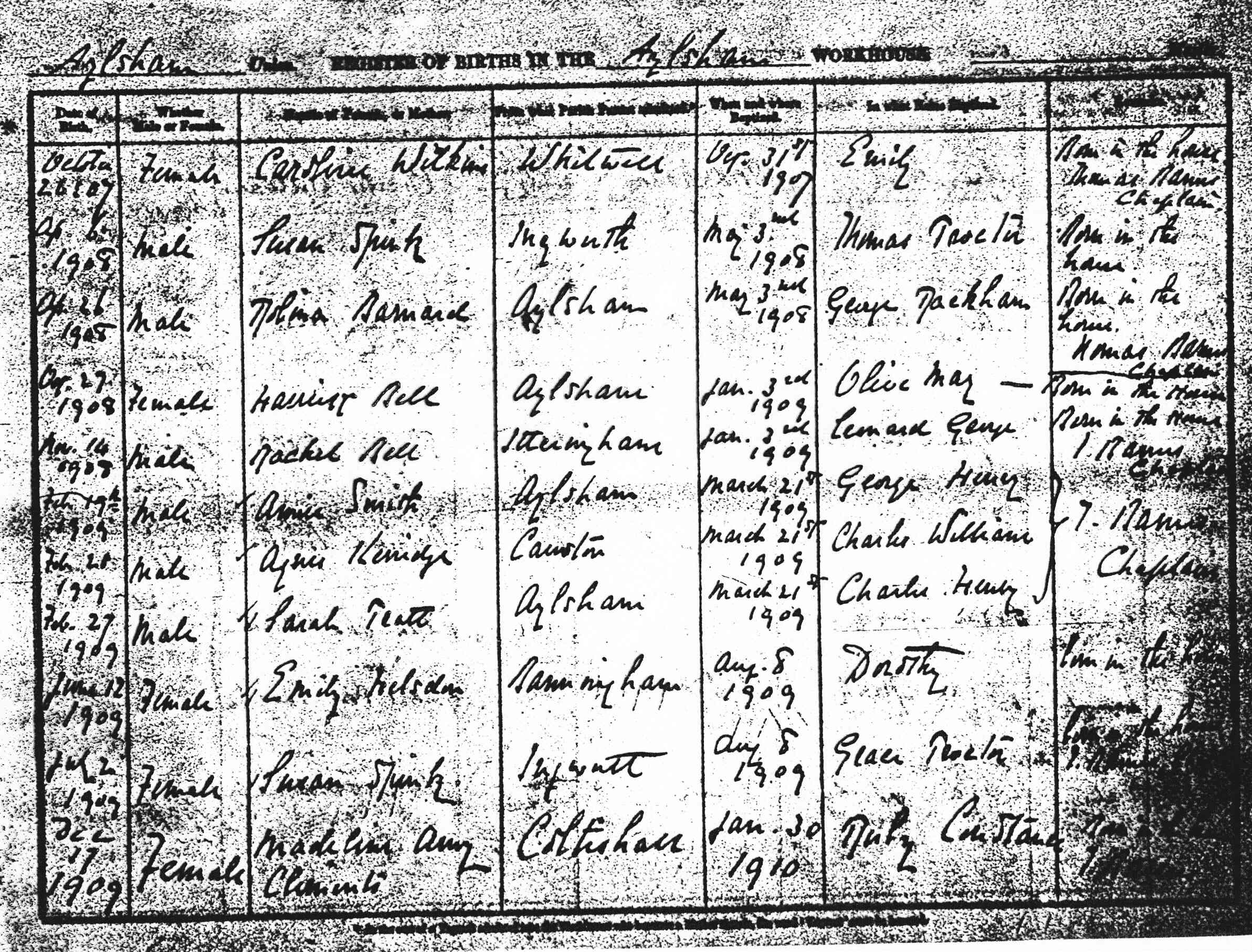




Births and deaths in Victorian workhouses were frequent; they often took place under harsh conditions and tere was a high infant mortality and deaths of the elderly or infirm, all of ehich were recorded in specialised registers. Births were often stigmatised while deaths led to paupers' funerals. Workhouses acted as a last resort for medical care.

Giving birth in a workhouse was dangerous, with maternal mortality rates often exceeding five per cent. Infant mortality in workhouses was also very high, averaging between twenty and fifty per cent. Most workhouse births were illegitimate, with mothers often forced into the workhouse due to social shame. Despite the stigma, births and baptisms were recorded and, after 1904 many records used neutral, non-workhouse addresses to disguise the fact a birth was in fact in the workhouse. It was hoped this would reduce the stigma.

It is estimated that ten per cent of those admitted to the workhouse after 1834 died within the system. Many residents were elderly, sick or disabled, leading to high death rates in workhouse infirmaries. Bodies unclaimed after forty-eight hours could be used for medical research under the Anatomy Act.

Workhouse infirmaries became more involved in care toward the end of the nineteenth century with many deaths in this period stemming from medical rather than just economic circumstances.

There were various registers of birth, christening, death and burial kept by the workhouses and these are especially useful in the early period of civil registration up to 1875 because registration was not compulsory until that date especially for births. Because of the intense social shame engendered in Victorian England by having an illegitimate child, most families heartlessly evicted a pregnant unmarried daughter and her only option was to have her baby in the workhouse - unless of course the grandparents were able to bring the illegitimate child up as their own.

Workhouse birth, baptism, death and burial registers

Workhouse birth records, often combined with baptism registers, are an important resource as information might not be found in parish registers or civil registration.

Baptism registers  contained details of  illegitimate children born in the workhouse. They become a valuable resource if entries of baptism or burials cannot be found in the parish registers or nonconformist records.

Deaths, usually recorded separately from burials, are also recorded in separate registers. Details can also include the vaccination officer’s Return of Deaths of Infants under Twelve Months of Age. These contain the child’s full name, date and place of death and the father’s name and occupation, if known, or the mother’s name if the child was illegitimate.

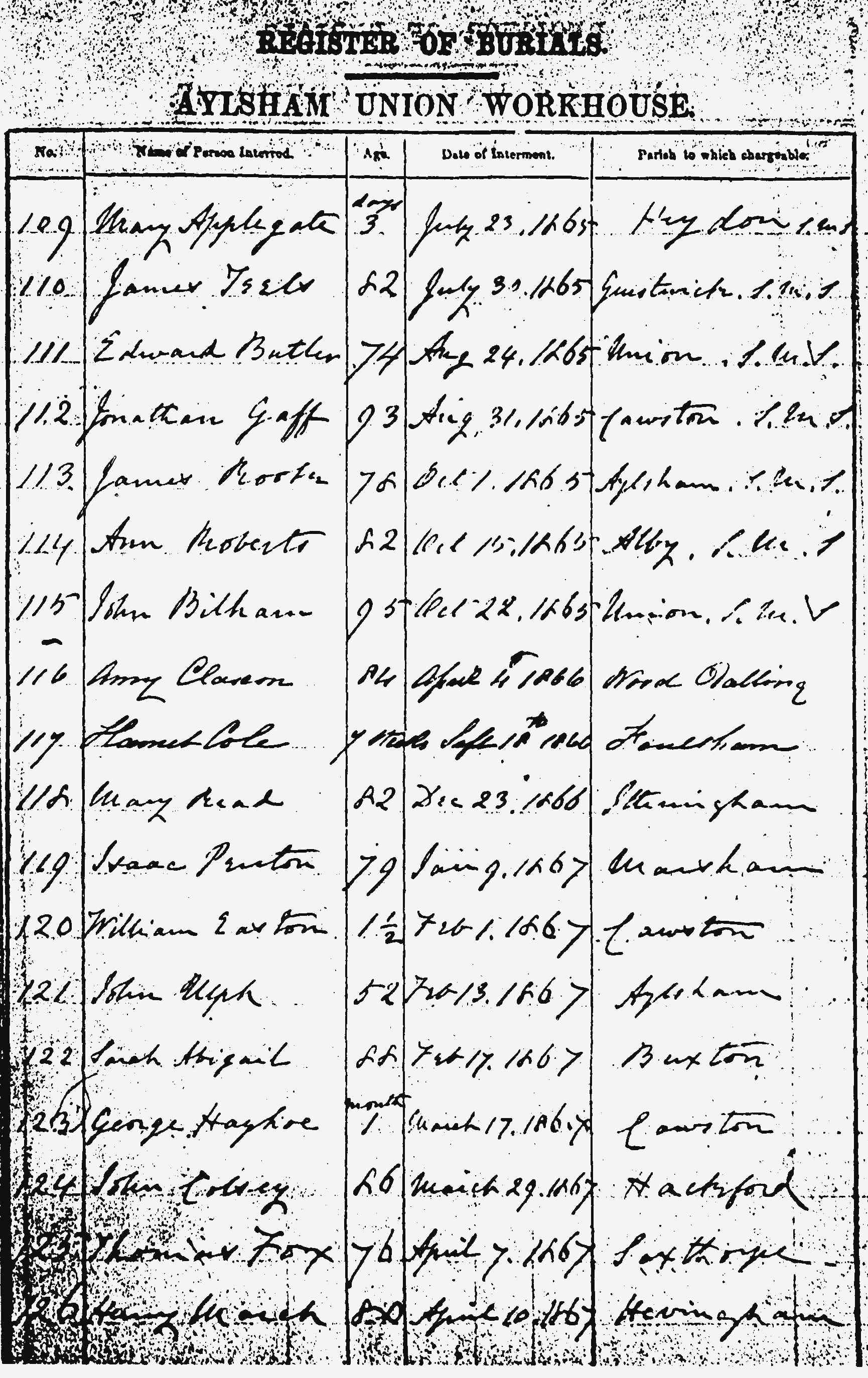
Burial registers were maintained by most workhouses particularly where the workhouse had its own burial ground.   However, most paupers would have been buried in the parish churchyard or, after 1853, in the municipal cemeteries. The registers of burials would have listed their abode listed as union, workhouse, or simply house.


Death in the workhouse

When a workhouse inmate died, the death was notified to the family who could arrange for a funeral.  If this did not happen, usually because of expense, the Board of Guardians arranged a burial in a local cemetery or workhouse burial ground.  The cheapest possible coffin or shroud was used and the body was placed in an unmarked grave, sometimes in un-consecrated ground! 

Prior to the 1834 New Poor Law Act, parish or early union workhouses had no systematic arrangements for recording births or deaths.  This was not resolved until 1837 when registration districts were introduced.  In 1904, the stigma of being born in a workhouse was removed with the introduction of an anonymous/neutral address.  In 1918 a similar practice was followed for deaths.

Where to Look for records

Workhouse records can be found in local or county archives where they have survived. Websites including Findmypast and Ancestry may have digital images or transcripts of such registers.

To determine if a birth or death took place in the workhouse, there are key records to research if the actual registers do not survive. Look at Admission and Discharge Registers and Creed Books which listed religious affiliation as well as records of the infirmaries with the workhouse system.

This article was contributed by Ian Waller from Family History Federation.
Website by Beachshore