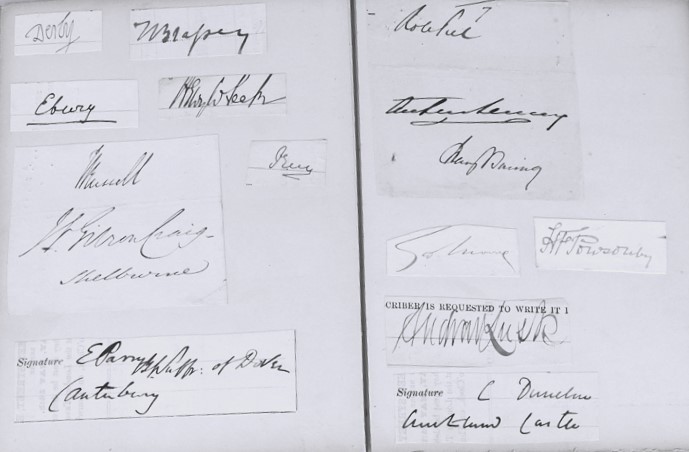





The largest group of people who owned and kept an autograph book were young adult girls but many military personnel also maintained them. Autograph books, whilst being essentially personal, can be a resource for other areas of social and local history. They are not a private diary nor were they intended for public use but autograph books are a record of interaction and engagement. They are unique amongst family records.
It is unlikely that autograph books will provide you with genealogical facts but if you are engaged in family history, then there is so much in those books that puts the flesh on the bones of your ancestors and often provides a true perception of life at the time. Autograph books provide a means of exploring life, attitudes and perceptions. Given that autograph books are a visual medium, they incorporate illustrations and text. They bring this type of material culture into historical records.
It was very common in the late nineteenth and early twentieth centuries for people to own an autograph book. They were readily available in many shops and were frequently given as birthday or Christmas gifts. The owners collected autographs of family, friends or people they met at social, sporting or cultural gatherings. During the First World War, they were frequently used by soldiers to gather the autographs of their battalion members or their fellow prisoners in POW camps. If your ancestor served in a Pals battalion, then other names will usually mean something. (These Pals Battalions were made up of men who had all enlisted together in local recruiting drives; they were promised that they would always stay in that battalion and not be moved to other units.)
Nurses or VADs were stationed in particular areas of war or served in the many convalescent hospitals; they kept autograph books as a record of their time there and these contain messages and autographs from the servicemen that they cared for. They can provide a valuable insight into that person’s life.
Traditionally autograph books were exchanged to be filled with poems, drawings, personal messages and mementos. They were particularly popular among university and grammar school students. Many were pocket-sized leather-bound accessories kept by young people of all social classes. For family history researchers, they are often filled with either signatures or contributions of close and extended family. They can also prove to be a real treasure when they contain information such as marriage notices and obituaries. Some even contain photographs. Even if your own ancestors did not keep their own books they may well have provided content for one owned by another family member or friend.