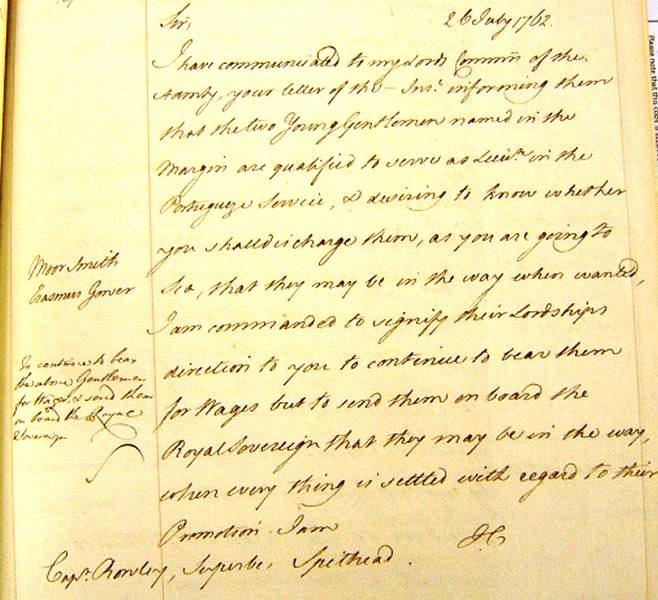




The Admiralty indexes and digests comprise Royal Navy administration, operations and correspondence dating from c1660. These records can be accessed using series ADM12 at The National Archives - they are commonly referred to as Indexes and Digests.

Although they contain much valuable information, they are not the easiest records to research unless you understand naval organisation. The digests cover naval battles, orders, instructions, strategy, policy, communication between the various naval branches and, above all, names of officers and men of the navy.

These records are some of the most underused resources of genealogical information outside Royal Navy service records themselves. The aim of this short article is to guide you through these valuable resoureces.

Naval administration

An understanding of the roles of the various naval administrative bodies is necessary to aid your research.

The Board of Admiralty was the body in command for most of the eighteenth century onwards. It consisted of a council of up to seven members known as Sea Lords and headed by the First Lord of the Admiralty; it was frequently referred to and recognised as 'the Admiralty'. The board was really the political representatives of the navy and virtually all of its members were politicians.

The real day-to-day control was dealt with by the Navy Board, established in 1546 and primarily responsible for the administrative affairs of the Royal Navy and advising the Board of Admiralty. Until the mid-seventeenth century, it controlled all aspects of naval administration but its role was gradually reduced, ultimately focusing on the building and repair of ships, the running the dockyards and administering supplies excluding armaments.  The Navy Board ceased to exist from c1832 when its duties were absorbed by the Admiralty.

From 1689 to 1782, especially in wartime, broad naval strategy and policy was determined in conjunction with the two Secretaries of State who also, from time to time, dealt with naval operations.

Because of the way in which these records are organised, you will need to understand and use the indexes to find relevant information. Throughout its history the Admiralty used various codes and abbreviations as well as changing its filing system on more than one occasion. In simplistic terms, the indexes relates to ships and people and are a basic alphabetical key to correspondence, linking to the correspondence itself or to a digest entry, and the digests relates to subject. Digests are summaries of information in documents that can also be used as indexes to documents.

What do the digests and indexes in ADM12 cover?

The digests and indexes enable you to access the following series of records:

  • Admiralty correspondence received from 1660 to 1976 in series ADM1.
  • Letters sent by the Admiralty in series ADM2, known as Admiralty out-letters.
  • Admiralty minute books in series ADM3 covering 1657 to 1881.
  • Case files – series of letters etc. collected together into a single file – in series ADM7.
  • Supplementary Admiralty records in series ADM13.
  • Official History of the First World Qar in series ADM137.
  •  

Sometimes the digest is the only reference to the existence of a document or letter because the Admiralty may well have disposed of the correspondence; this situation is more noticeable from the mid-1800s onwards. Separate records also exist for the Navy Board in series ADM106.

Using the indexes and digests

The correspondence received by the Admiralty was divided into separate classes namely:

Public Offices - letters from each rank of flag and commissioned officers, Promiscuous letters and Admiralty Board minutes. (Promiscuous letters in the Admiralty were letters from various correspondents that were not classified by rank or position. They were often anonymous or unofficial letters that expressed opinions or complaints about naval matters.)

As the clerks in the navy record office read them, they decided whether the record should be indexed by the name of the person or the name of the ship. There were around 104 subject codes and the list can be located in the reading room at The National Archives. It was at this point that the system of cross referencing operated. The correspondence from officers and in the promiscuous sections was sorted annually into alphabetical order and the rest were kept in chronological order. Each year was covered in the alphabetical index to persons and ships, and a digest which combined a summary and a subject index of the papers to which each was allocated a number. This number is essential in order to step from the index and digests to the original record.

However, a further stage is often needed in translating the references to find the correct document. In some cases there is more than one type of index in use. For example, during the First World War two clerks worked on the indexing and digests and each had their own volumes so both volumes need to be consulted to locate all relevant information.

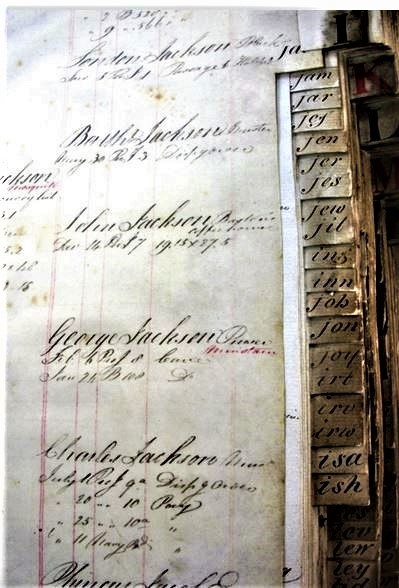
The indexes

These contain entries by the name of the person who wrote the letter, Royal Navy ships (annotated in red ink) and Merchant Navy or foreign registered vessels (annotated in black ink). The indexes also refer to people mentioned in the letters as well as the author.

In each book before 1859 there are four columns, none of which have headings but they relate to the following from left to right:

Column 1 – Marines

Column 2 – Ships

Column 3 – Officers and ratings

Column 4  - Promiscuous.

After 1859 the number of columns is reduced to three labelled thus:

Column 1 – Naval and marine officers

Column 2 – Ships

Column 3 – Promiscuous.

Each main column, whether labelled or not, was then sub-divided into three smaller columns - the original date of the correspondence, the ADM1 reference and subject column.

If more than one number is included then there may be more than one reference in the digests to which the letter refers.

From 1860, an extra column was included in the index volumes showing the date of any correspondence generated by incoming letters and reports and including the code letter of the Admiralty branch originating the action. This information is again essential when locating the out-letters.
The digests

Not all correspondence found in the indexes warranted inclusion in the digests. If an item was included, then it was placed under one of the 104 subject headings. The codes were revised on several occasions and there are separate tables for 1963, 1935, 1909, 1843 and 1800.

It is necessary for you to understand how the digests can be accessed in order to find information about your ancestor. Initially to use the index you will need to know the name of a ship or the name of one of the officers on a ship. Various references also relate to ordinary seamen. There is a slightly different technique depending upon the years to be searched and also whether you use the index or the digest.

What does series ADM1, original correspondence, contain?

The records in ADM1 relate to a number of groups for a range of years. The contents are arranged into four basic groups according to the author:

- Rank 

- First letter of the surname

- Area of the world from which the letter or report was sent.

 - Name of the naval station from which the letter was sent.

There are some shortcomings because these groupings are not always consistent so they also vary according to different periods. So sometimes searching ADM 1 even after using the ADM12 indexes is not always straightforward; but the more familiar you are with the process, the more straightforward this becomes. Occasionally, you may just have to browse through the year or name ranges to find your record.

ADM1 is a class which contains the official correspondence sent in letters for the information of the Lord Admiral or the Lords Commissioners; it includes correspondence to, from and within all the departments of the Admiralty from c1660 to 1976.

Minutes were also noted on the in-letters and from around 1870 minute sheets were added to important letters when they were received as a matter of course. Sometimes the copies of relative out-letters were placed with the in-letters (although ADM2 is the main class for such a series) but in doing so “files” were composed.

From around 1832 the centralised nature of naval affairs changed and the papers in ADM1 began to appear as secretary papers. For the twentieth century most of the papers are internal correspondence within the Admiralty as opposed to those just relating to in-letters. 

To add slightly to the confusion, the organisation of ADM 1 differs depending on the period; the series has been sub-divided. Up until 1839, the series is organised into groups according to the source of the incoming letters. Between 1840 and 1913 the series is organised into year groups and also within each year into the same groups that existed for the pre 1839 series.

For later series records, see the section on twentieth-century operational records.

Captains' and Lieutenants' letters

One of the valuable resources in class ADM1 is the captains’ letters. The letters written by captains contain a variety of information and if your ancestor was indeed a Royal Navy captain, they are likely to be of particular interest. It is unlikely that they will contain much genealogical information but will be useful when tracing their careers.

The name index to captains’ letters for the period 1698 to 1792 is in ADM10 and from 1793 to 1815 (some extend to c1839) there is a separate index in The National Archives reading room but for some reason it does not extend beyond the surnames beginning with the letter P but the volumes do.

Within ADM1 the letters are grouped together in a series namely A - H, I – Q and R - Z arranged by the initial letters of their surnames. They include both officers at sea and those employed ashore and are particularly useful for those on half-pay and also for those employed in the Impress Service.

Some captains’ letters are summarised in the similar series for Commander in Chief letters. The letters also relate to post-captains, masters and commanders and in some cases commodores who were in positions of command. Up to 1705 the letters from can also contain those from acting captains of HM. ships. In the ADM12 indexes the captains’ letters have a reference commencing “Cap” followed by the first letter of the surname.

Lieutenants’ letters exists from 1791 to 1839 arranged by the initial letter of each officer's surname. Letters which were written before 1791 have been destroyed in various Admiralty reorganisations. The series consists of letters written by lieutenants to the Secretary of the Admiralty and includes lieutenants who were in command of vessels but not reporting to a senior officer. However, most of the letters in this series are from ieutenants on half-pay or employed in shore establishments. The series also includes some letters from sub-lieutenants although they are few and far between. In the ADM 12 indexes they are referenced by the letter “L” followed by the first letter of the surname.

What does series ADM2 contain?

This series contains Admiralty out-letter books and includes information on commissions and warrants appointing sea and naval officers, and other out-letters, principally the Lords' letters and routine correspondence. Lords' letters were formal letters signed by the Lord High Admiral, by the lords commissioners of the Admiralty, or by the monarch holding the office of Lord High Admiral.

Routine correspondence was that which did not require the signature of the Lord High Admiral or the Admiralty Board and which were normally written and signed by the Secretary.

The records only exist in this series up to 1859 and most of the individual volumes contain their own index.

Royal Navy operational records for the First World War

Most of the principal operational records for the Royal Navy can be accessed via Discovery or by referring to the Official History of the Great War in ADM137.

However, the papers in ADM1 include reports of naval actions, casualty lists, courts of enquiry documentation and the recommendations for honours and awards, particularly those received from individual ships.

To complement these records, there are also ships' logbooks in class ADM53 and submarine logbooks in class ADM173 as well as Royal Navy station records for Plymouth, Portsmouth and Chatham. Additional information exists for the Board of Admiralty concerning such documents as board minutes, weekly and monthly orders etc which cannot be accessed using the index and digest system but which provide additional supplementary information enabling family historians to flesh out the bones of anyone’s naval service.

Royal Navy operational records before 1914

These records are filed using more or less the same categories as those for the Great War and this is really where the indexes and digests come into their own.

Slightly more complex are the out-letters in ADM2 and other series. Many of the early letters up to c1680 can also be accessed from the Pepys' Library at Magdelen College, Cambridge. Between 1689 and 1859, separate series exist for correspondence from naval officers serving at sea and those officers ashore. For a short period between 1859 and 1869, the administration of the Admiralty changed slightly and these documents are in series ADM13 loosely indexed in ADM12.

Between 1869 and 1976, the system becomes slightly more complex as you will need to refer to both ADM1 (In letters) and ADM2 (out-letters) in order to locate a full sequence of events. In 1847 the Admiralty began to collate papers referring to the same subject and called the papers “case papers”. These records are identifiable using the indexes and digests but all related papers should be together for the particular subject. The actual records are in series ADM116.

To facilitate the keeping of case papers, a record office was established by the Admiralty in 1809. By around 1850 the Admiralty perfected its system whereby the larger, more important, files were bound together into a single volume. Each case was then given an Admiralty case number by which it was then referred to in the indexes and digests and in other Admiralty sources. It is useful to understand the classifications within ADM116 in order to correctly identify the documents and this will become apparent as you translate the index codes and apply them to Discovery searches.

A worthwhile resource

Although accessing the records may sound a little complicated, it is well worth persisting at locating the information. Practice makes perfect, and in this case could easily lead to a gold mine of information.

This article was contributed by Ian Waller from Family History Federation.
Website by Beachshore