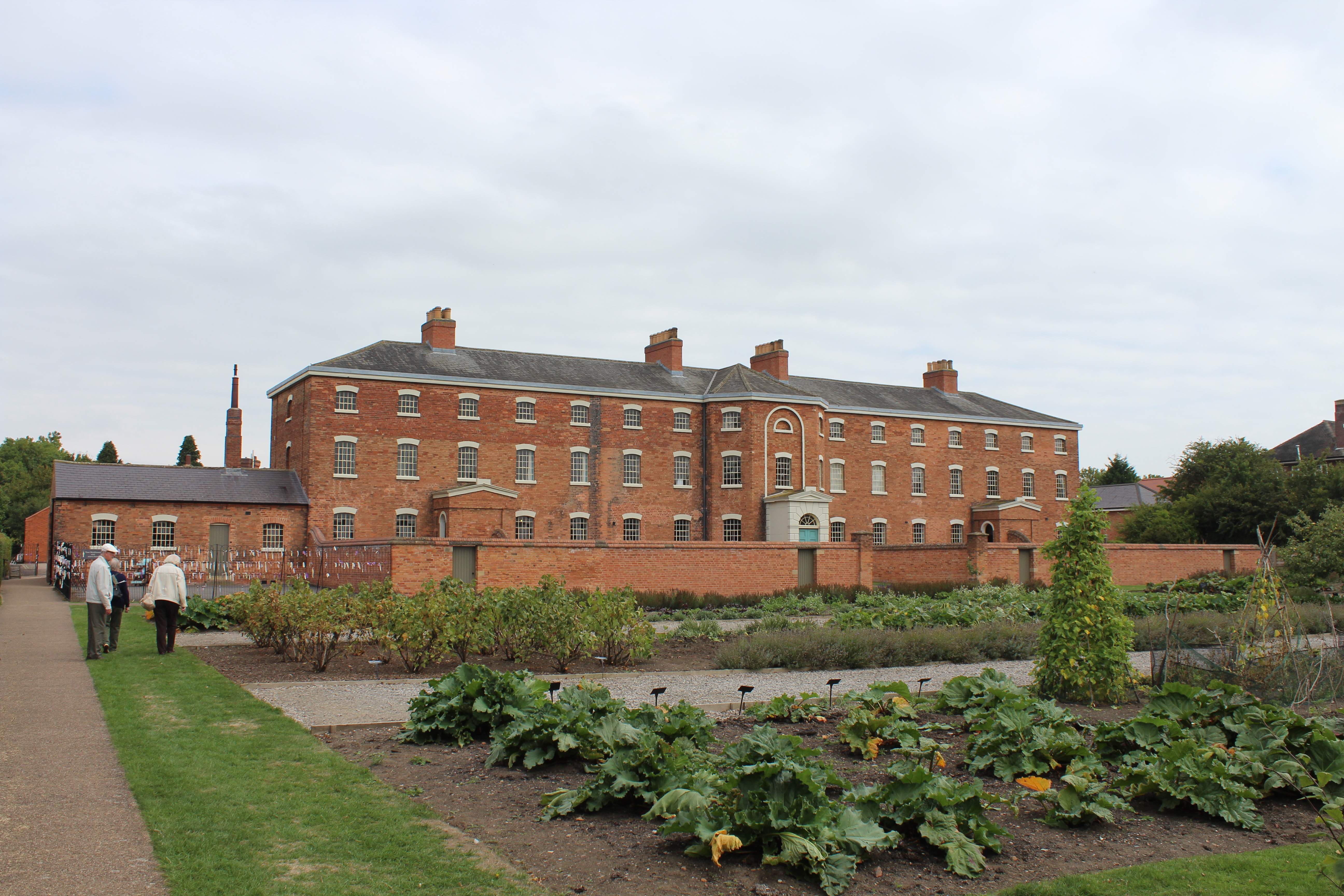
Prior to 1834, arrangements for the care of the poor was patchy to say the least. It was left to parishes to do what they could. Care of the poor did exist in workhouses but it was entirely voluntary. The new Poor Law was introduced in 1834. Essentially this Act changed the way relief for the poor was administered; groups of parishes were combined into a union and this meant that previous outdoor relief from the parish for those in need ceased and the union workhouse characterised the spirit of the New Poor Law.

The Union Workhouse

Workhouses were austere forbidding places and deliberately unconvivial, so much so that those who entered the workhouse were designated as inmates, a term more commonly associated with prisoners. Admission and discharge from the workhouse were both voluntary acts but most people in poorer communities looked upon the workhouse as a last resort for help.

Union workhouses were governed by a Board of Guardians; there was usually one member from each parish in the union on the board. Each workhouse was run my a master and matron - very often a husband and wife.

Documents for research

Where records survive, documentary evidence of life in a workhouse can be really enlightening. Life was hard and reading old records about workhouses helps us understand the reality of our ancestors' experiences. Records of the workhouse provide the following information:

·         Admission and discharge registers

·         Creed registers

·         Emigration books

·         Punishment books

·         Masters' journals

·         Guardian minute books

·         Apprenticeship books

Most surviving records have been deposited with local record offices but some records for London workhouses are online at ancestry.co.uk.

.Workhouse were not all bad because access to the infirmary was often the only way poorer people could receive medical treatment. This was particularly essential in old age and for single girls giving birth to an illegitimate child.

This website - www.workhouses.org.uk - is also a mine of useful workhouse information.


  1. 1

    Inmates had to overcome the trepidation of knocking on the door, which, once opened, subjected them to a rigorous  interrogation before being accepted. 

  2. 2

    Once they had explained their circumstances of need to a workhouse official, they were admitted and taken to the receiving ward where their outdoor clothes were exchanged for a pauper uniform.

  3. 3

    A family or individual then had to undergo a medical examination. Any personal possessions were confiscated: all they had now was a workhouse bed they could call their own!

  4. 4

    Families entering the workhouse were segregated. Men, women, boys and girls had their own dormitories, day rooms and exercise yards. Meals were also taken separately.  

  5. 5

    Order and decorum had to be maintained (although after 1842 the silence element was relaxed if the workhouse master allowed). Prayers were said before breakfast and after supper, and everyone had to attend chapel on Sundays. 

  6. 6

    After about 1860 most workhouses received donations of books and magazines for the inmates and some entertainment was arranged for the occasional evening.

Workhouse  means... Work

The clue is in the word! As the name suggests, it was a house of work, so able-bodied inmates spent most of their time working. They were allocated a variety of tasks most of which were mundane and necessary for the running and upkeep of the workhouse. The female inmates were involved in domestic chores such as cleaning, helping in the kitchen or in the laundry. Some workhouses contributed to the local economy and had weaving sheds and sewing rooms; not only was this a way the workhouse could supplement its income, but it also gave an inmate the opportunity to learn a new skill to help them survive outside the system. If the workhouse had a garden, the female inmates grew vegetables to supplement the bland diets.

If a male inmate had any trade skills, they would be allocated tasks around the house such as mending and repairing things. Most of the male inmates were involved with more mundane jobs such as stone-breaking, which was physically demanding. The stones were then used locally for the upkeep of roads. Corn-grinding, bone-crushing to make fertilizer or wood-chopping were also undertaken.

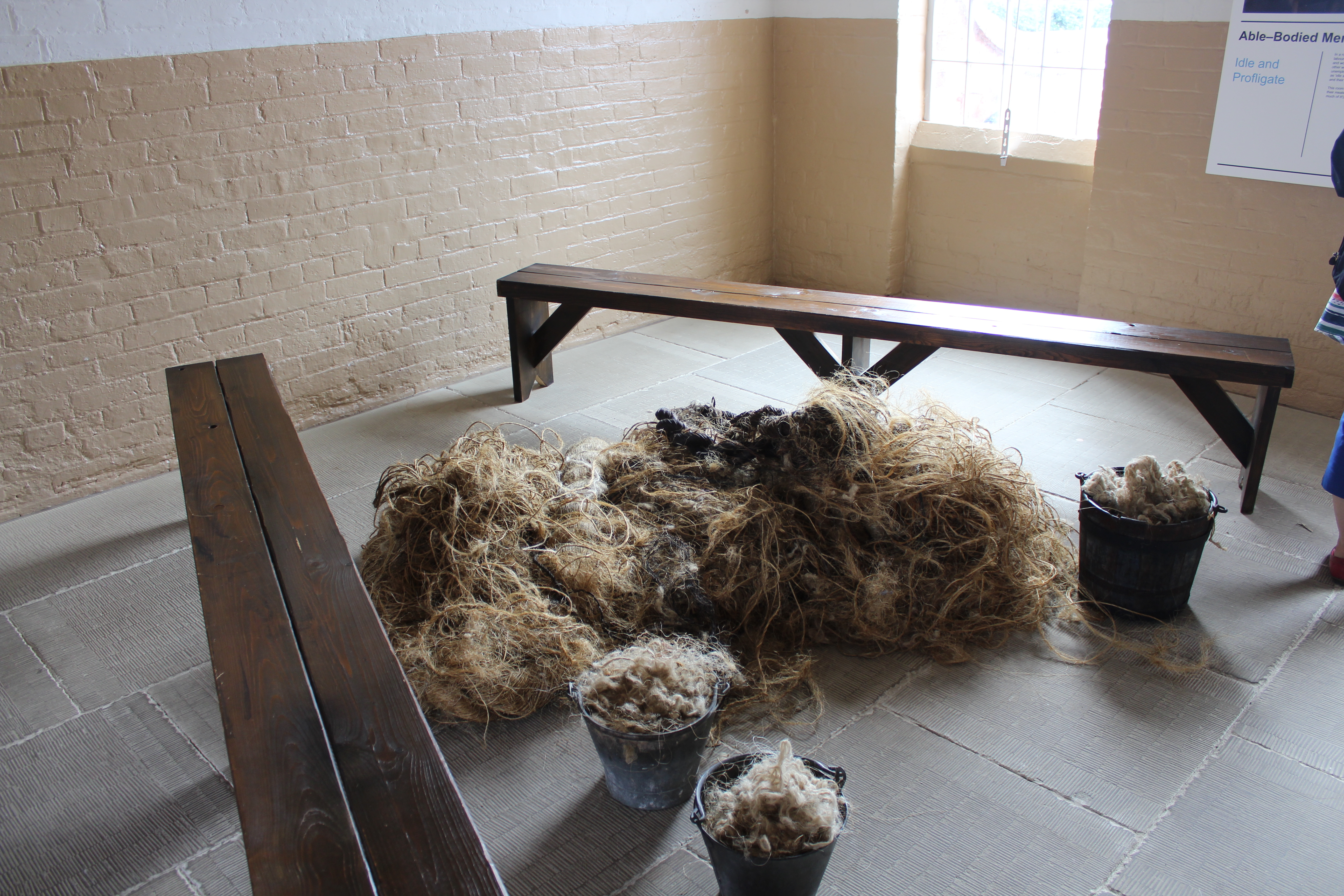
Oakum picking also took place and was carried out by both men and women. Oakum is a preparation of tarred fibre used to seal gaps. Picking oakum was particularly rough as it involved teasing out the fibres of old hemp rope and appying tar or pitch. Oakum was used to seal joints in wooden hulled navy ships.


 

Food, glorious food!

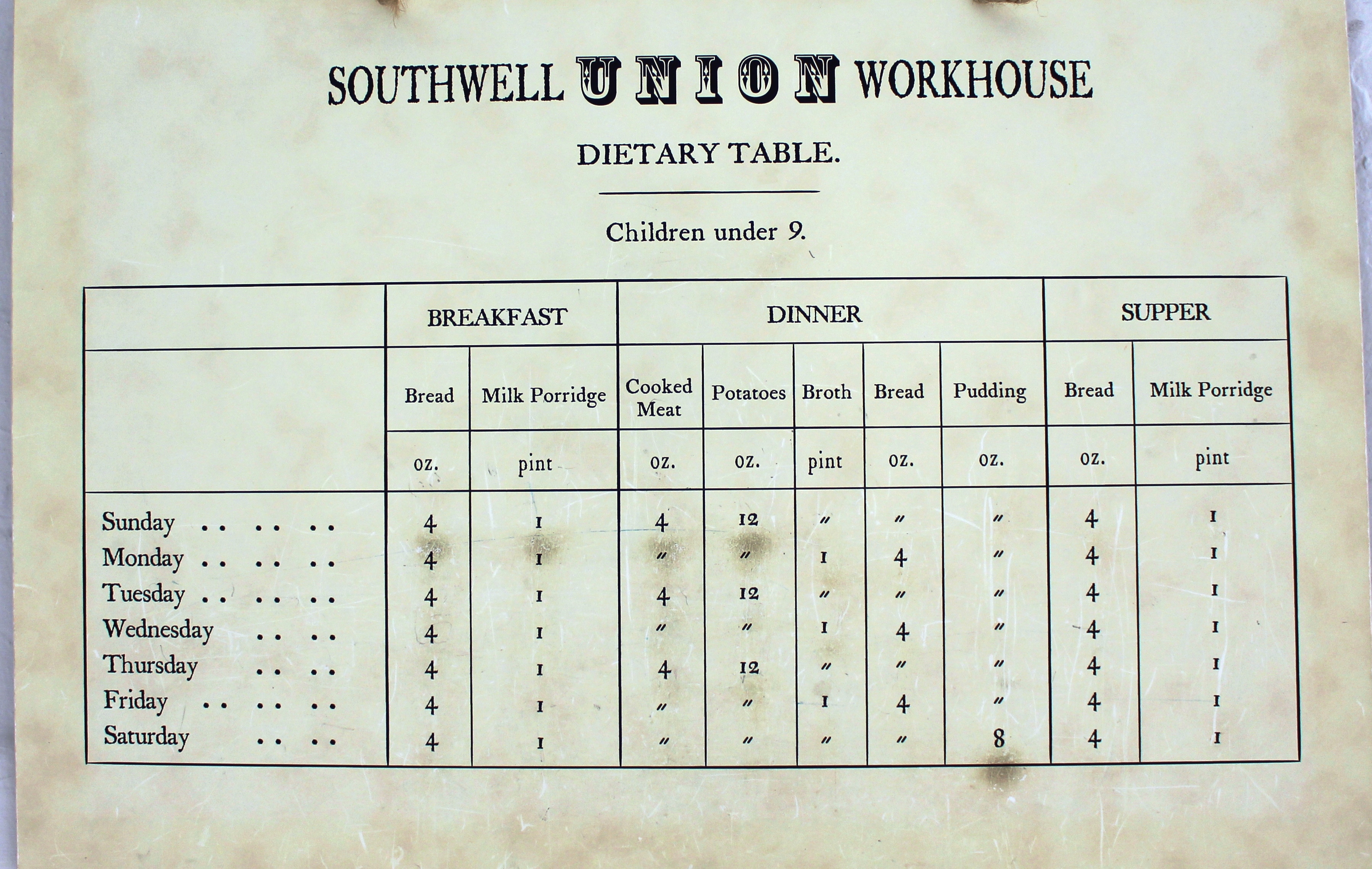
The diet to be followed in workhouses was laid down in detail; the food was very plain and the portions meagre. The Poor Law Commissioners issued six sample dietary tables; the amounts of food given at each meal depended upon whether the inmate was a man, woman, or child and whether able-bodied or infirm. Most breakfasts consisted of bread and milk gruel; dinner was normally meat pudding or suet pudding served with potatoes. Supper was bread and cheese.

Children and the infirm had slightly different diets usually inclding milk or tea, and special medical cases might have received alternative food.

No one ever starved in the workhouse. As nutrition became better understood, a greater variety of food formed part of the menu. If the workhouse had a garden, then they grew vegetables to supplement the substantial stodgy food.

  1. 1

    Many illegitimate births and baptisms,  deaths and burials of the aged or infirm occurred in the workhouse, mainly in the infirmaries.

  2. 2

    The births, baptisms and the workhouse burials  were recorded in registers similar in style to parish registers.

  3. 3

    Most workhouses had a chapel so children born in a workhouse were usually baptised by a visiting minister in the workhouse chapel.  If no chapel existed, arrangements would be made for baptism in the local church. But remember...as with all baptisms, entries in the parish register depended upon the memory or accuracy of the minister!

  4. 4

    At the other end of life, deaths were also recorded and many were buried in the workhouse burial grounds without marked graves.


  5. 5

    Many deaths and burials were recorded in parish burial registers with place of residence given as union workhouse.

  6. 6

    Some workhouses were only identified by their street address rather than attaching the stigma of workhouse to a birth or death record.

Demise of the workhouse system

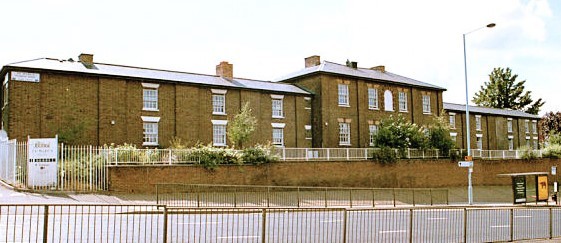
With the advent of the Children’s Act 1908, the old age pension and National Insurance, the workhouse system fell into decline just before the First World War. Many workhouse buildings became poor law institutions and then general hospitals when the NHS was established in 1948. Some were renovated completely and became luxury flats or quality nursing homes.

The welfare of workhouses

Most people dreaded the very idea of entering the workhouse, but when a family or person had no work, nowhere to live and no means to support themselves, then there was no option. Workhouses gave them a roof over their heads, food to eat and medical care - the essentials of life. Life was harsh but fair; most inmates contributed by working, either in the workhouse itself or learning a new skill in a workhouse weaving or sewing shed. 

Despite the emotions generated by the word workhouse, they weren't all bad. As time went by, in the late-1800s charity organisations began to help at times. They would organise books and games for the children and even sometimes a day out for a walk in the countryside or a trip to the seaside! 

The bottom line is that these people survived longer - thanks to the workhouse. 

This article was contributed by Ian Waller from Family History Federation.
Website by Beachshore